

Greg Muhr, Director of Coaching for Campton United Soccer Club in St Charles, Ill., knows the game has changed. Recruitment has evolved into an arms race. With the arrival of NIL, every high school standout is now a walking corporation. Muhr observes that this is not just a policy shift; it is a transformation of the professional identity. If you are not recruiting a brand, you are already behind the curve.
“Ten years ago, it was a lot more regulated. It was watched a lot more. And [it changes] from sport to sport. College football and college basketball are both big businesses. Now, even youth soccer, where I make my living, it’s more about big business than it is about development and enjoyment,” Muhr said.
Muhr says there is no single moment that leads to an athlete being scouted. Rather, it is a combination of everything related to how an athlete is as a player and teammate. Sometimes, social media presence is factored in.
“The biggest thing that coaches should be looking for is the right attitude, the right approach to things—a good approach and then a good response [from a player]. Whether things are good or bad or ugly, they know how to respond properly,” Muhr said.
A very small percentage of high school athletes reach the college level (according to the National Collegiate Athletic Association (NCAA), less than 2% in the higher divisions of some sports), making the field highly competitive.
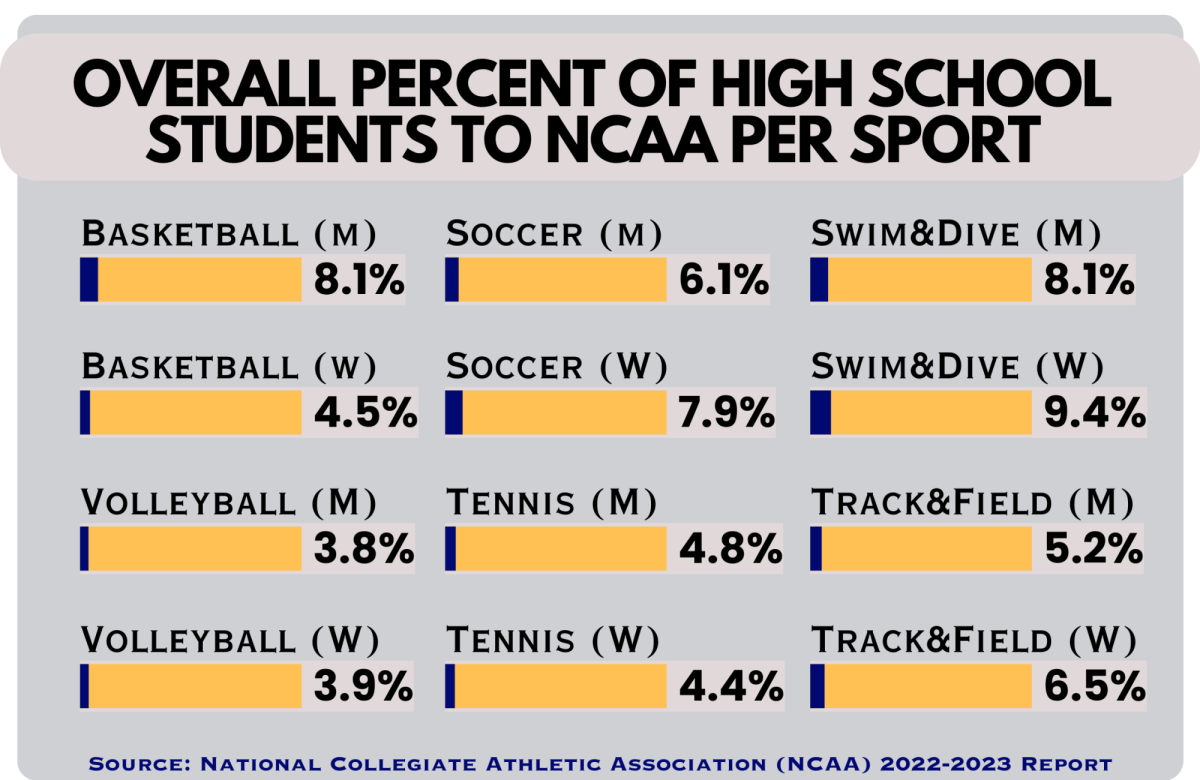
“I think parents are chasing a scholarship, and there’s very few athletes that make it to a college level, and then even fewer that make it to a professional level. Scholarships are limited,” Muhr said. “We’re misleading and misguiding a lot of people, parents and children both. Overall, it’s become more expensive [and] more difficult.”
Muhr believes that not enough of his job involves managing the stress of parents who have invested time and money to get their child to play at a high level and expect a return on that investment.
“Look, if your kid gets a scholarship, it’s definitely a bonus. But if you’re looking for a scholarship, you’re probably not focused on the right things,” Muhr said. “You [want] a coach that’s going to give a crap about you and your daughter or son. I think we’re really misguided right now about that stuff.”

Muhr believes it makes things more difficult when the college level becomes more of a business, focused on making money rather than on being a team, even though it can be beneficial that professionals can now legally accept donations and sponsorships.
“Nick Saban, [a] famous Alabama football coach, resigned. He used to have the story that I remember, he said they used to always have the mother and father of the recruited players into their home for dinner, and the first question [the parents] started asking was, ‘How much NIL money can I get?’ instead of ‘How are you going to look after my child? How are you going to keep them safe?’ So it’s definitely changed that in a way that’s very difficult to manage,” Muhr said.
Muhr argues that the sports field has become dominated by teams evaluating their performance against other teams’ players, whereas they should instead focus on what they can control and how they can build the best team possible.
“It’s very difficult to build a team right now, because everybody’s looking out for themselves, which is normal human nature. But when you sacrifice the ‘me’ for the ‘we,’ that’s what team sports should be,” Muhr said. “If you do, then I think it would speak for itself, even in today’s age where [it is] more competitive because one club always wants what another club has.”
Muhr has noticed changes in how coaches are selected in recent years, with a shift toward people rather than players.
“People in leadership roles, coaching—we need to see ourselves more as guides and help young people. That’s more prevalent now,” Muhr said. “That’s one of the best things that has changed; it’s people first, then players second.”
Alumna Emma Wilson, a current freshman at the Massachusetts Institute of Technology (MIT), is on the university’s rowing team.
“I think rowing is a very rewarding sport. It’s very easy to see the improvements that you’re making, [and] I felt that that was very satisfying. I also liked that to be rowing, you don’t have to start at age five. [It’s] a more even playing field,” Wilson said.
Wilson never considered herself a college competitor, and when she first started rowing in eighth grade, it was just to try a new sport.
“A lot of my teammates were recruited for rowing. So as I got older, I started to realize [that] this could be a real possibility for me,” Wilson said. “So, my junior year, I started reaching out to coaches. I went through that whole process and ultimately ended up at MIT. I felt like it was the best fit for me, both academically and athletically.”
According to Wilson, having multiple pathways for students to gain admission to college has positive effects on the school environment.
“It helps get more diversity of people on campus,” Wilson said. “[You] have the people that are very academic, you have the people that are very athletic, and [the] crossover as well, versus if the recruiting process didn’t exist, you might end up with more of one side rather than the other. And that would make for a less well-rounded campus.”
While some schools expedite admissions for committed athletes to build their sports teams’ skill levels, others, like MIT, still require students to complete the admissions process.
“With a school like MIT, you have to do something to stand out to get in. It’s just so competitive these days. If you do a sport, that letter of recommendation [from a coach] could be that thing that makes you stand out. But you definitely need to have baseline qualifications to get through the admissions process,” Wilson said. “I think it’s just important to really think about what schools you actually could see yourself at, and not just look at the sports.”
Alumnus Tucker Dias, a freshman at Case Western Reserve University, is a kicker and punter on the university’s football team. His participation in sports has a positive impact on his mental health.
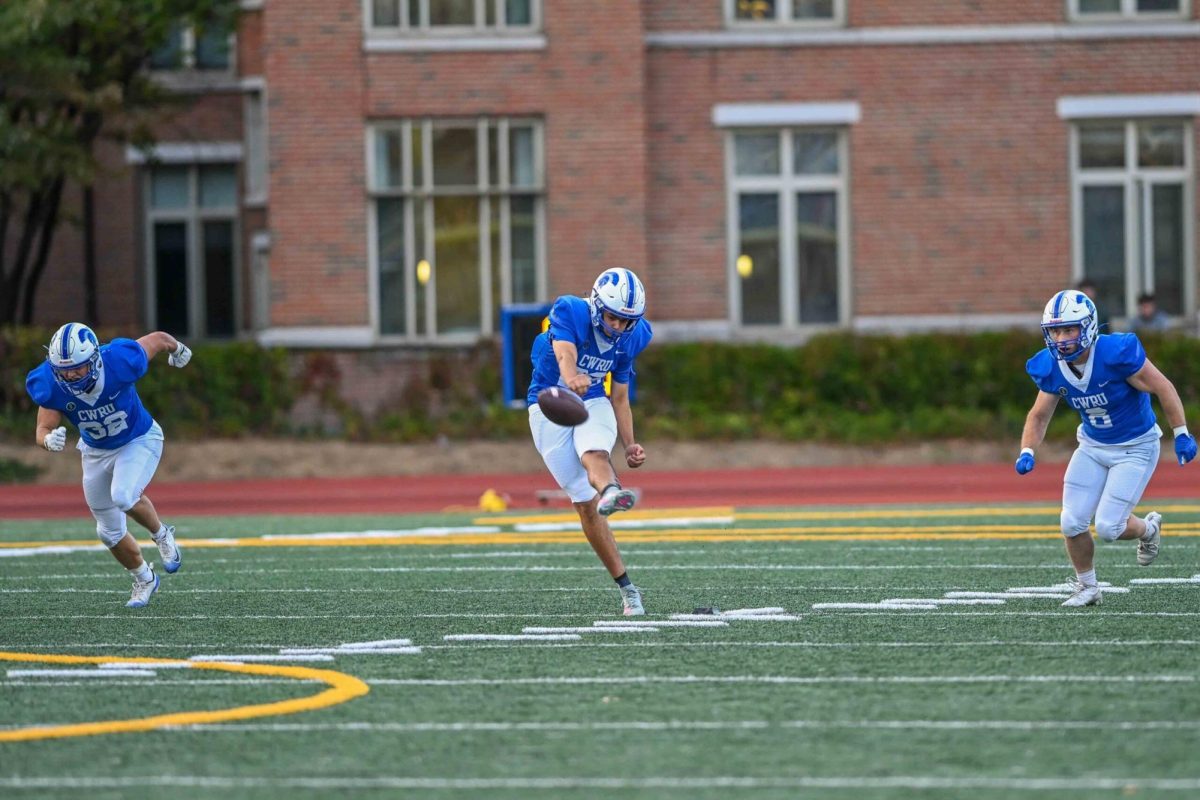
“I have a much better attitude when I work out, and [it] helps me feel more productive. I feel much more motivated to get homework done and much happier to be doing it [after practice] than before practice,” Dias said.
Dias believes that being a good athlete can help the college admission process, but that it is not the definitive factor.
“It makes you well-rounded. It shows an admission officer that you can apply yourself, shows that you’re dedicated—[a] lot of things that admissions care about. I think it can certainly help you get into a good school,” Dias said.
Some young athletes begin specializing in a certain sport at a very young age, while others bounce around more. Research in the National Library of Medicine states that by age 18, 95% of players are specialized. However, for ages 14 and older, enjoyment and satisfaction scores began to decline.
“Cross-training and playing different sports, especially as young athletes, is a good thing. [If] you’re going to play at a high level, Division 1 program, it helps to be specialized, but not until you’re probably 15, even 16,” Muhr said. “There’s the technical, tactical [and] psychological pieces being spoken about a lot more now. It’s good for the kids to do both [because] you get worn out in the muscles with such specific training.”
Muhr argues that, with the prevalence of social media, many things are more difficult for young people, including staying motivated to play sports.
“It’s hard for players, harder for coaches, to understand that part of the process [is] making mistakes. If you don’t have a good performance, and you worry, then you miss improving,” Muhr said. “There’s a lot of parents, as well as athletes, that stress pretty bad[ly]. But that’s the level of commitment they feel [they] need to be at these highest levels. It’s not necessary. But people think anyway that [they] have a better chance of being recognized by colleges for recruitment.”
Muhr emphasizes how kids should get into sports as a way to “stay out of trouble.”
“As much as it is more difficult now [for] athletes and families, I still think it’s a great [thing] for kids to go out in the driveway, pick up a basketball [or] pick up a hockey stick. [Sports are] always going to be a great escape, [a] different way to spend energy,” Muhr said. “Sports is always going to be something that you can count on to make you feel better.”
For Wilson, having rowing as a part of her schedule improves her time management.
“Sports is one of the things that brings balance into my life. If I didn’t have something else on my schedule, I would spend all my time on schoolwork. So it forces me to be better about managing my time,” Wilson said. “It’s important to set aside certain times to do something non-school related, non-sports related, even if you have a lot of work to do.”
Wilson had to shift her mindset about which sports to pursue upon entering college.
“In high school, a lot of people are stressed about sports because they want to use it to get into college. But [once] you’re here, if this is the thing you do for fun, then it should be fun,” Wilson said. “I think rowing is one of the things that helps me get more balance in my life, and [it] definitely improves my mental health. The teams are a built-in support system that people go to. I think [rowing has] been a positive aspect of my experience at school. I’m very glad that it’s something I chose to pursue.”
Wilson’s advice to high school students trying to break into college sports is to work hard, start early and build relationships.
“Even if you don’t think you’re good enough, you never know [until] you try,” Wilson said. “Coaches love to see improvement [and] someone who’s coachable. [If] you’re not where you want to be, they’d like to see you trying to get there. Don’t be too afraid to reach out, because even [if] it doesn’t pan out, you’re exactly where you were in the first place.”