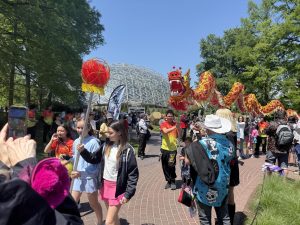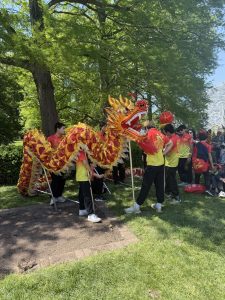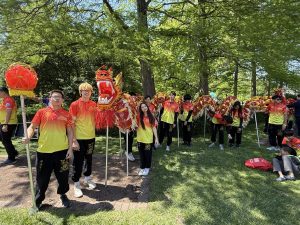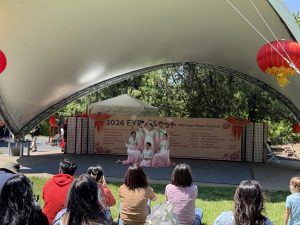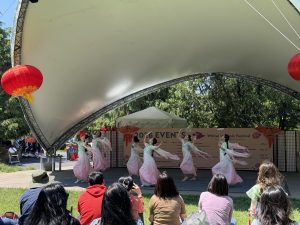

A brightly colored dragon danced along the path as the scent of authentic cuisine drifted through the Missouri Botanical Garden during the 30th anniversary of Chinese Culture Days, May 2-3.
Every year, the board of organizers prepare for the event by reaching out to dozens of performers and making sure all pieces fall in place. The Botanical Garden collaborates with Chinese Culture Education and Services (CCES) and many other organizations, with around 800 volunteers helping make the festival a success. Sophomore Mark Yurkuns performs the lion and dragon dances every spring.
“I just like jumping around with a partner and performing in front of hundreds of people. It is kind of nervous because you can easily mess up, especially the jumps like horse stands. It’s something I enjoy, and I feel like I’ve got a lot of freedom to move around and do my own moods,” Yurkuns said.
Yurkuns practices dance for the festival at Saint Louis Modern Chinese School (SLMCS) a nonprofit organization well known among Chinese families in Saint Louis. In the six weeks leading up to the Chinese Culture Days, he spends two hours practicing: one class with four people performing lion dance and another with many other students performing the dragon dance.
“Lion dance is a relatively new team. We started it two years ago, and it’s improved [a] significant amount,” Yurkuns said. “We’re still struggling in finding more people involved. It’s really easy. I highly encourage more people [to] join.”
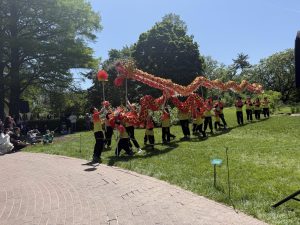
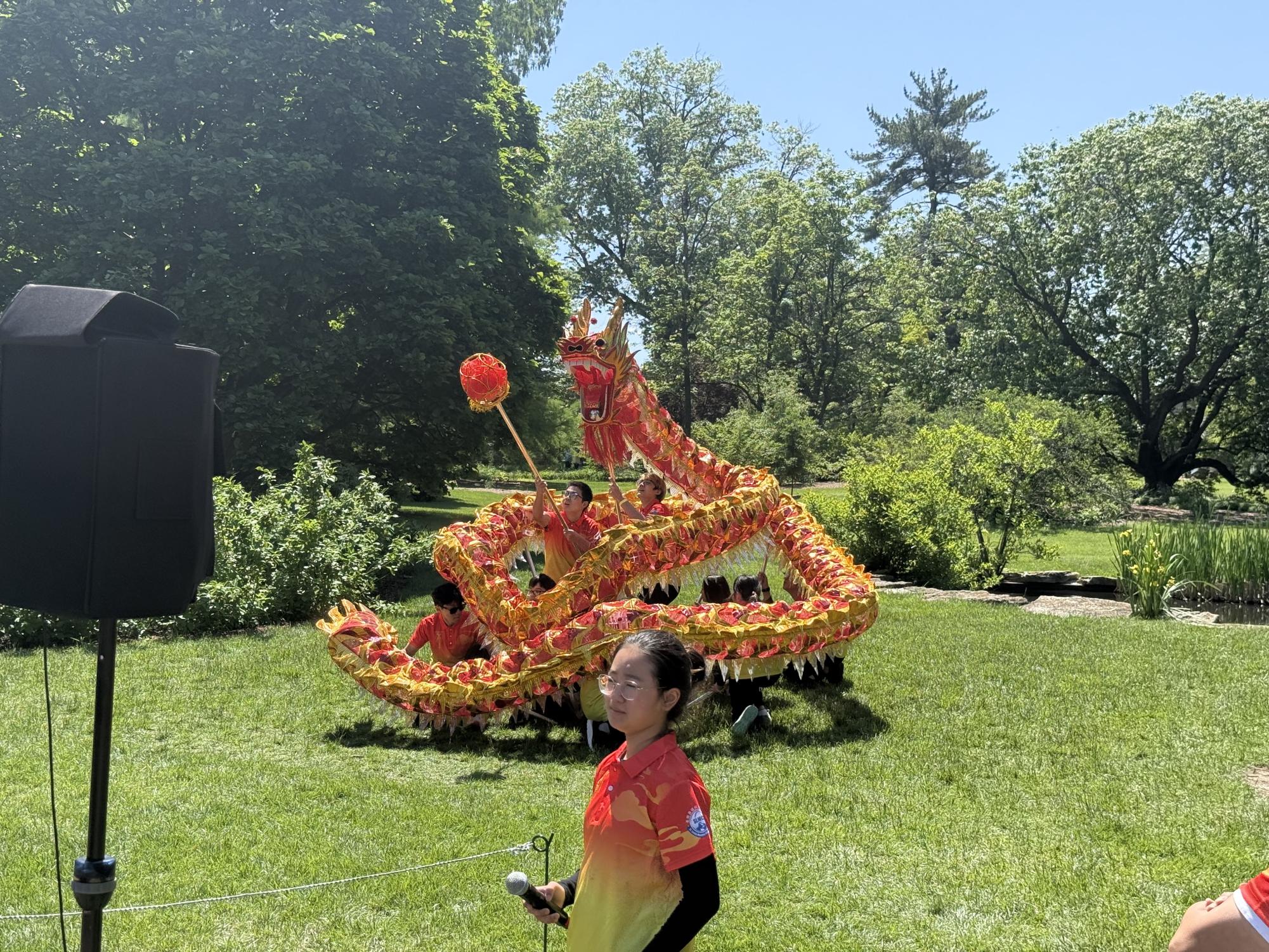
There are three dragon dance teams in total, a baby dragon for younger children, one for teenagers and one for adults. After the main dragons dance for several minutes, bystanders are encouraged to join in and replace a component of the dragon as it moves.
“There’s a lot of people, not just from Chinese culture, that are joining. Just seeing it is different than actually holding it, even though it’s nothing too complicated,” Yurkuns said.
Compared to the dragon dance, the lion dance is much harder.
“I try to hide my face because under the mass, it’s just like me sweating, it’s really tiring. It’s like 15 pounds you[‘re] just shaking for five minutes above your head,” Yurkuns said.
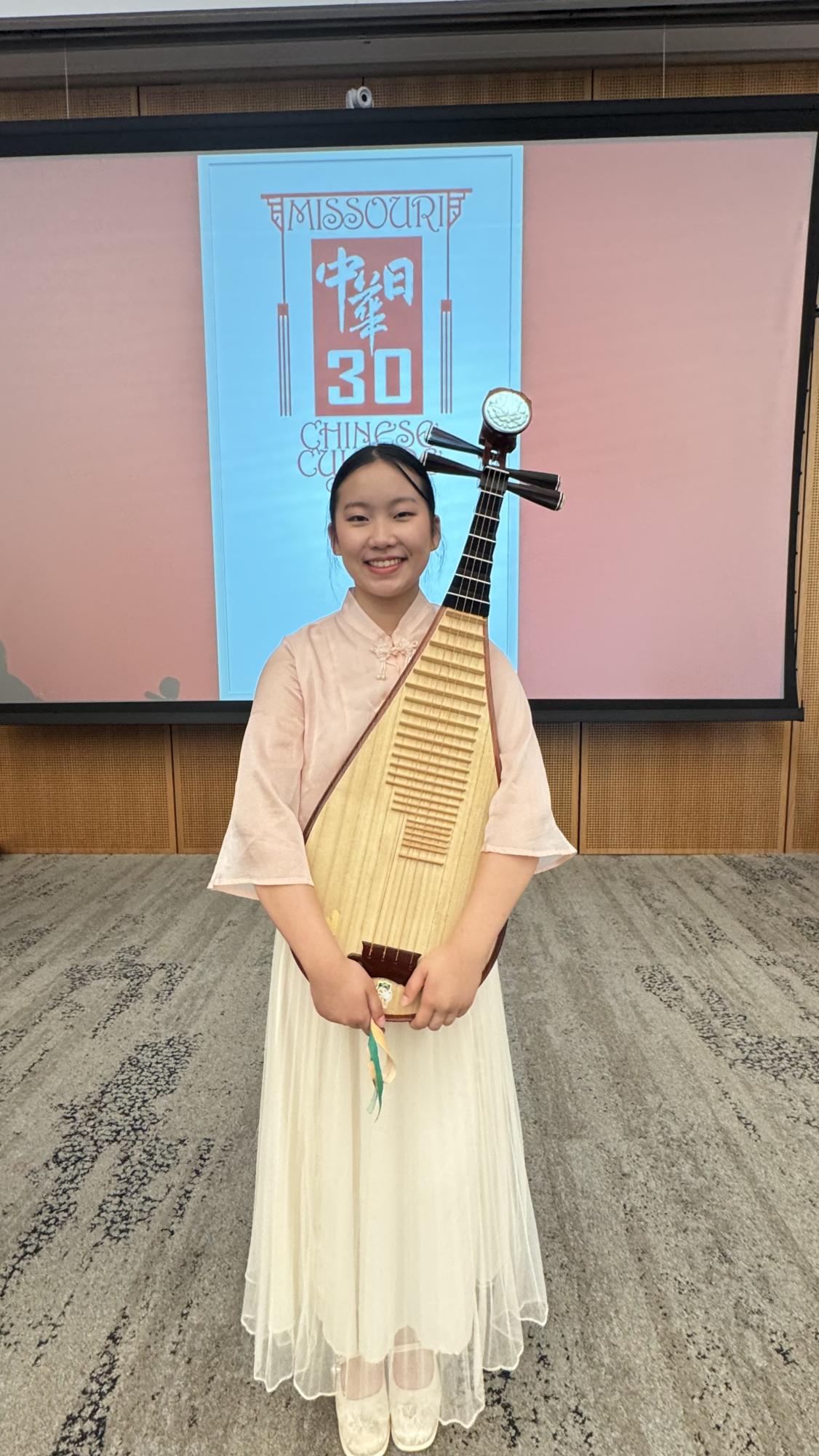
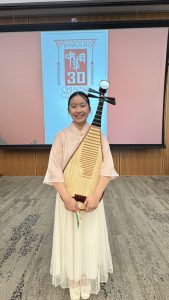
Freshman Maggie Zeng played the pipa, a Chinese traditional instrument, for this year’s festival. She volunteers through Saint Louis Modern Chinese School.
“I first became involved because I took [Chinese lessons] [at] the St. Louis Modern Chinese [School],” Zeng said. “I also started taking pipa lessons. Pipa is a Chinese traditional string instrument—that got me into the actual performance [in] Chinese Culture Days.”
Zeng attends weekly practices for her events at SLMCS. Her favorite parts of the event are the activities that she can participate in when not performing.
“I think my favorite part of the event is probably either the food—it’s just really exciting because there’s a bunch of food trucks there, and there’s also always boba,” Zeng said. “But I think my favorite part is probably the arts and craft station, because the crafts are always really [fun to do], but there’s only six spots per hour, so you have to run to sign up.”
In addition to the pipa, she practices traditional Chinese dance for the festival, totaling three hours each week, reflecting the collective hard work all performers put into it.
“In the middle of rehearsal, after doing it so many times, I get really bored with [the] dance. But when I’m actually on stage, I think it’s a really rewarding feeling seeing the effect performers have on the audience.”
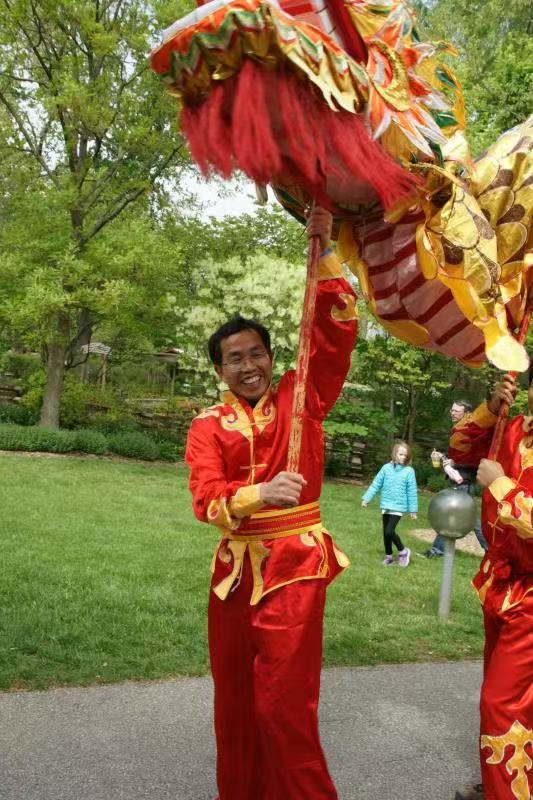
Just like the performers, volunteers are crucial to the streamlining of the event. Adult Volunteer Jiansheng Huang helps out with the dances that Yurkuns’ team performs. Routine and repetition over many years have ingrained the acts in him and in the adults he performs with.
“We usually just practice one or two [times] in Chinese School because we are already very familiar with the show. Every year [there] will be some new volunteers joining us, but most of the volunteers are old friends,” Huang said.
Huang is familiar with many of the volunteers in the interconnected Saint Louis community, and he sees them often at the Modern Chinese School. More than just the Chinese School community, though, he also emphasizes the value of familiarizing other communities with Chinese culture.
“I think this is one of the most important gate[s] to open for the foreigner[s] to understand more about our traditional Chinese culture. I believe many foreigners are very interested [in] our Chinese culture,” Huang said.
Overseeing the event’s management are the seven CCES board members, one of whom is Sanhong Chang. Managing such a large event takes up a lot of time throughout the year, and Chang invests 10 hours a week.
“The events only [lasts] for two days, but we almost started from last July, [that] early,” Chang said. “Because some performer[s] [are not from Saint Louis]. [They are] from other state[s], even some [from] China. So obviously, there’s a lot of planning to do, the transportation, everything.”
Chang knows that the volunteers have a lot of work to do and believes that the value of Chinese Culture days lies in the collective effort.
“I love every part of the [event], but the [one thing I like the most [is]: as you know, there’s 13,000 Chinese people in the Saint Louis area. We get all of the Chinese people from the different organizations [to] work together,” Chang said. “That’s really [a] very important part of this event, not only [promoting] the culture.”
-
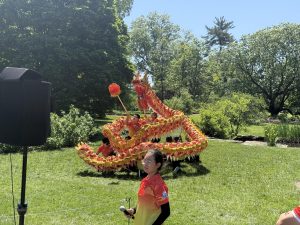
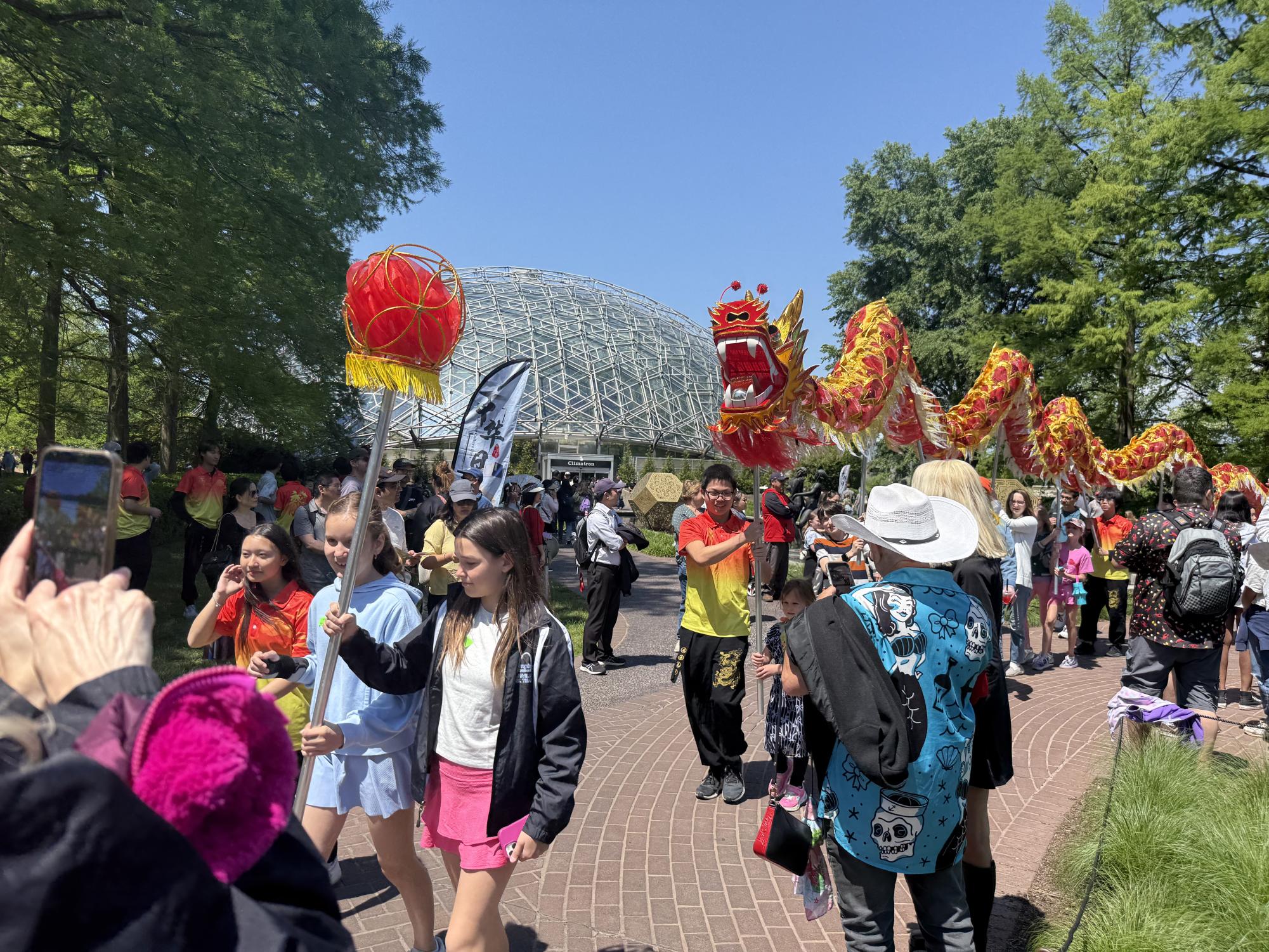
Spectators can join in, experiencing the dragon dance firsthand. The dance was simple, with the performers dipping their sticks occasionally to make the dragon wave. Photo courtesy of Lucas Ruan
-
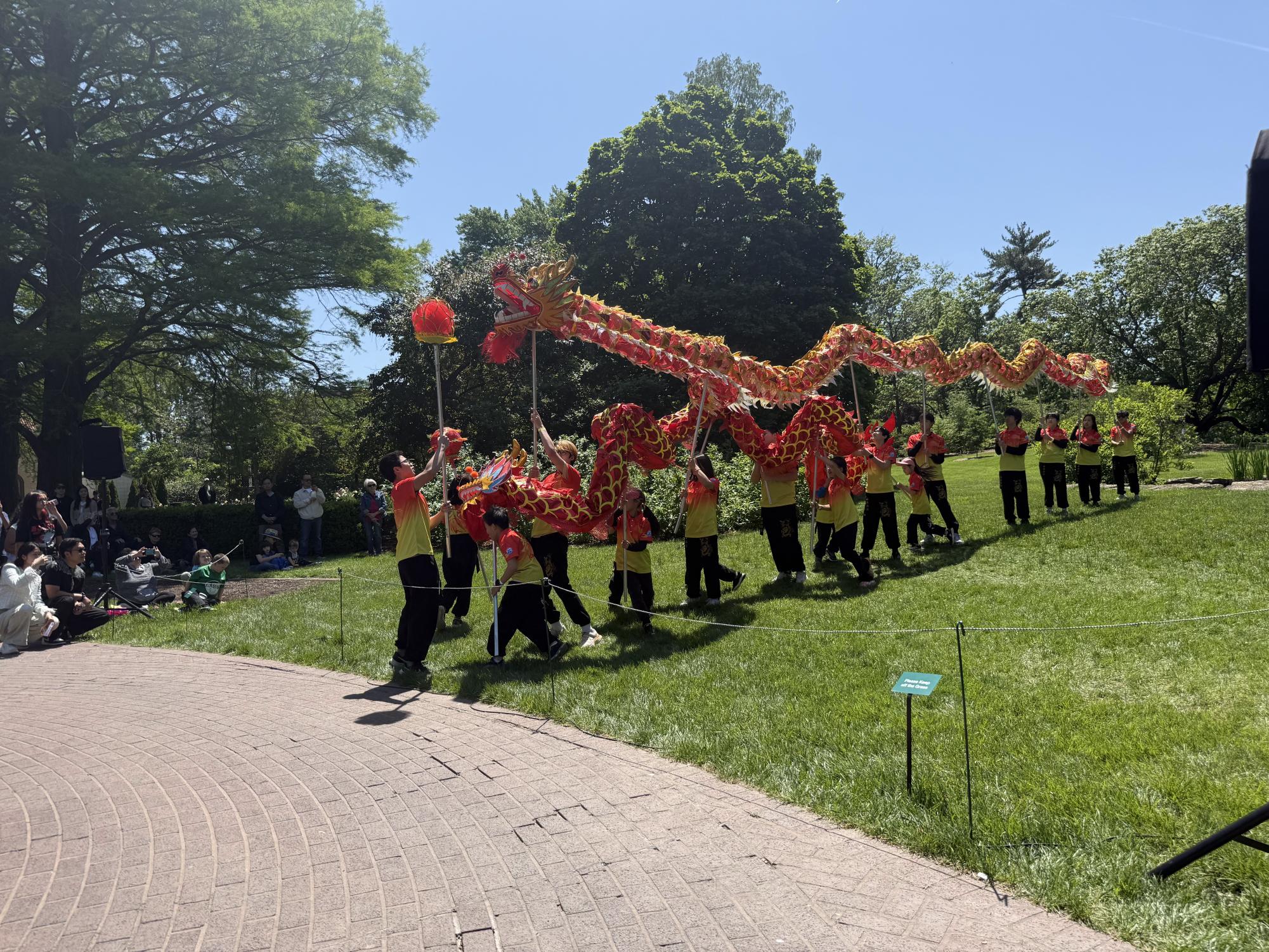
The two dragon teams collaborate as they pull off one of their harder feats. The baby dragon navigates around the performers to snake underneath the older group. Photo courtesy of Lucas Ruan
-
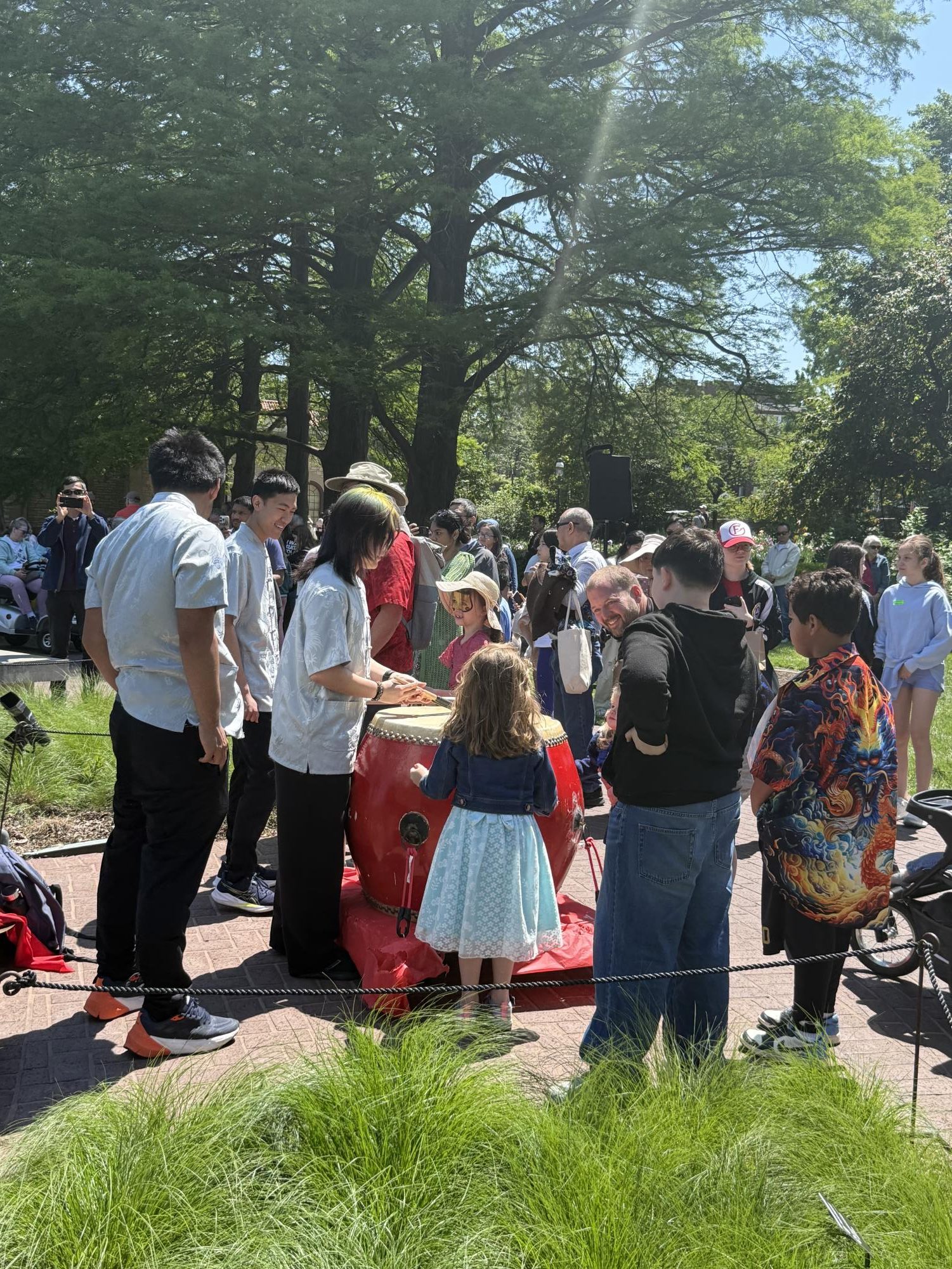
A small ensemble performs music to accompany the dragons’ flight. Photo courtesy of Lucas Ruan
-
-
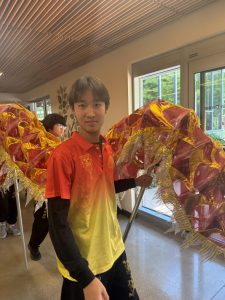
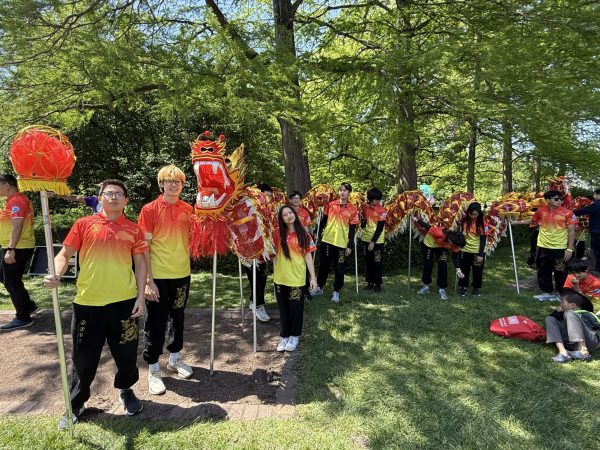
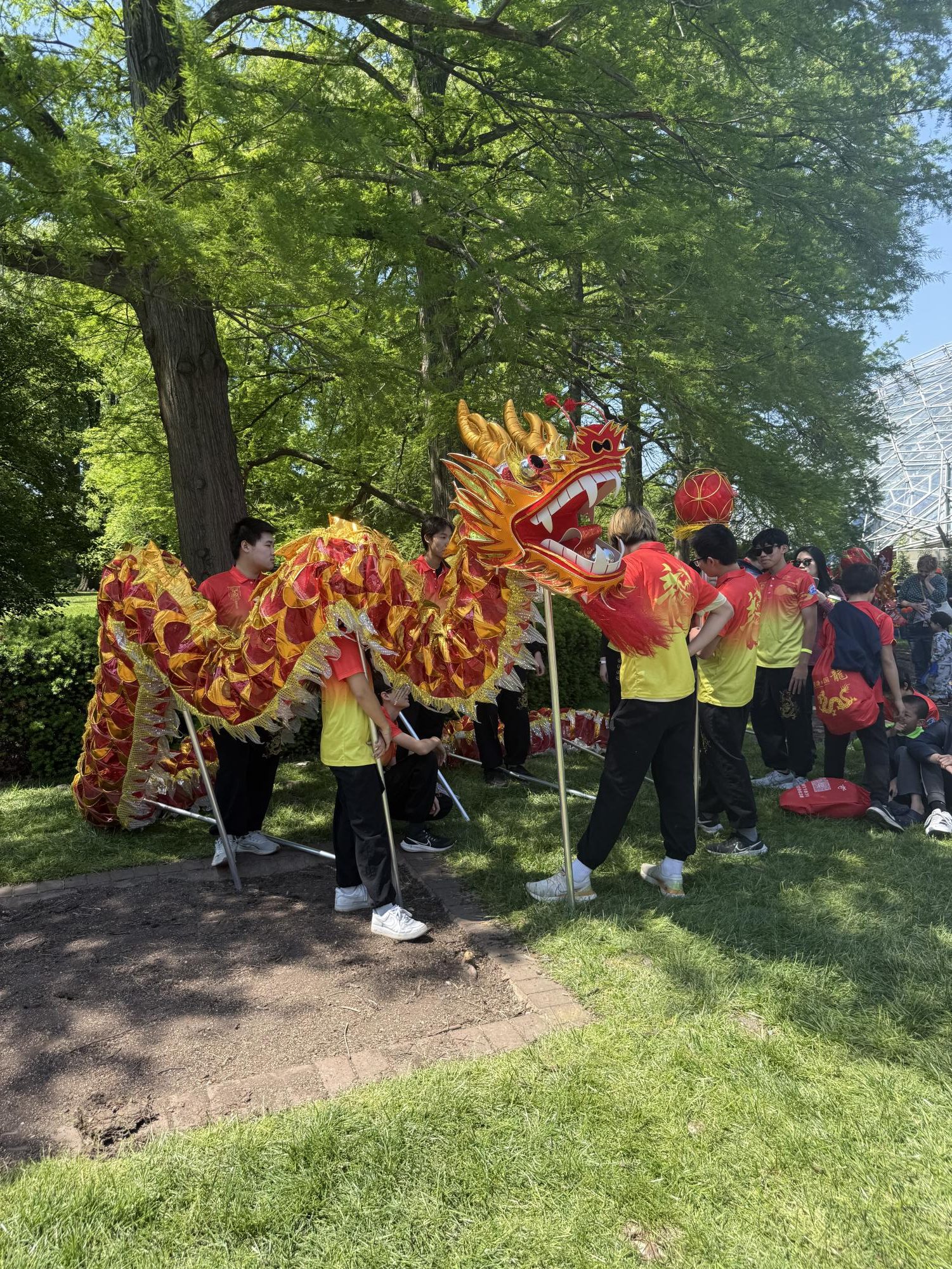
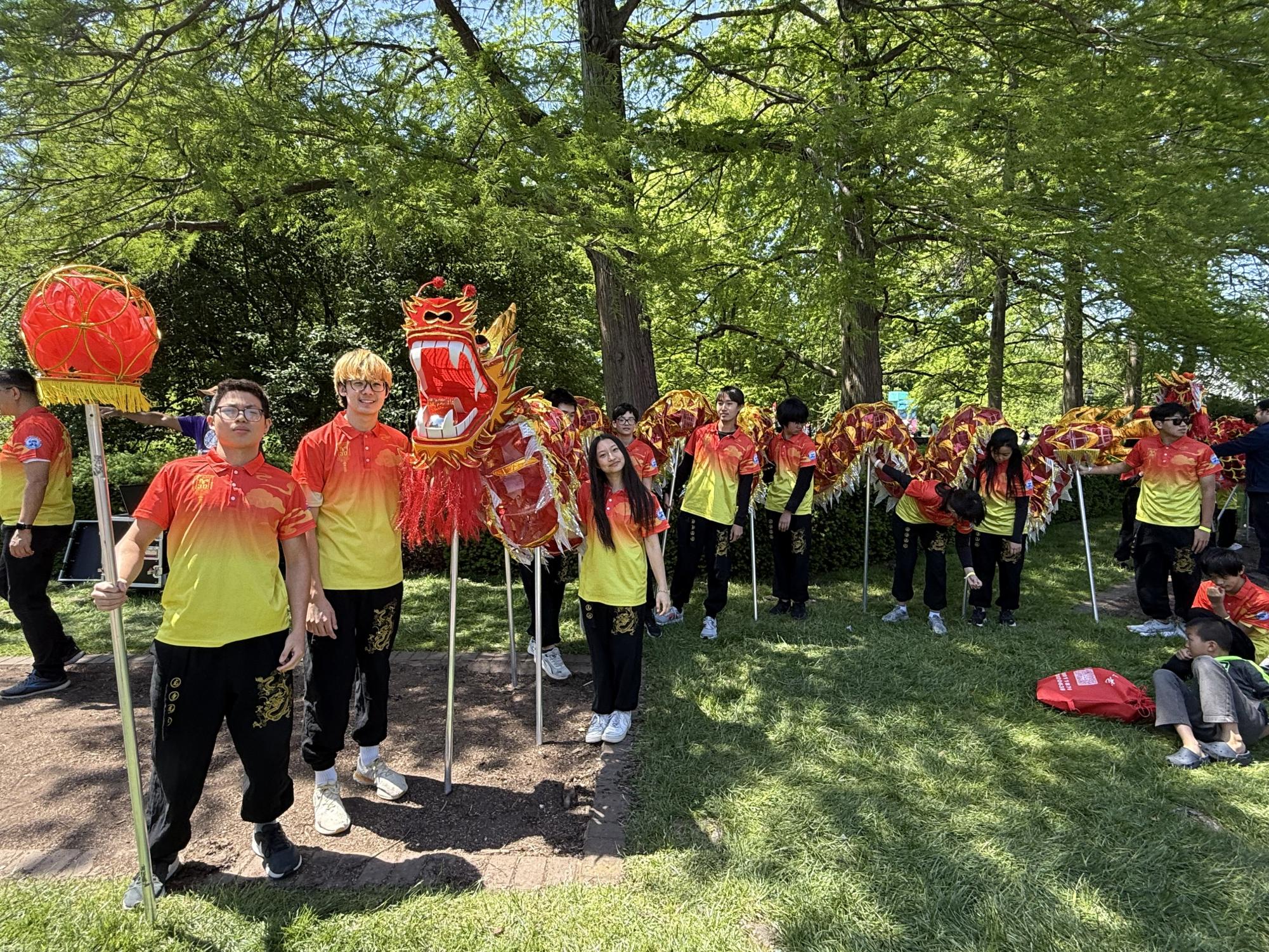
The dragon dance team convenes prior to their flashy performance. Photo courtesy of Lucas Ruan
-
-
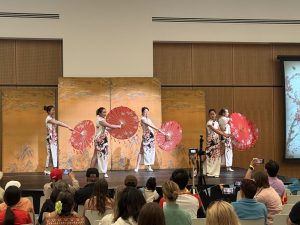
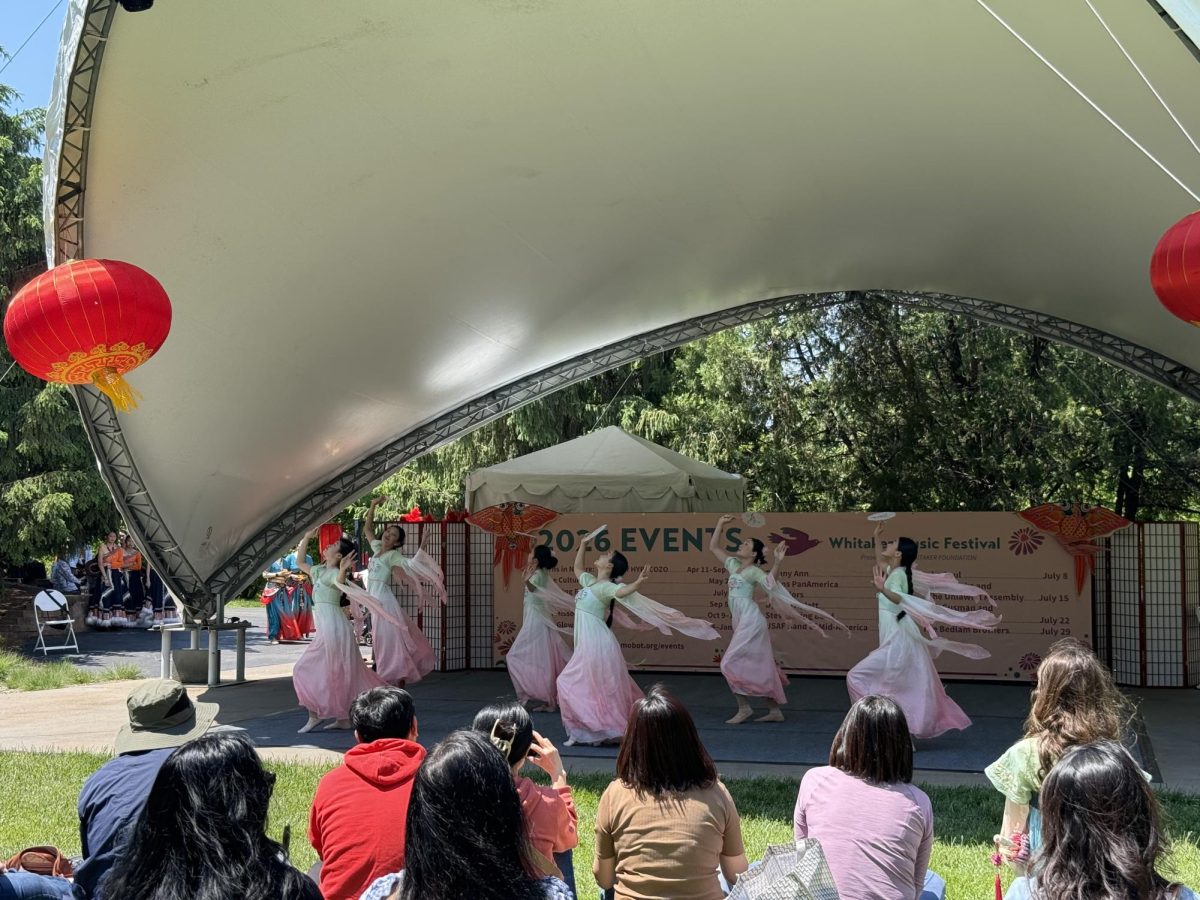
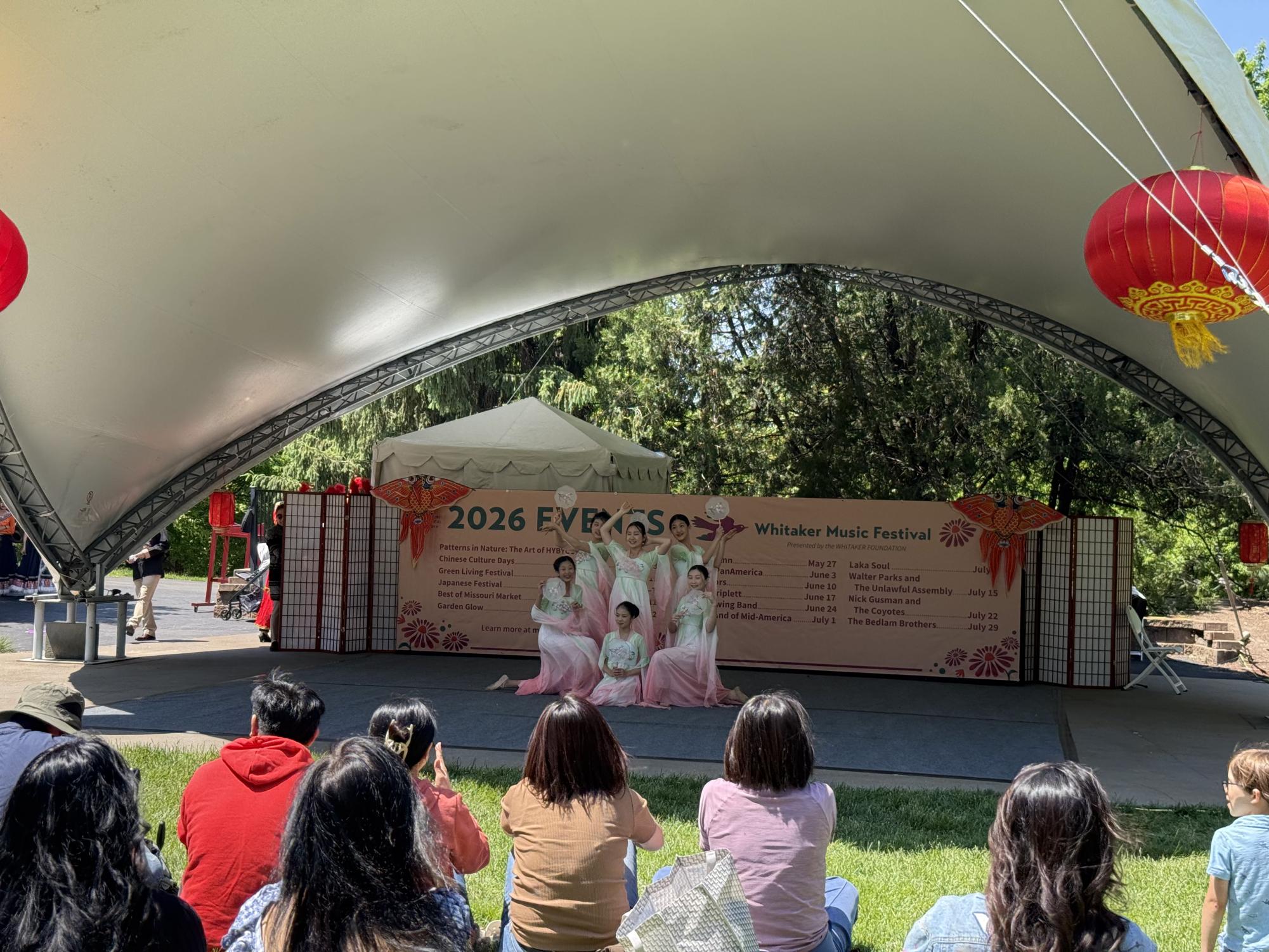
Freshman Maggie Zeng dances alongside students of the Modern Chinese School. This particular performance is representative of the traditional friendship formed between Chinese girls. Photo courtesy of Lucas Ruan
-
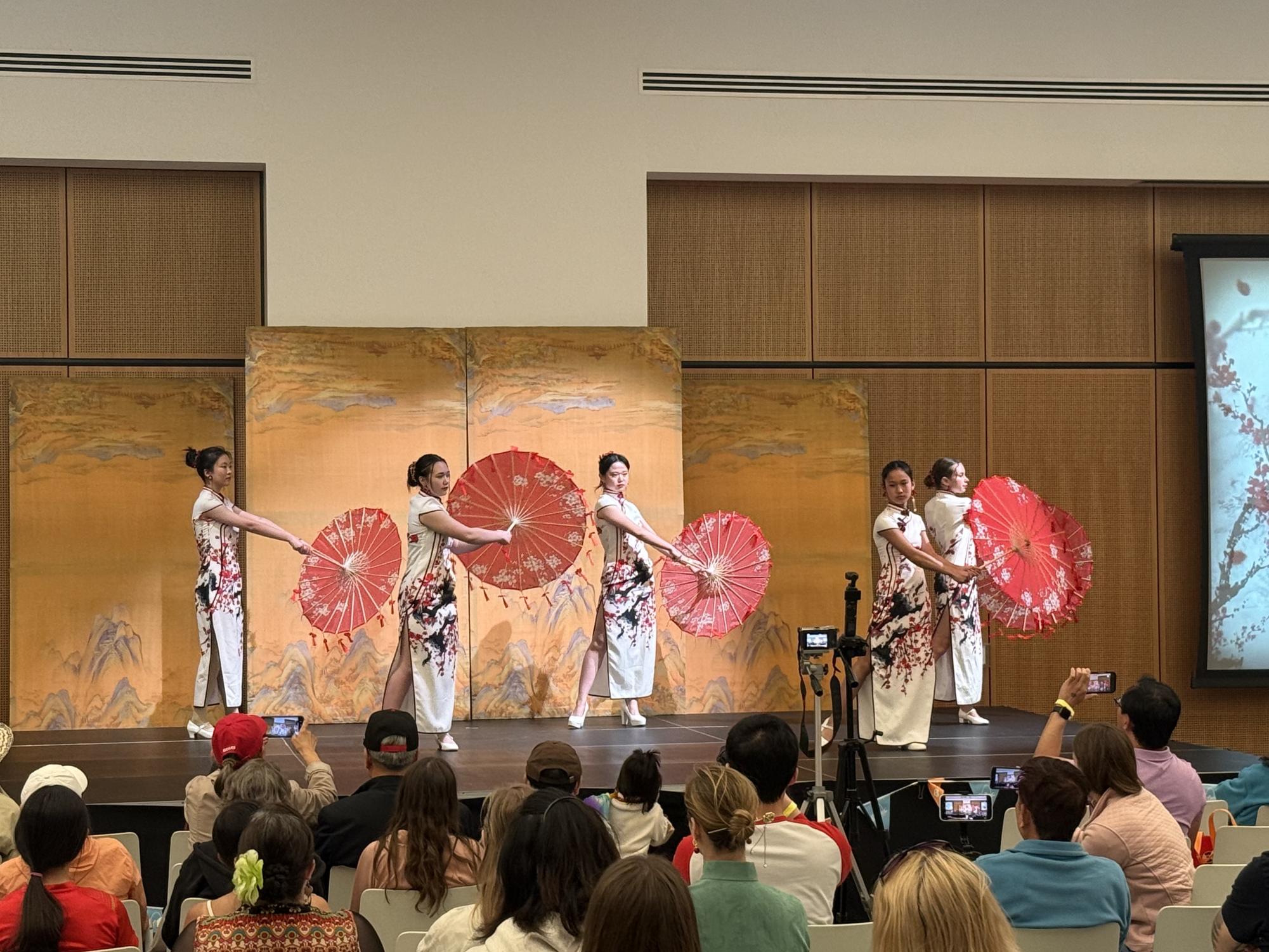
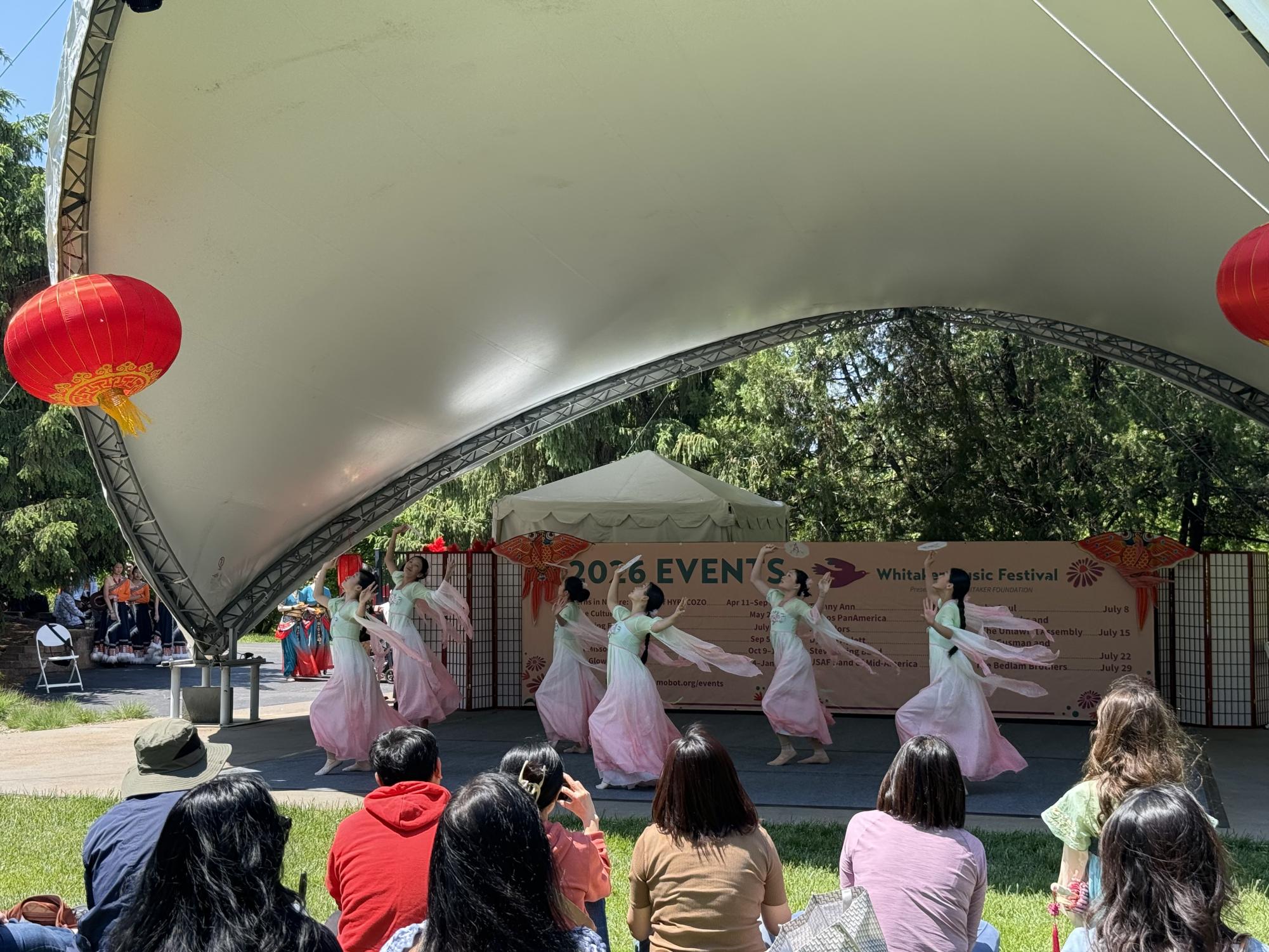
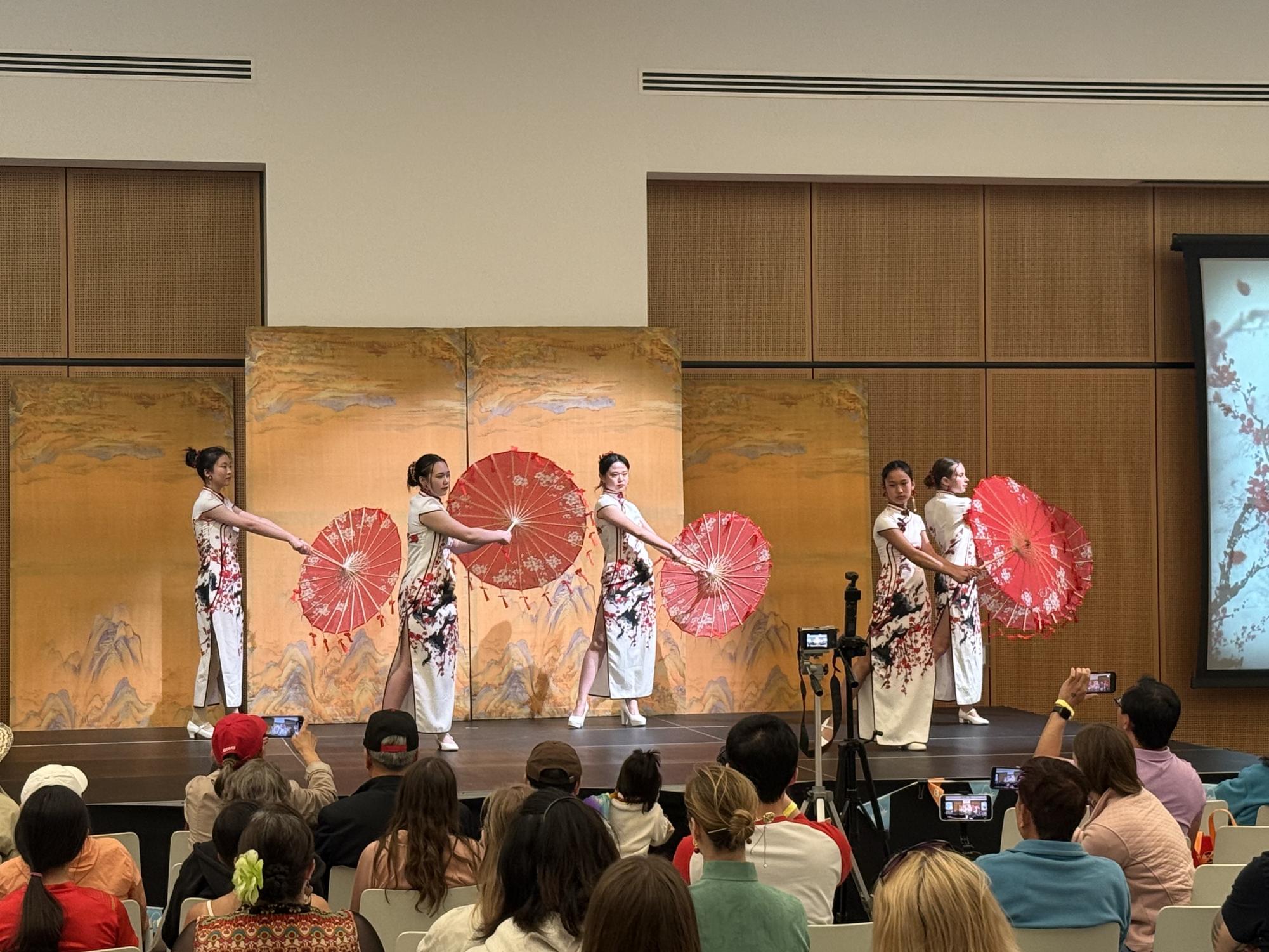
Performers dance with flat umbrellas at the Fashion China event in the Bayer Event Center at noon. Photo courtesy of Lucas Ruan
-
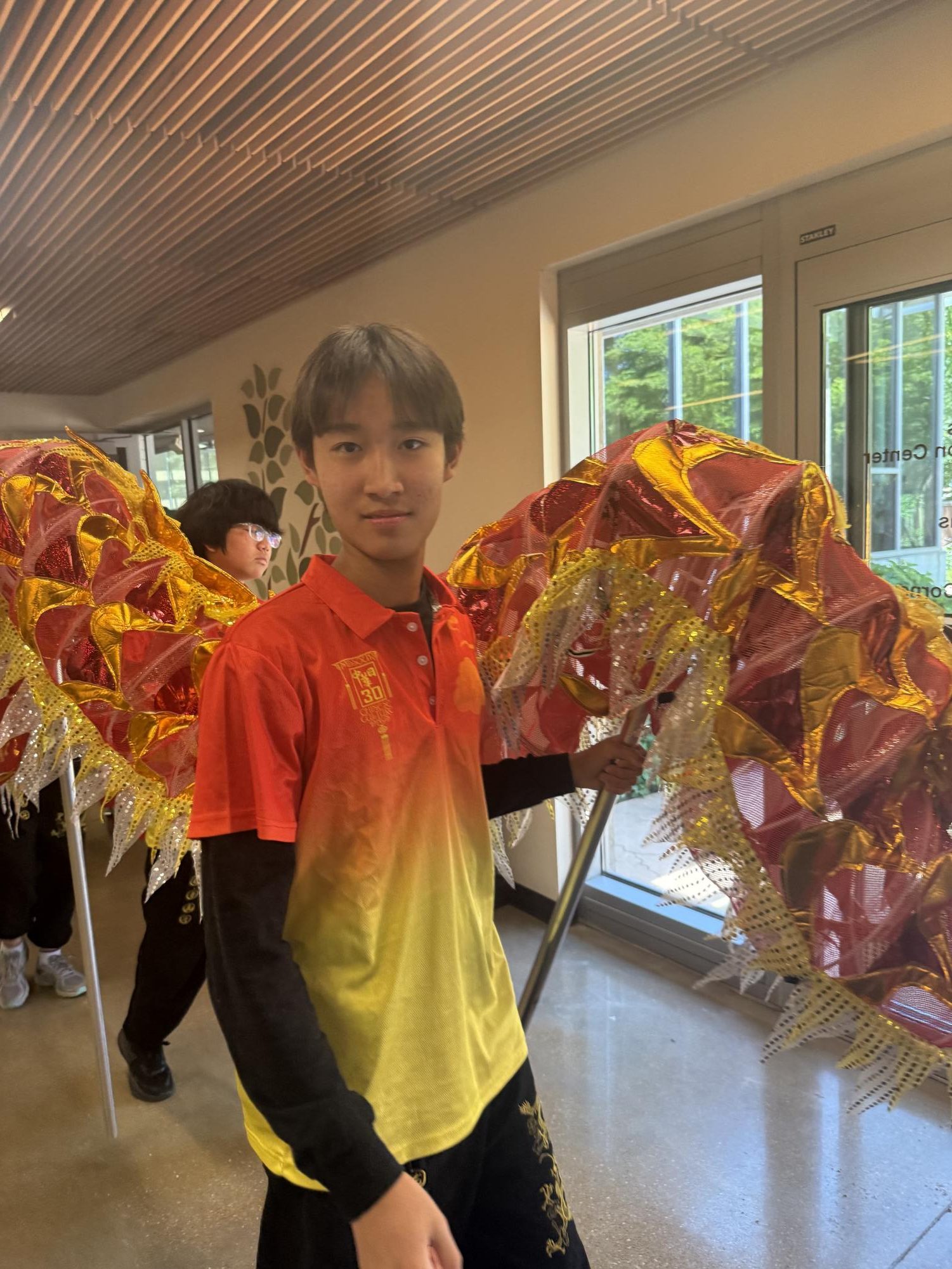
Sophomore Andrew Su takes up a middle section of the dragon. It functions with many performers holding sticks to prop it up, making it swerve through the crowd. Photo courtesy of Lucas Ruan
-
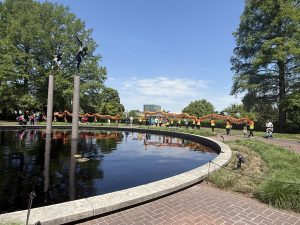
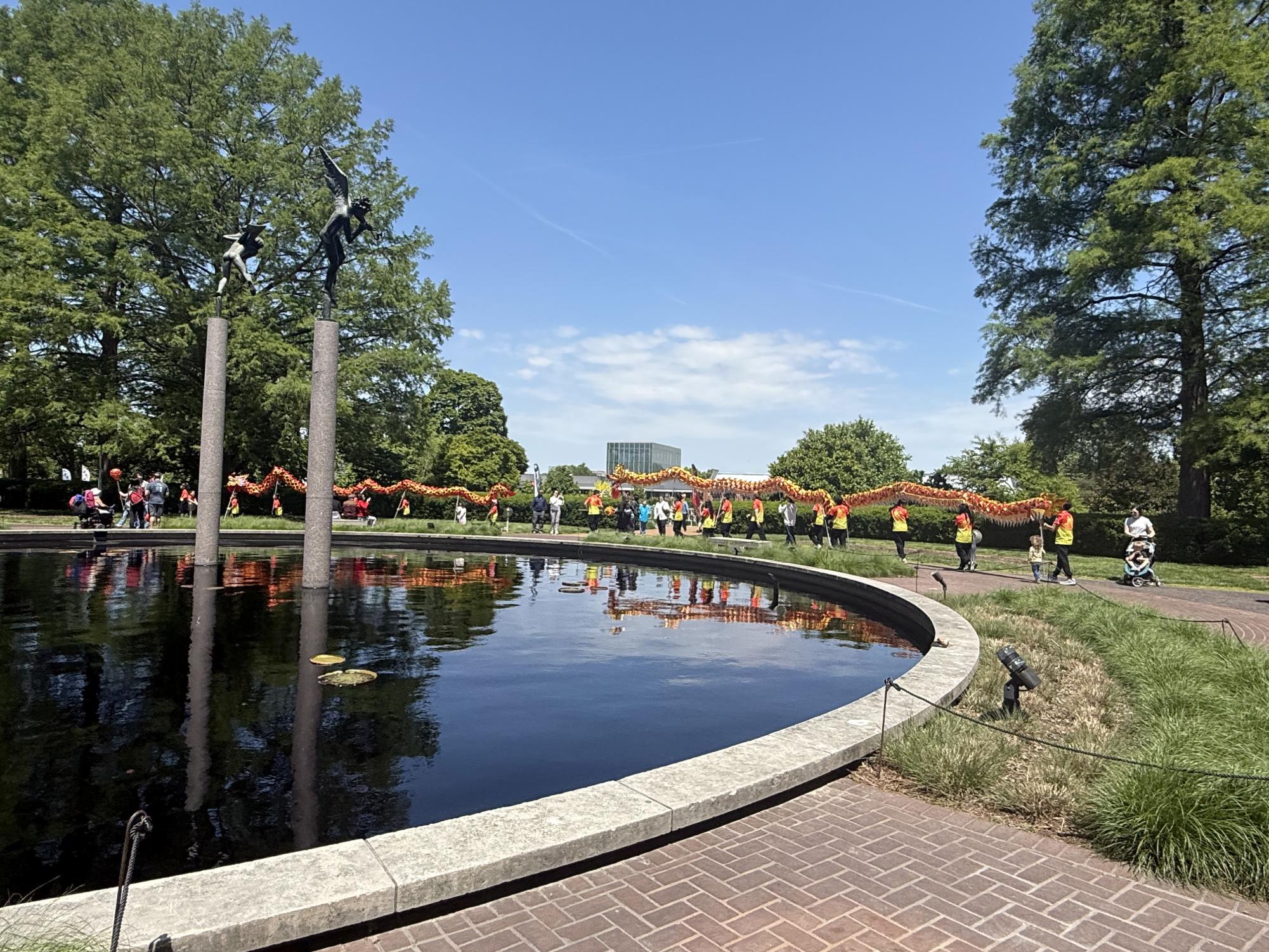
A dragon and baby dragon perform at the same time, dancing around the circular reservoir many times throughout the performance. Photo courtesy of Lucas Ruan
-
-