


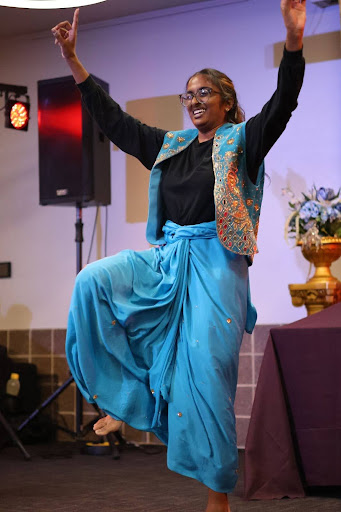
Walking into the Richmond Heights Community Center on Nov. 1, the Clayton South Asian Community was greeted by marigold-adorned statues of Hindu Gods and a sign-in desk. In the main room, a small photo stood framed by golden curtains and lavender flowers. On the other side of the bar were containers of traditional Indian cuisine, standing between a sea of sunset-colored round tables with small flower bouquets. This event was the annual Diwali gala and was hosted by the newly formed Clayton South Asian Community (CSAC), which was founded by a variety of South Asians seeking a way to connect.
“I love to meet people with whom I share a cultural heritage, and I think that is the best way for my children to experience it. I can only be one mom. My husband can only be one dad. To have a community, you need people to create that community, [and to do so means] creating opportunities,” co-founder of the CSAC Alpana Chandra-Mani said. “You just don’t walk up to somebody and say, ‘We are a community.’ You have to create an opportunity where people feel like a community.”
This opportunity took the form of a Diwali celebration for the second consecutive year, hosted by the CSAC. The community gathered to meet, dance, talk, and catch up during this celebration of light.
The Driving Force
The CSAC hopes to create a welcoming space, especially for those navigating their identities within the U.S. According to Chandra-Mani, who has been with the community since its formation, Clayton South Asians had no way of finding each other before 2024, as there was little to no opportunity for a connection, outside of an occasional picnic at Shaw Park. This lack of community led Chandra-Mani and others to form the Clayton South Asian Organization.
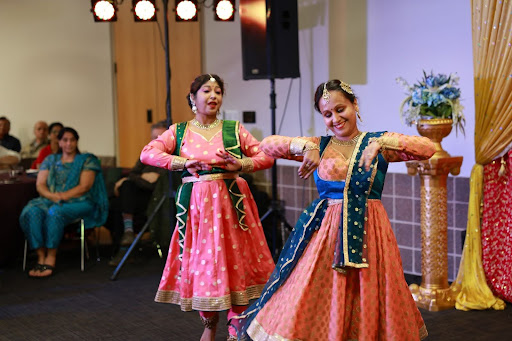
“The intent was to get people who share a South Asian cultural heritage in Clayton together. Diwali became a focal point, which gave us the reason to get everybody together,” Chandra-Mani said.
Divya Palamand, the CSAC’s treasurer, notes the growth, adding that while South Asian students graduate and move on, the CSAC has continued to extend its branches.
“When [my family] came to Clayton in 2013, there weren’t that many Indians. Now we have this huge committee of Indians, [so big] that we have no idea who they are. It was a great idea for us to mix and mingle, notice that new Indians have come here, and welcome them,” Palamand said.
Palamand highlighted the community’s goal to network families of all ages, including empty nesters and newer arrivals, around the shared love of celebration.
“Some of them, who are empty nesters, find themselves alone. They have no South Asian friends, [and] some of them want Indian friends, [because of] similar culture, and [Diwali] was a nice way to bring all of us together [in celebration]. In a way, Diwali’s Festival of Lights brings brightness to the Clayton families and also the South Asian community,” Palamand said.
Chandra-Mani finds that having this community creates a space to continue her culture in a place where it is not commonly celebrated, allowing her to pass on her traditions.
“When you live in the midst of your culture, everything is very natural. You don’t have to make an effort. It’s just part of your life,” Chandra-Mani said. “It’s in everybody that you interact with, in everything that you eat, and [when you are] in a country where that is not the mainstream celebration, you have to make an effort. I think for all people who emigrate, we have our cultural ties and those lovely memories associated with them, but it is an innate desire to pass them on to our children and our descendants.”
According to Chandra-Mani, the organization is meeting its goal. Using Diwali as a “focal point,” the organization has grown from approximately 110 people to over 200 in just two years.
Behind Closed Doors
Before the Diwali gala, the CSAC members found ways to celebrate the Festival of Lights in the comfort of their own homes.
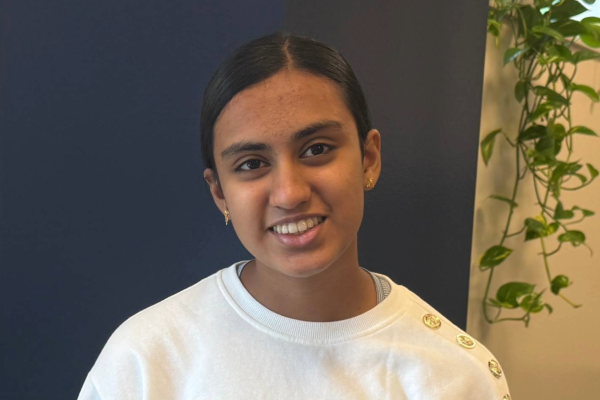
“Normally, we go to a Diwali party with all my family members, and we do puja for a long time, and then we eat food,” sophomore Manu McDowell said.
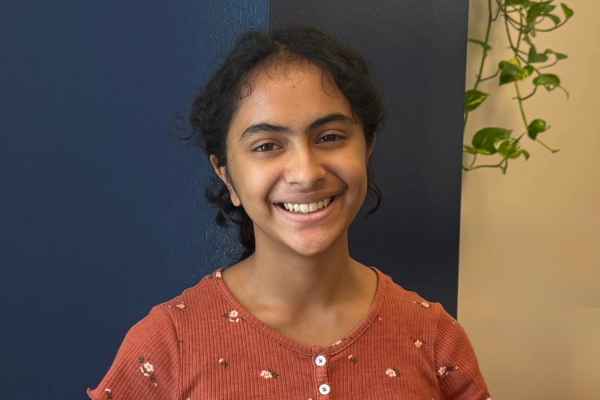
Sophomore Varun Singh also has similar traditions.

“On Choti Diwali, [which is] the day before Diwali, we do 10 to 15 minutes of a small puja, and I also receive some gifts from my family. Then on the actual day of Diwali, I usually meet up with extended family, like my cousins and all my uncles that live in St. Louis, and I’ll also call my grandparents, and my other side of the family in India,” Singh said.
Cooking different foods and delicacies is a vital part of celebrating the holiday, as highlighted by seventh grader Arianna Sambandam.
“We have a big dinner on a banana leaf, and it’s really fun. After dinner, we go outside into the backyard, and we do sparklers,” Sambandam said.
Junior Sritha Rathikindi highlights how food plays an important role in celebrating the holiday in her household.
“My mom always cooks some sort of Indian dessert, and then we always light [diyas] because it’s the holiday of light,” Rathikindi said.
For McDowell, who is of mixed heritage, Diwali is a way to connect with his Indian culture.
“I’ve been celebrating with my family since I was young, and it brings me closer to my Indian side, because my mom [is] Indian, and my dad [is] Black and Christian. Diwali and Holi are really the only Hindu holidays we celebrate as a family,” McDowell said.
Despite these rich home traditions, Singh feels that many of his classmates are unaware of the holiday.
“They’re not really educated about what it is,” Singh said. “It’s like they don’t even know what’s going on. There are probably so many of my friends and other kids that don’t even realize there [is] value [in celebrating Diwali].”
The lack of visibility extends to the school environment, where there are few South Asian peers. According to 2020 data from the U.S. Census Bureau, only 12.8% of the Clayton community identifies as Asian, which is an umbrella term that includes South Asian, so the percentage of South Asian individuals is even smaller.
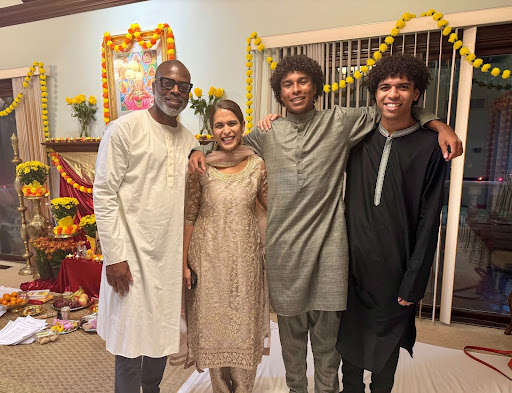
“I personally feel connected, [even to a small community]. There are a couple of other ethnic groups at my school who feel more or less connected. I think that [there aren’t many] South Asians at school, but we all know each other, and we all talk to each other, [and] say hi,” Sambandam said.
Singh compares the overall lack of South Asian diversity at school to the overall trend in other St. Louis high schools.
“I have a lot of [South Asian] connections at Marquette, Lafayette and the Parkway schools who have a stronger sense of community among them. I don’t really feel that [at Clayton],” Singh said.
The issue of identity amongst South Asian students extends beyond school for McDowell and Singh, internally.
“When I go to gatherings with my parents’ friends and all the kids that they have, I feel really connected, because they’re all in the same kind of situation I am, [and] they understand the culture. They can speak a little Hindi, but they’re not too involved,” Singh said. “It’s awkward when I’m standing out as someone who doesn’t know everything about it, but then that’s where I feel comfortable. But when I go to India, for example, my pronunciation in Hindi is not very good, and I immediately stand out as someone who’s not really ‘Indian.’ So I do feel a little out of place there.”
McDowell emphasizes this external feeling by describing how it shapes his family interactions.
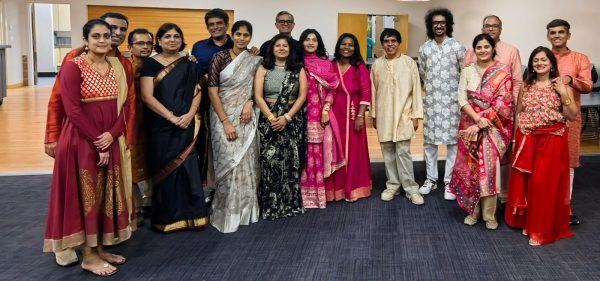
“At parties, because I don’t know Hindi and might not look as Indian as my family members, I’ve kind of felt out of place. I don’t know what they’re saying, [when] they’re in puja, or what they’re singing, so that’s made me feel [out of place],” McDowell said.
Rathikindi has a similar outlook on feeling connected to others in the community, and speaks about how this connectivity affects her relationship with her culture.
“There’s such a sense of disconnect with the South Asian community in Clayton because there are so few of us, [that] it’s not really there. I have friends all over the St. Louis area who have such a sense of community. In Kansas City, the sense of [South Asian] community is insane; it’s very easy to be jealous of, because they get each other, and it’s very strong. I’m not saying that I don’t [feel] a sense of community in Clayton. I definitely do as a whole; I [generally] feel like I belong. But when you talk about the specific South Asian aspect of it, [it feels like] there’s just not a community to be a part of,” Rathikindi said.
Chandra-Mani adds to the sense of how integral the community is in celebrating holidays, especially when it’s not commonplace.
![Registrar Lois Stiegemeier gives her daughter an inspirational speech to remind her of the uniqueness of every human, that she has higher significance to this world then she realizes. As a parent, Stiegemeier wanted to ensure her children went into the world with a positive attitude. “You are worth more than you [know]. Don't settle for less,” Stiegemeier said.](https://www.chsglobe.com/wp-content/uploads/2026/05/Screenshot-2026-05-18-11.27.23-AM.png)
![Sophomore Adam Gallegos walks his first-ever runway for Dolce & Gabbana. “When I saw a picture on the Vogue website of me, [I thought] this can't be me. This can't be real,” Gallegos said. “That picture to me will always be crazy.” Dolce & Gabbana Fall 2026 Menswear Look 51 / 100
Photo by Isidore Montag, Vogue, ©Condé Nast](https://www.chsglobe.com/wp-content/uploads/2026/04/image4-960x1200.jpg)
![Dorsey teaches his third-period geometry class on Thursday, April 9. "I enjoy that [the students] are willing to get up, work at the whiteboards and collaborate," Dorsey said.](https://www.chsglobe.com/wp-content/uploads/2026/05/IMG_9493-868x1200.jpg)