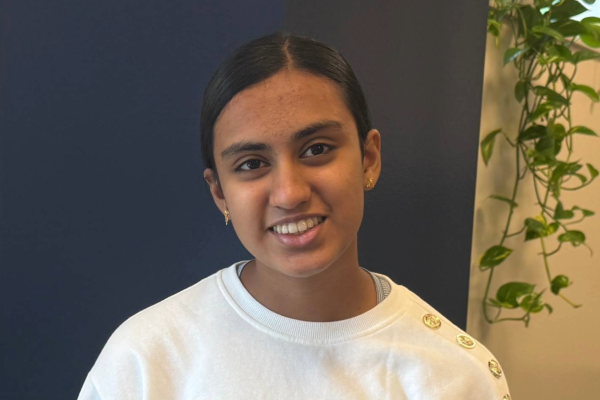


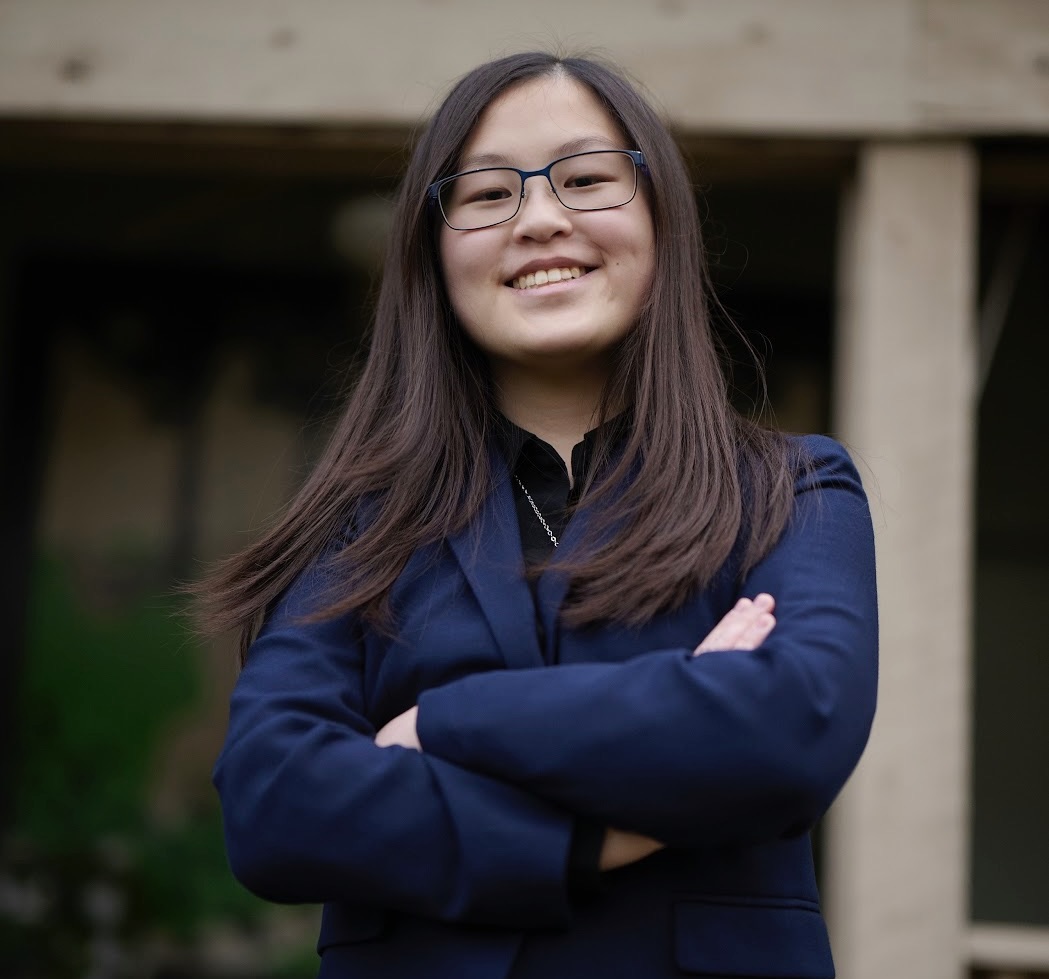
Following persistent symptoms of nausea and dizziness, sophomore Sabrina Perng was diagnosed with Type 1 Diabetes (T1D) in 2018. For Perng, this marked a drastic life change.
“I was diagnosed in second grade [and] I started with finger pricks, insulin pens—all of the basic stuff [for treatment],” Perng said. “But I was lucky enough to have very great health providers and have my parents walk me through upgrading to devices such as a continuous glucose monitor and an insulin pump.”
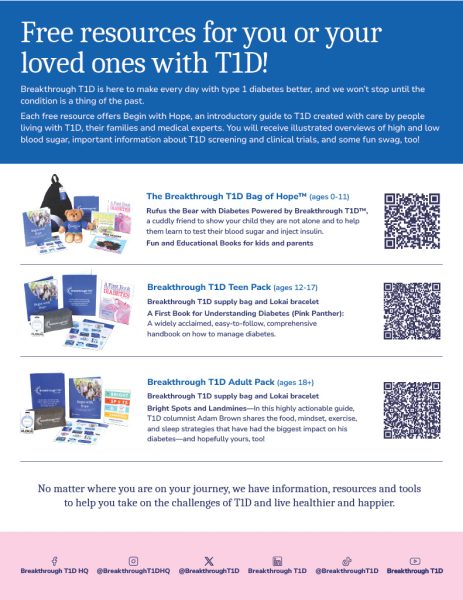
Perng learned about the nonprofit Breakthrough T1D when they reached out to her shortly after her diagnosis. According to the American Diabetes Association, 40 million Americans have T1D, and Breakthrough T1D focuses on raising awareness and funding to address it.
“They sent me care packages and helped talk my family through how to live life now that things have changed,” Perng said. “They’ve inspired me [to help other people], because I’ve seen what they can do. [Their] mission is to cure T1D, and the way that they do that is through fundraisers [and] spreading awareness to allow more research to be done in hopes of one day having a diabetes free world.”
This led Perng to become a Youth Ambassador for Breakthrough T1D’s St. Louis chapter.
“Our Youth Ambassadors are typically children and teens ages five to 18. They raise awareness, share their stories and support the community through local volunteering and fundraising. They put a face to the disease, which helps others make a personal connection to our mission,” Chris Reilly, the Community Engagement Manager, said. “They also show our community that while T1D certainly has its challenges, it doesn’t stop our remarkable ambassadors from [achieving] excellence in their interests.”
Reilly works alongside Perng to educate the community on the importance of T1D and its prevention.

“The most important part of my role is making sure that families and individuals who are newly diagnosed are connected to our support, educational resources and caring community,” Reilly said. “We provide follow-up support, not only through our staff team, but also through a program where our peer team of Outreach Ambassadors (OAs) reaches out to each one of these families to provide mentorship and reassurance. They don’t give medical advice. They’re individuals who either have T1D themselves or a close family member and understand the 24/7 demands of this autoimmune disease.”
Reilly emphasizes the importance of recognizing the differences between T1D and Type 2 Diabetes (T2D). T1D is an autoimmune disease that occurs when a person’s immune system attacks their pancreas, the organ responsible for maintaining glucose levels in the blood by producing the hormone insulin, and T2D is a condition where the body develops resistance to its own insulin, due to environmental and lifestyle factors.
“Two continuing misunderstandings are that Type 1 and Type 2 are the same disease [when they are not],” Reilly said. “Diabetes needs to be identified correctly and treated appropriately, or it can be very dangerous and even life-threatening.”
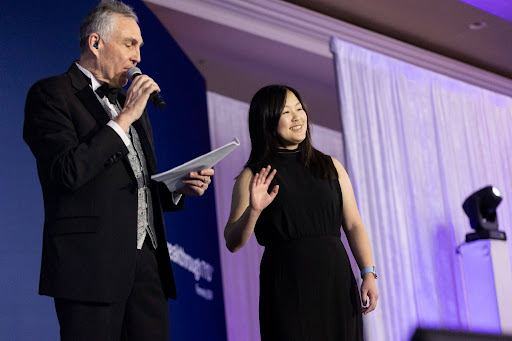
Breakthrough T1D holds events around St. Louis to raise awareness and to provide people with a fun time. Perng describes her role as a Youth Ambassador at these events and how they help inform others about T1D.
“My first event was the Breakthrough T1D walk in St Louis. The Youth Ambassadors went up there [and] talked to people who were there [and] cut the ribbon to start that one-mile walk,” Perng said. “Recently, we also had a gala, [and] the Youth Ambassadors helped record videos to say ‘Hey, thank you for being here. Thank you for contributing. Here’s what it’s for, and here’s why it’s important to us.’ We represent the people who are benefited [from] what we do.”
The Breakthrough T1D Gala in March raised $1 million toward a diabetes cure.
“We did a lot of previous reaching out [and advertising] [to] sponsors for our event. We had a lot of people who cared about our organization [and] our cause, and we auctioned off items. We had visits to an Italian villa, a puppy and we also had a pizza party [that] you can call to your home or any other location within the next three years,” Perng said. “But there were also smaller things, such as raffles, where you could enter if you donated $100 and similar promotions, [and where] you can donate for the sake of donating.”
In acknowledging the success, Perng also recognized the challenges of being part of these opportunities and that the root of the problems lay in education and funding for the cause.
“For the walk, my family and I needed to fundraise $1,000 for our team specifically. So we learned how to reach out to people, how to encourage them to donate and how to make a concise, meaningful message to [our community],” Perng said. “For the gala [and] the walk, it’s a lot of learning [about] how to be a representative, how to be the life of the event [and] how to embody [it all].”
Perng’s goal is to keep steadily raising money to fund research.
![Registrar Lois Stiegemeier gives her daughter an inspirational speech to remind her of the uniqueness of every human, that she has higher significance to this world then she realizes. As a parent, Stiegemeier wanted to ensure her children went into the world with a positive attitude. “You are worth more than you [know]. Don't settle for less,” Stiegemeier said.](https://www.chsglobe.com/wp-content/uploads/2026/05/Screenshot-2026-05-18-11.27.23-AM.png)
![Sophomore Adam Gallegos walks his first-ever runway for Dolce & Gabbana. “When I saw a picture on the Vogue website of me, [I thought] this can't be me. This can't be real,” Gallegos said. “That picture to me will always be crazy.” Dolce & Gabbana Fall 2026 Menswear Look 51 / 100
Photo by Isidore Montag, Vogue, ©Condé Nast](https://www.chsglobe.com/wp-content/uploads/2026/04/image4-960x1200.jpg)
![Dorsey teaches his third-period geometry class on Thursday, April 9. "I enjoy that [the students] are willing to get up, work at the whiteboards and collaborate," Dorsey said.](https://www.chsglobe.com/wp-content/uploads/2026/05/IMG_9493-868x1200.jpg)