
Adam Watson (00:00) Welcome back to “Simplifying the State,” the podcast where we break down politics so you don’t have to try to figure out why the race for Senate is suddenly looking competitive.
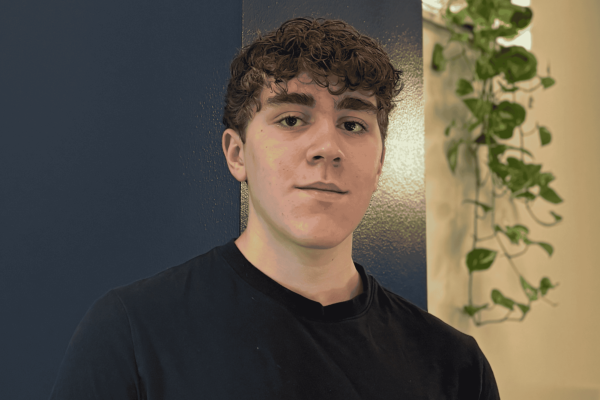
Adam Watson (00:02) As always, I’m Adam Watson.
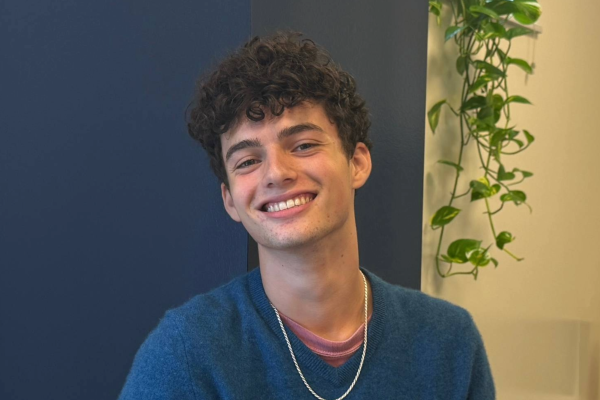
Luciano (00:10) And I’m Luciano Perman.
Adam Watson (00:12) All right, before we start, please rate us and follow the podcast wherever you are listening and share it with anyone you think would enjoy it, like Senate Majority Leader John Thune, who, you know, after the results of last night, might be sweating a little bit.
Luciano (00:20) He’s looking. He might be. I mean, should we just jump right into it?
Adam Watson (00:27) Yeah, all right. So for those who haven’t been tracking it, big news out of Texas last night. So there was a primary there, and then there was also a primary in North Carolina, which we’ll talk about a little bit later. But basically, Texas state Rep. James Talarico won his primary by about 6 points. He was again up against current U.S. House Rep. Jasmine Crockett. It was projected to be a close race. It wasn’t decided until pretty late. The Republican primary, however, has gone to a runoff. So there were three candidates. None of the three secured 50%. So now it’s John Cornyn, the incumbent, versus Ken Paxton, the current Texas attorney general. So right out of the gate, I’ve been saying this for a while. I think if Talarico won his primary, this race would be competitive. Now that he has, I think, you know, it’s Texas, but I think there’s a chance that Talarico can flip Texas blue. What do you think?
Luciano (01:19) I’m inclined to agree. I feel like there’s a little part of me that’s like, is this just like 2020 hype where it’s like we overestimate everyone in the polls and then it’s like, “Oh, actually he loses by 10?” But I think we have a real chance. And I feel like last night more than anything showed that because you saw a massive turnout among Democrats, more so than Republicans, for the first time in I think like 20 years. And just like the insane enthusiasm around Talarico, especially with independents.
Adam Watson (01:25) Yeah. Mm-hmm.
Luciano (01:49) Like independents and moderate Democrats, even people on the progressive side of the Democratic Party, like Latinos, white people, Republicans even, like he’s enjoying a crazy amount of support from all over Texas. And I feel like, depending on how the runoff goes for the Republican Party, we could see Texas shift blue. And whether that’s enough to flip it, flip it, or we get in the realm of competitiveness, I feel like that’s still —
Adam Watson (02:19) Mm-hmm.
Luciano (02:19) It’s still going to be really good for the Democratic Party moving forward, I feel like. Yeah.
Adam Watson (02:21) Yeah. I mean, I feel like aside from the Senate race, this is going to go kind of far out from the midterms, but after redistricting in 2030 with the census and everything, the Democrats are going to need to make either Texas or Florida competitive. Because with the redistricting, even if they get all the Blue Wall states, that’s still not going to be 270. So they need to start focusing on those states. And I think this could be a good chance to start.
Luciano (02:30) Okay.
Adam Watson (02:51) Going back to the Senate race, I think that Democratic turnout last night is indicative of a Democratic voting base that is eager to vote in something. Even if it’s a primary, they are fired up. They want to turn out. They want to vote. They want to express their displeasure with the Republican Party and with, I think, Trump in particular, over some of the actions he’s taking. And I think that’s going to be really good. I think that—
Luciano (03:03) Yes. Mm-hmm.
Adam Watson (03:19) Talarico’s strategy has the best chance of winning because his strategy is basically to create a really large tent and get as many people in as possible. I think he’s in a really good position to connect with Trump-curious voters, to connect with voters who voted for Trump in 2024 because of the economy, but who are now like, “I don’t like what he’s doing, but I’m not sure if I want to vote for a Democrat.” I think he has a really good chance of being able to break through with enough of them to really make this race competitive. And I think that’s one of the big reasons that Talarico was the preferred choice in that primary.
Luciano (03:58) Absolutely. I think going back to what you said about the big tent, it was Elizabeth Warren who was quoted recently, saying the Democratic Party needs to become a big tent party again. And the pole of that tent needs to be affordable. That is the rallying cry that I feel like Talarico used a lot. And I feel like while Crockett had agreed on a lot of the same things, I feel like Talarico attacked it from a more populist angle. And I feel like that’s why he was able to secure so many more votes—200,000 more votes than Crockett.
Adam Watson (04:09) Yeah. Yeah. Mm-hmm.
Luciano (04:27) And again, energize the space and get people out to vote and get people excited, especially young people. It’s because he focused on the issues that actually matter. And I feel like there’s a good Instagram account, too. And it’s called Stocking the Capital. I love it a lot, but it’s a little silly; they have a political integrity pledge. And it’s like, if a candidate promises to end congressional stock trading, overturn Citizens United, and end the revolving door of lobbyists and corporate PACs—or not take any money from corporate PACs—then they get the political integrity pledge. And I think Talarico took that pledge and he ultimately won the election. It’s because people value integrity, and they value affordability. Those are the two lessons I feel like we should take away from this election. It’s the candidates—
Adam Watson (04:58) Mm-hmm. And he didn’t. Yeah. Yeah.
Luciano (05:15) or people like candidates who argue for the issues that they really care about. And they actually put their money where their mouth is. I feel like Crockett taking thousands of dollars from corporate PACs, especially like Lockheed Martin, AIPAC, stuff like that, is a poison pill for her. You’re seeing that all across the country, but I feel like Texas exemplified that a little bit. I mean, I love to hear your thoughts on that, but I just think that combination of those two things really pushed Talarico over the finish line.
Adam Watson (05:25) Mm-hmm. Yeah. Yeah, I mean, part of this goes to one of the big things people talked about when they were deciding about who they were going to vote for in this primary: electability. And I mean, it’s a primary electorate, so they’re a little more tuned into politics, and they’re watching what’s happening. And I think that there were two different sides of the electability argument. There was the James Talarico side, where it’s like —
Luciano (05:53) Mm-hmm.
Adam Watson (06:06) I think he can appeal to those moderate Republicans. I think he can build a wide tent. And then there was the Jasmine Crockett electability argument, which is like, she’s really good at getting attention. She can keep focus on herself and all that stuff. And I think that also connects with the idea and the argument that we as Democrats have been making: we want a candidate who is a fighter, right? But we haven’t really defined what that fighter looks like. Is it a fighter that goes after Trump exclusively, or is it a fighter that goes after the establishment, that goes after the really rich people? And I think that Talarico is the latter. I think Crockett is the former. And I think clearly Talarico’s argument went far, to your point about the political integrity thing and the economy thing. I think that, definitely, one of the biggest issues in America, if not the biggest issue, is affordability, right? I mean, you know —
Luciano (06:36) Mm-hmm. Yeah. Mm-hmm. Mm-hmm.
Adam Watson (06:58) Trump is not doing well on that. Republicans are not doing well on that. And outside of politics, people are hurting in their wallets. They’re seeing the gas prices go up. They’re seeing electricity bills rise as a result of all the AI data centers and other factors. They’re seeing grocery prices go up. They’re seeing all of this stuff largely due to corporate greed. And I think James Talarico made that argument and made the case of why he’s the best one to combat that. And I think when people see this economic disparity amongst their neighbors and amongst themselves, and then they see politicians who have hundreds of thousands worth in stocks and they see them getting all this corporate PAC money, I think they get upset because they think that they are also part of that establishment that is not doing enough to help them. And I think James Talarico—this has been the cornerstone of his campaign—is talking about how it’s not a divide of left and right, but a divide of bottom and top. And I think that’s really been a—
Luciano (07:44) Mm-hmm. Yes!
Adam Watson (07:57) And I think that’s an argument that helped him win this primary. And I think it’s an argument that could win him the general election.
Luciano (08:03) Yeah. I mean, and you see a lot of the mood right now is incredibly populist. I feel like in the country right now, people really do not like the establishment. I feel like every single Democrat who’s in a leadership position who trends more moderate is negative in the approval rating, and by a lot, too. I feel like you’re seeing general polls of Democratic voters who say they want Hakeem Jeffries out as House leader. They want Chuck Schumer to retire or get primaried by someone like AOC. You’re seeing—
Adam Watson (08:13) Mm-hmm.
Luciano (08:32) In many districts across the country, the words AIPAC, corporate PAC, and super PAC are becoming not just more well-known, but known as something that’s bad. I mean, if you look at the New Jersey 11th special election, the Democratic primary for that. There was a former congressman who took hundreds of thousands of dollars from AIPAC.
Adam Watson (08:41) Yeah. You—
Luciano (08:58) And then it was a lady who was anti-AIPAC, anti-establishment, pro-affordability, all this stuff, similar to James Talarico. And she won, and not by a lot, but she still won and outperformed polls. And then you saw this New Jersey congressman go to the news and write an op-ed about how AIPAC is a poison pill. It’s like these super PACs and these corporate PACs—getting any sort of dark money or getting any money from any corporation in politics —are traders of reputation, especially among the base, which, as you said, are the people who are more politically tapped in and are more likely to vote in primaries. And I think, again, you’re seeing a movement towards politicians who have integrity and relatability. It’s not 2006; we’re not putting candidates up on pedestals where they’re flawless and focus group tested and their polling numbers are good, and they have good name recognition. You’re getting real people. And I think that’s critical. Yeah, that was kind of the battle I saw between Talarico and Crockett. Talarico presented himself as this down-to-earth, relatable person, and Crockett branded herself as a firebrand against Trump. Yeah.
Adam Watson (09:58) Mm-hmm. Yeah, I think in the last 20 years, every time Democrats want to run a candidate or do an issue, they go through 50 rounds of focus groups and message testing. And then by the time it gets to the voter, it feels very artificial; it feels not real and like I can’t relate to this, even if I may agree with the messaging. But then you have these candidates and these issues that are just so organic and widespread in terms of how they’re felt by Americans. And I think that’s the way you build up a new Democratic Party that is focused on this economic populism, which is what most Americans care about. I mean, if you hear the word “democratic socialism” in Arkansas, you’re probably going to vote “hard no” against that. But if you take the time to explain democratic socialism and how the basics are covered by the government, you get a strong social safety net and affordable health care, then I think they would maybe start to come around. I think that economic populism is what’s going to help the Democratic Party. And I think that’s actually a good segue to move away from Texas and up to Maine really quickly. Yeah. So in Maine, Susan Collins has been in that seat for 30 years.
Luciano (11:17) Excellent. Yes.
Adam Watson (11:35) So right now, there’s a primary between two candidates: current governor Janet Mills and oyster farmer Graham Platner. In that primary, Platner does much better against Mills. The polling average is about 55% to 32% in favor of Platner. Yeah, it’s crazy.
Luciano (11:42) Yeah. Is it that high now? Jesus, my God.
Adam Watson (11:57) And then in the general election, it looks even better for Platner. I think he’s at 46.5% compared to Collins’ 39% in the most recent poll by Pan Atlantic Research with 810 likely voters. He’s at 44%, she’s at 40%, but about 16% is in the “other” category. So that can be other candidates or undecided. And I think that his whole message and brand have been about fighting against the establishment and building up this economic populist message and delivering that to the people of Maine. I think Maine, as a state, is really receptive to that. And I think that’s the winning argument in Maine. I mean, Mills, whether you support her as a politician or a person, she sort of represents this establishment and this moderate centrist class. Because she was endorsed by Chuck Schumer right out of the gate, and she was given the funds of the Democratic Senate campaign to help win her primary. And so she is sort of seen as this vehicle of the establishment, whereas Platner is more like a down-to-earth working class. And I think that’s going to help him a lot both in the primary and in the general.
Luciano (13:07) Yeah, I would agree with that. Platner’s up by 14 million points at this time. Well, as you’re seeing across the country, you’re seeing these Clinton-Obama-Biden era Democrats who are holding on to this older time where establishment meant good, and people liked technocratic, qualified people who are super polished. And those people won elections closely, but they won elections, especially in the suburbs and urban areas. And that was the strategy Chuck Schumer pioneered all the time: establishment people who have credibility and have been career politicians who fit their state and are relatively moderate. You’re seeing a pushback with Graham Platner and Susan Collins in Maine, Zohran Mamdani and Andrew Cuomo in New York, and Talarico and Crockett in Texas. Every single one of these primaries has been a microcosm of what’s going on in the Democratic Party right now. Do we continue to be the “not Trump” party, or do we shift towards economic populism and this new era of communication and people who are rough around the edges? Last night proved that style of politics, and that way of thinking works, and it can outperform expectations by a long shot. Yeah.
Adam Watson (14:45) Yeah. I think that’s something Democrats heard about Chuck Schumer pioneering that argument. West Virginia was a solid blue state for many, many years. And then the Democratic Party shifted its focus away from the working class and more to those suburban voters outside of the cities. And there was a quote from Chuck Schumer that for every two voters in West Virginia we lose, we’ll pick up three in the suburbs. And so you saw the Democratic Party shift away from these working-class voters and more towards the suburbs, moderate and polished. I like some of those politicians, and I think they did a lot of good things for this country, but I think their style of politics and what they are arguing for is not going to work in this political environment. And I also think it’s not what we need as a country. I think we need radical change when it comes to our economy because of the disparity we’re seeing between the top and the bottom. I think you have to fit the candidate to the state, and that’s kind of true in Alaska because the reason we are now possibly competitive in a state like Alaska is that we have Mary Peltola running there. For those who don’t know, she was their House representative. They get one statewide. And she’s running against Dan Sullivan. She is not like Mamdani or Platner, but she is sort of the Alaskan Graham Platner. Her views are very much Alaska-first, focusing specifically on the issues of Alaska, like fishing. Making sure they have a self-sufficient economy because they can’t get much from the Lower 48. I think we need to look at what kind of economic message is going to work best in the state that it’s in organically. We have to think about what’s going to win. Zohran Mamdani will not win in Alaska, and Mary Peltola is not going to win in New York. You have to pick and choose; it needs to be an organic candidate and an organic campaign.
Luciano (16:59) Absolutely. And I think Mary Peltola’s whole model for the Senate campaign is “fish, family, freedom.” And I love that so much. We need T-shirts that say: “Fish Family Freedom.” Seriously, I’m going to go on after this. Because that’s a killer motto to have for a T-shirt.
Adam Watson (17:07) Yeah, I loved seeing that. That was so cool. Yeah. I’m pretty sure she has some on her website. I might buy one, honestly.
Luciano (17:28) It kind of goes back to what you said: cater your messaging to the people who live where you’re running. With Zohran Mamdani, you saw free rent, universal childcare, and fast and free buses. That doesn’t work if there are no buses because everything’s full of polar bears and moose. And again, fish, family, freedom—I don’t see a lot of fish in New York City. I wholeheartedly agree that the candidate has to cater to the populace, but they have to have that level of relatability that you can’t get from a focus group or overthinking it so hard that you just completely fumble the bag, which we’ve seen many, many times with all sorts of candidates run by the Democratic Party. I think you have to separate that style of politics from the times because it’s completely outdated. And also the mindset of prioritizing the suburbs over rural areas—it’s not working. Blue West Virginia will always be in my heart and in my dreams. And I hope we can get back to that point someday. Is there a world in the next two years where we flip West Virginia? Absolutely not.
Adam Watson (18:32) Absolutely not, no. Even in my wildest dreams, that doesn’t happen. I dream about it very often.
Luciano (18:53) Believe you me, I am manifesting that every night before I go to bed. I’m praying to Jay Rockefeller. But with that kind of messaging and populism, can we win back areas like West Virginia? Maybe. I think it’s a real possibility. And Texas is how we test that. Does the politics of economic populism, relatability, and big tent work in a ruby-red state? If he wins, then I think that provides a lot of data and a very good model of what candidates in 2026 or 2028 should be like. And I think the Senate elections, especially in Texas, will really decide what direction the party takes come 2028. Do we keep going with people from California and New York, or do we pick someone from the middle?
Adam Watson (19:54) Yeah, I think it’s going to be a great testing ground. Most people probably know—at least most people who are as insanely tapped into politics as we have chosen to be—there is a war within the Democratic Party about which road to take. After the 2024 election, there were a lot of people who were saying we lost because we are too far to the left. We need to come back to the center on everything: economics, social issues, everything. And I think who wins in these elections is really going to determine what kind of candidate we’re going to see on the ticket in 2028. Because if Graham Platner and James Talarico and these progressive, economically populist candidates can win, then I think you’re going to see someone in 2028 who shares that economic populist message. I think you’re going to see that become the center focus of the Democratic platform. And personally, I think that should be what we do. That is the argument that seems to really be working. But that’s just going to provide evidence to the Democratic strategists about what kind of message is really going to work. Obviously, there are some races where you don’t have a giant progressive running—in North Carolina, Roy Cooper is still a really good candidate. I’m really hopeful that he’ll win. He does really well in polls and has been very good for that state. But again, it’s choosing the candidate that’s going to do best in that state and choosing the issues that matter to those people.
Luciano (21:41) Yeah, relatability is key. There was no question whether Roy Cooper was going to win that primary or not because he is such a household name in North Carolina. He has the name recognition of a moderate Democrat, but he is not the kind of person who will just run on experience and say, “I used to be in charge, so put me in charge again.” That’s going to be a real test of whether a moderate candidate can still win on affordability and relatability. Is that style of politics not just limited to the center-left or the Democratic Party? Every single poll has him in the lead by 14 million points. I think it’s going to be a wash, knock on wood for him. But again, that makes the Senate tighter. That allows more avenues for progressive candidates to come into these areas and do their thing and maybe win. Picking up places like Maine, Ohio, Texas, Alaska, and even Nebraska might be in play. Making the GOP more nervous is very exciting for Democrats and people who want to be able to afford groceries and gas.
Adam Watson (23:08) Yeah, Ohio is another one. Sherrod Brown is a big economic populist; that’s been his whole thing since he’s been running in Ohio. And I think that’s why he’s been able to—at least until 2024, “the dark year” for Democrats—hold on to that seat in a state that was trending Republican for several years. That economic populism kept him in that seat. This is separate but related: incumbency is no longer the boon we all used to see it as. In AP Gov, we learned about how the incumbent had a huge chance of winning, but I think that’s not true anymore. Because people see what’s going on with the economy and these corporate PACs, and they’re seeing all these government officials getting rich and corrupt. They’re seeing that the establishment and incumbency is not working for them. Outsiders are what they need. And that’s one of the big reasons Trump was able to win in 2016. He was seen as someone they could trust to not be corrupt, even if that trust was misplaced. People are really sick of the establishment.
Luciano (24:33) Yeah, absolutely. There are a bunch of articles in the Atlantic about how Gen Z hates voting for the people in charge. I think it’s not necessarily that incumbency is inherently bad; the incumbents that we have are just not great. A large majority of them are baby boomers or older, and you’re seeing a record number of them retire this year. They’ve done amazing stuff, but the style of politics is outdated and unrelatable. The decorum of politics was broken by Donald Trump, and that woke people up to the fact that you don’t have to be a five-term governor or 16-term senator to win elections and fight the good fight. You’re seeing a lot of people who are heads of a union or just working in state government running and winning. Incumbents aren’t doing their job; they’re taking money from corporate PACs and trading stocks. They’re not listening to their constituents, and they’re apathetic. Apathy more than incumbency is bad now. People are yearning for a paradigm shift in the way politics is done and how conversations and policy should be made. A lot of incumbents are cynical, and that apathy is going away. In the next 10 to 15 years, you’re going to see a lot of new people become incumbents, where the term is associated with helping the people.
Adam Watson (27:06) Yeah, the idea of that fading apathy is definitely true. Why now, of all times, is a congressional stock trading ban coming up? It’s because people are vocally pushing the government to ban members of Congress from trading stocks. You’re seeing that activism play out. To your point about the age thing, the average age of a House member is 57, and the average age of a senator is 63 or 64. Age inherently should not stop you from running—Bernie Sanders is still going strong and fairly connected to the people he represents. It’s about the ability to connect with the people you represent. I’ll take Nancy Pelosi as a test case. I respect her decision to step down. When you’re in a position of power for so long, it becomes harder to understand and empathize with what the average person in your district is going through. That disconnect, more so than age, is what is triggering people to call for older members of Congress to retire.
Luciano (29:14) Yeah, those are really good points. The ages are a crazy fact. I horribly mispronounced this name—I noticed you avoided it intentionally.
Adam Watson (29:24) Yeah, you’re braver than I am; I just didn’t even try.
Luciano (29:36) Everyone, feel free to correct me in the comments on how to phonetically pronounce this poor man’s name. Luciano butchers the guy who’s running in San Francisco’s name—that’s going to be the Instagram post. But yeah, age matters.
Adam Watson (29:44) In the comments, brutalize this man in the comment section. I beg of you.
Luciano (30:04) As you mentioned, Nancy Pelosi has done a crazy amount of good work.
Adam Watson (30:10) Obamacare was a big thing; she was a big reason that got passed.
Luciano (30:31) But her time is over; she’s 83. Her stepping down was a noble decision, and a record number of Congresspeople and senators are making it. It’s become such an overt trend that it has to be talked about. We haven’t had a president younger than a baby boomer in 34 years. Obama was on the cusp.
Adam Watson (30:50) Obama was like 40 when he was elected. He’s like 50 or something now. Hang on. Yeah, you were right, he’s on the edge, though.
Luciano (31:02) Boom, got it. Trump and Biden are from the Silent or Greatest Generation, the ones before boomers. As you said, the average age of a senator is 63 or 64, and that’s obscene. You’re seeing that divide where older people in the Senate are usually more moderate and establishment, like Chuck Schumer. Younger people are more progressive and pushing for the Democratic Party to be more than just “not Trump.” All of these things encapsulate the same issue: we’re split between keeping things how they are or changing direction completely. Affordability works, young people can be voted in, and they don’t have to be establishment politicians. Progressive policies actually work, and people are waking up to that.
Adam Watson (33:41) Yeah, the current non-voting delegate to the House for D.C. is 88 years old and retiring. She was born in 1937.
Luciano (33:50) Jesus! What? All right.
Adam Watson (34:03) So what I’m hearing is that Mitch McConnell still has like four terms left in him.
Luciano (34:09) That is obviously the main takeaway from this episode. He will still be in the Senate when we’re both 90, and he’s 200.
Adam Watson (34:13) I think he’s going to outlive me at this point. He will still be vetoing Merrick Garland for that attorney general position.
Luciano (34:35) Oh, that makes me so mad. That’s for people who “know the ball.”
Adam Watson (34:38) That’s an inside joke for politically deranged people who are tapped in and have no life outside of politics.
Luciano (34:49) People who need to get off their phones. 2026 is going to be an eventful year. Turnout has already been insane, and we’ve outperformed expectations. Whichever way it goes is going to be incredibly entertaining.
Adam Watson (34:53) Yeah. I’m going to add one last thing, though. That apathy starting to fade is really important for young people to understand. Voting is not the only way we can affect change. You see that with the congressional stock trading thing, because people put pressure on their representatives and use social media. It’s a really hopeful sign for the future because that’s the way we have a strong, efficient democracy that works for everybody.
Luciano (37:06) Absolutely. And that’s how we save democracy. Bang.
Adam Watson (37:13) That’s going to be the title: “How We Save Democracy.” If you elect me president, I’ll have that stuff fixed in a day, trust me. Of course.
Luciano (37:19) “How We Save Democracy,” featuring you. We are going to simplify the state.
Adam Watson (37:44) Exactly. We are going to take our name literally. By that, I mean we’re going to fire Congress, and it’s just going to be me in charge.
Luciano (37:48) One branch of government: Adam Watson. That’s it.
Adam Watson (37:57) Do you have anything else to add?
Luciano (37:58) Not really. I’ve talked about James Talarico so much that his figure is ingrained in my eyeballs.
Adam Watson (38:06) All right. Thanks, everybody, for listening to this episode. We’ll be back with our next episode, probably later in the week, with Luciano and Drew.
Luciano (38:19) It’s a surprise. All right, bye, everyone. Bye.
Adam Watson (38:24) See ya.
Music Attribution: “The World Is Ours” by Zane Little, used with permission, courtesy of freemusicarchive.org.