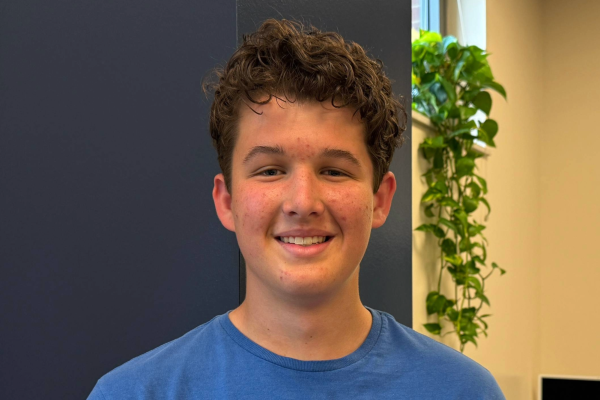
Owen Weiss: Welcome back to Clayton News Network. I’m your host, Owen Weiss. And today we’ll be speaking with Dr. PJ Cabrera about the effect on college by AI. Doctor Cabrera is an award winning educator and media professional who truly does it all. He’s got a doctorate in educational leadership. Our guest has spent a career mentoring the next generation of journalists (like me) and advisors across both kindergarten through twelfth grade and even higher education like college. From developing innovative new courses to contributing to national media organizations and publishing influential work in the field. Doctor PJ Cabrera is a leading voice for future-ready, inclusive journalism. Please welcome Doctor Cabrera.
Owen Weiss: Welcome to Clayton News Network. So my first question for you is, is it true that colleges are checking less and less applications, like via real people?
Dr. PJ Cabrera: I’ll start with this. I think that the collegiate standard is a little different from when I went to school, versus when you guys are going to be going to school. Um, there are ways to use AI as a tool rather than something to replace humans. Um, I can completely can see I’m not an admission, so I don’t necessarily know the ins and outs of the admission, the admissions process, but I can see that that would be a tool to use to screen out certain students from other students. The problem I see there is you are missing that human empathy, sympathy aspect of reviewing an application that I think is incredibly important. So I again, I don’t know the admissions process, but I can see how it being as a tool can be beneficial. Um, being in the higher ed world, I have tried my best to push back on AI use in the classroom and outside the classroom in the higher ed, because you’re losing the human. But the more and more higher ed as a whole is starting to embrace it way more than it did a year ago or two years ago. So
Owen Weiss: Yeah.
Dr. PJ Cabrera: It’s not something that we can ignore anymore.
Owen Weiss: And then kind of on the other side of that, what stops someone from using AI for their application letter?
Dr. PJ Cabrera: Nothing. Nothing does like like if you want to go to, I don’t know, Apple University, there are a ton of resources that you can use to create a letter to check all those boxes that Apple University is using. There’s nothing to stop you. And that can actually be one of the one of the points of this discussion. Technology is technology is specifically AI is moving faster than humans can. There are no policies in place when it comes to how
Owen Weiss: Yeah.
Dr. PJ Cabrera: We use AI, especially in higher ed. Um, and there’s no policies in place in terms of, um, law in how we use higher, how we use AI. So AI is advancing every single day, but policy is not backing it up. And that is the big problem when when it comes to how we’re using it.
Owen Weiss: When you’re reviewing your students work, like, do you ever notice, like, AI generated stuff or, like, AI enhancements?
Dr. PJ Cabrera: All the time. The problem is, is it’s really difficult. Um, I wouldn’t say difficult, but we have to tiptoe on the line of being accusatory, because some students can be great writers, and it sounds like it’s AI, but it was done by them. And some students can be crappy writers and they use AI. And it’s just like, how can I prove whether this is AI or not? One of the tactics that I have done going into, uh, this upcoming summer session and then going into next school year is going straight to pencil and paper, going back to original stuff. And it’s not because I don’t want to embrace AI. It’s my goal is for students to learn, and if I’m realizing that students aren’t learning, then I need to change my tactics.
Owen Weiss: I’ve noticed we’ve been doing like a lot more pencil and paper stuff in high school too.
Dr. PJ Cabrera: And that’s probably by design, because, as collegiate people, we’re seeing more and more students not adhering to a specific collegiate standards. So then we have to talk to our high school partners and say, hey, like something needs to be done on your level. So when they get to our level, we’re not having to kick them out because they did plagiarism or we’re not having to kick them out of a of a high, intense program. Um, the other part of that is we are now seeing more and more students wanting to do school online. So it’s really difficult to police AI when you have an online system in place. One of the things to combat that is students have to answer questions via video. So they have to do it face to face, but face to face with a computer screen, that’s the way, that’s a way to combat it. But there are ways that we’re trying to figure it out. But are those ways to combat it more cumbersome for the classroom or cumbersome for the teacher, or more cumbersome for the student? We are legitimately right now in the wild, wild West when it comes to AI. So
Owen Weiss: Yeah.
Dr. PJ Cabrera: There’s no right or wrong answer.
Owen Weiss: What is your top five list of majors or, like, professions you think will be safe from AI in the next, like, say, ten years?
Dr. PJ Cabrera: Oh, okay. Um, that’s interesting. Uh, as an as an educator, um, if you would have asked me this question two years ago, I would have said, teacher, teacher is safe from AI as long as as long as people have babies, we’re going to need teachers. And then if you start looking it up, there are more and more AI schools, more and more fully online schools, more and more ways that people are getting their education through technology. Um, so two years ago, teachers right now, uh, even we’re being looked at being replaced. But when? To answer your question, when I think about with, uh, professions, trade work, trade work, trade work, anything that requires, uh, human using their hand to do something is going to be incredibly beneficial. So my rhetoric when it comes to pushing higher ed on students has changed my my rhetoric has. Okay. You need to have a plan. Either it’s college or if it’s the military or if it’s the workforce, whatever. But have a plan. Pushing higher ed on students may not necessarily be the smarter option. Pushing trade work may be a smarter option. That’s not for everyone. But when you think of of professions that are going to be safe from being done by a machine, it’s it’s the HVAC person, it’s the plumber, it’s the hairdresser, it’s the all of those professions that need, uh, need your hands. However, um, I think even as advanced as AI is, AI still needs a human to use. So I don’t think a lot of professions are going to go away, but I think that they’re going to be less of them.
Owen Weiss: Yeah, and I was kind of thinking as you were talking, like, I feel like stuff that requires human trust would probably be safe for a little bit, too, because personally, I wouldn’t want, like, an AI doing, like a heart surgery on me or something, or like assisting a doctor in heart surgery because
Dr. PJ Cabrera: You’re absolutely right. Policy needs to back that up. Policy needs to be like all right. Said professions can only have X amount of AI use in it. Anything medical? You would think needs to have that balance. But just like you said, I don’t want to trust a robot with my heart.
Owen Weiss: Right?
Dr. PJ Cabrera: I would hope that the doctor also thinks the same way. But you see more and more AI software in medical diagnosis. So how do you avoid that?
Owen Weiss: Yeah. Um, and then for people thinking about their future, how should they decide on a profession that assures stability.
Dr. PJ Cabrera: So I think about when I went to when I was looking at going to college, um, fifteen, twenty years ago. Um, and so right after that, it was like this coding boom, this, this go, go to college to be a coder, and now you can get AI to code for you. So that profession is changing. Um, higher ed is changing in terms of its stability, in terms of its financial financial stability, its terms, in terms of its relevancy. Um, I do I am a wholeheartedly believe that there is a need for higher education in our society. We as a society, one need to continue to support public education, but two need to make sure that we want a educated electorate. So we have to our policies need to need to follow that as well. If I’m telling you, yes, go to college, I’m going to tell you what can you do that you can’t be replaced with and go to a state school because it is cheaper than a private school. Um, and that’s just to make sure that you have the best financial footing out of that college. Um, my my degree, my degrees. They’re over there somewhere, but my three degrees are from a public institution are just as valuable as my colleague who got theirs from private institution. And we make the same money. So, so. And then at the same time, once I get to a certain part of your career, no one’s going to ask you about your GPA. No one’s going to ask you where you got your degrees from. Do you know what you’re talking about? And can you do it well? And I know what I’m talking about. And I can do it well. So my level of competing and selling myself in networking is just as important as where you got your degree from.
Owen Weiss: Yeah. Are people not going to college as much because they assume that AI will take over a lot of the jobs that they could get from going
Dr. PJ Cabrera: Um,
Owen Weiss: to college.
Dr. PJ Cabrera: So pre Covid, you saw people going to college, right? People. People just love going to college. Um, post-Covid you saw a dip in it because people wanted to do it online. And then after Covid, now that we’re seven years after Covid or so, you’re seeing an uptick in people wanting to go to college because they’re wanting that in-person connection. Um, so there’s an interpersonal aspect there that is incredibly important. Now, that’s an aside. You also see students that are wanting to come to college still to learn, but are wanting to make sure that they’re picking up majors that are going to equip them with a job afterwards. Because if you want to go to college to be a basket weaver, great. Go to college to be a basket weaver. But are you going to get a job afterwards to be a basket weaver? So,
Owen Weiss: Right.
Dr. PJ Cabrera: maybe not necessarily trade, but maybe a profession in which you’re going to you’re going to be able to find a job afterwards. And I think that that’s what people are thinking, and that’s what we’re trying to put. That’s what I’m trying to push anyways. It’s like, yeah, I listen to me like I love certain things, but I don’t want to get a major in it. And then focus for years and fifty thousand dollars on something that I cannot find a job afterwards.
Owen Weiss: Yeah, that makes sense. So would you say people should prioritize like passion or stability more?
Dr. PJ Cabrera: That’s always the million dollar question, right? Because if you do something that you’re passionate about, you’re never going to work a day in your life. That’s the old adage. But if you’re passionate about something that doesn’t pay the bills, then you’re going to be stressed about money. So what I tell students is find that balance. Find something that you enjoy, but also something that is going to give you financial stability. Because financial stress is real. It impacts your mental health, it impacts your relationships, it impacts everything. So if you can find something that you’re good at, that you enjoy, and that pays well, that’s the sweet spot.
Owen Weiss: Yeah, like the intersection of all three.
Dr. PJ Cabrera: Exactly.
Owen Weiss: Do you think AI will make that harder or easier to find?
Dr. PJ Cabrera: I think it’s going to make it more competitive. Because now you’re not just competing with other humans, you’re competing with technology that can do things faster, sometimes more efficiently. So it’s going to force people to be better, to be more creative, to be more adaptable. The people who are going to succeed are the ones who can work with AI, not against it.
Owen Weiss: So it’s more about like adapting than avoiding it.
Dr. PJ Cabrera: One hundred percent. The worst thing you can do is ignore it. Because it’s not going anywhere. It’s only going to get more advanced. So you might as well learn how to use it as a tool.
Owen Weiss: Yeah. Do you think schools are doing enough right now to prepare students for that?
Dr. PJ Cabrera: No. And I say that as someone who works in education. We’re behind. We’re reacting instead of being proactive. And part of that is because education systems move slowly. There’s policies, there’s approvals, there’s funding, there’s all these things that slow down change. Meanwhile, technology is moving at lightning speed. So we’re constantly trying to catch up.
Owen Weiss: Yeah, that makes sense.
Dr. PJ Cabrera: But there are people who are trying. There are educators who are trying to integrate AI in meaningful ways, teach students how to use it responsibly, ethically. It’s just not widespread yet.
Owen Weiss: What would that look like ideally?
Dr. PJ Cabrera: Ideally, students would be taught how to use AI as a supplement, not a replacement. So instead of saying “don’t use AI,” we say, “here’s how you use it correctly.” Here’s how you fact-check it. Here’s how you build off of it. Here’s how you use it to enhance your own thinking, not replace it. Because at the end of the day, critical thinking is still the most important skill you can have.
Owen Weiss: Yeah, that makes a lot of sense.
Dr. PJ Cabrera: If AI does all your thinking for you, then what are you bringing to the table?
Owen Weiss: Yeah.
Dr. PJ Cabrera: So that’s where I think education needs to shift. It’s not about banning it. It’s about teaching students how to use it well.
Owen Weiss: Yeah, and I feel like a lot of people are just using it to skip the thinking part entirely.
Dr. PJ Cabrera: And that’s the danger. Because the more you rely on something else to think for you, the less you’re developing that skill yourself. And then what happens when you don’t have access to it? Or when it gives you the wrong answer? You need to be able to identify that.
Owen Weiss: Yeah, because it’s not always right.
Dr. PJ Cabrera: Exactly. AI is only as good as the information it’s trained on. And if that information is flawed, biased, outdated, whatever it may be, then the output is going to reflect that. So you need to have the ability to critically analyze what you’re getting back.
Owen Weiss: So it’s kind of like a tool that still needs supervision.
Dr. PJ Cabrera: One hundred percent. Just like anything else. You wouldn’t hand someone a calculator and say, “you don’t need to learn math anymore.” You still need to understand the fundamentals.
Owen Weiss: Yeah.
Dr. PJ Cabrera: Same concept.
Owen Weiss: If you had to give one piece of advice to students right now about AI and their future, what would it be?
Dr. PJ Cabrera: Don’t be afraid of it, but don’t become dependent on it. Learn it, understand it, use it, but make sure that you’re still developing your own skills alongside it. Because at the end of the day, your ability to think, adapt, and problem-solve is what’s going to set you apart.
Owen Weiss: Yeah, that’s really good advice.
Dr. PJ Cabrera: And honestly, the students who are going to succeed are the ones who are curious. The ones who ask questions. The ones who don’t just take things at face value. If you can do that, you’re going to be fine.
Owen Weiss: Yeah. Thank you so much for being here.
Dr. PJ Cabrera: Absolutely, I appreciate you having me.
Owen Weiss: Thanks to all the listeners out there for tuning in. This episode of Clayton News Network was planned, produced, directed, edited, and hosted by yours truly, Owen Weiss. The music featured in this episode was sourced from the Adobe Podcast Stock Soundtrack “Baseline.” Till next time.