
Adam (00:00.716)
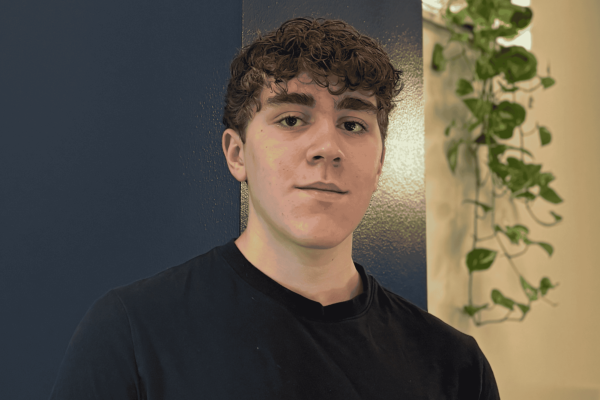
Welcome back to “Simplifying the State.” As always, I’m your host, Adam Watson, and today we have another special episode for you. Our guest today is Gregory Upchurch, a small business owner and candidate for Missouri State Auditor. We spoke about several different things, including what he sees as being one of the fundamental responsibilities of the State Auditor, as well as what drove him to run and advice he has for other candidates running throughout the state.
But before we begin our episode, if you would be so kind as to rate our podcast as well as follow so you can stay up to date on what’s happening in our government and our politics. And if you know anyone who may enjoy the podcast, be it a politics nerd like me, or just someone who wants to be more informed, please share the show with them as it really helps us out. And with that, let’s get to our conversation with Gregory Upchurch.
Adam (00:00)
Right, so thank you so much for coming on our podcast. Can you tell us a little bit about yourself and what your campaign is about?
Gregory Upchurch (00:07)
Absolutely. My name is Gregory Allen Upchurch, and I am running for Missouri auditor because I think we should be able to see what’s going on in Missouri.
Adam (00:19)
Alright, so you are a small business owner, and then before this, you ran for State House. What sort of led you to make the jump from small-business owner to running for State House and now State Auditor?
Gregory Upchurch (00:32)
You know, I’ve always been interested in politics. I have a picture from when I was probably 14 years old, standing next to Thomas Eagleton. You probably don’t even know who he is, but a lot of people that watch this will. He was a great Missourian, let’s just say. You can look him up later. But he was a really good guy. And I would do all kinds of things when I was younger. I’d go to campaign headquarters, and I don’t know, it just enthralled me. I like the buttons, I like the — I don’t know — the message. When you’re a kid, the message doesn’t land like it does when you’re an adult. But being around the energy and the atmosphere has always been something I kind of enjoyed. And then, you know, this isn’t the only business I’ve owned, but before the other business, I went and got a master’s in public administration. So I’ve always obviously been interested in the government, like I said. And then I still opened this venue. Well, I’m a wedding industry guy at Grand Opera House Banquet Center in St. Charles, but, you know, at the same time.
People come, they need the venue, they need to do things. Well, you know, Democrats tend to find Democrats. So I’ve been helping all kinds of organizations, all kinds of candidates. I did an event for Cat Clayton just last week and got one coming up for Bethany Mann. So, you know, this is one of those things — you walk the walk, you talk the talk, you do the do. It’s a natural progression for me. And then I just got mad in 2016.
Because, well, they weren’t listening to us then either. And so I started running because it wasn’t popular to run. So I decided to go ahead and run for office and just go for it and give people some kind of choice. You know, the whole state looks really red when there’s nobody blue to vote for. And that’s what’s been important about this election — we got somebody to vote for.
Adam (02:21)
Yeah, I know that there are historic numbers of Democrats on ballots in Missouri. I think you are running in a two-person primary, am I correct?
Gregory Upchurch (02:31)
It is myself and one other gentleman, yes.
Adam (02:33)
Yeah, so I’m wondering — and not in a “this person is bad for this reason” way — what do you think the main differentiation between him and you is? Like, what would you bring to the State Auditor position that maybe he could not?
Gregory Upchurch (02:50)
You know, the auditor position is — it’s a business, basically. It’s full of professionals. If you look at anything, the auditor doesn’t actually audit. You run a business like a business. They’re all professionals. If you go in there trying to change the culture of that place, immediately, there’s always going to be pushback. That’s not how you start or operate a business. And this is what I know about owning multiple. You treat your employees with respect, you figure out who they are.
You have conversations with them, you get to know them, and you figure out what they’re all about. And then you work into setting a policy that moves forward. Now, me saying whether I’m better at that than somebody else, you know, that’s for some to decide. But I do run a very successful business that I’ve run for the last 16 years. And the business before that was very successful in the transportation industry. So the office itself will do what the office does.
What it is, it’s mostly about setting that policy. Where are we going to go? How are we going to move forward? What are we actually going to look at? Those are the things that matter to people. And that’s where the master’s degree in public administration comes in — this is how policy is set, this is how policy is driven. And once you get the policy set, then you let the professionals do what the professionals do. And that’s how the office will be run, in my opinion.
Adam (04:08)
You’ve spoken about that experience in managing people, and that’s sort of a key part of being the State Auditor. Are there any other lessons or other experiences from your time as a small business owner that could help you as State Auditor?
Gregory Upchurch (04:27)
Well, especially the — yes, especially the small business I’m in. I’m in the wedding industry. I speak to people all the time. This is what I do. I host families. I bring together families, and they come to enjoy themselves, but they all come to speak to me, and I speak to them. And I draw people from not only St. Charles, which is where my business is — my doors open to Main Street — but
I draw people from West County, South County, North County and other states. I draw a lot of international, believe it or not. And people come to St. Charles, and they just cannot believe how beautiful it is here. And I have to agree with them. It’s a great city. We’ve got everything you would want here. It’s a beautiful place. And to me, it’s part of the epitome of Missouri. But if you make your way around Missouri, which I have done for multiple years now, in
In 2020, I ran for lieutenant governor. So I was all over the state. You know what I mean? Like, you speak to people all over the state and all over the world. You get to know how to speak to people, how to interact with them, how to be allowed into the room. Because we have to be allowed into the room. Now, being a businessman from St. Charles, I get in a lot of rooms. There’s a lot of people that will speak to me that they don’t instantly tag with that D tag — you’re one of them, no, it’s, let’s have a conversation. And that’s where I have strengths over many of my past opponents and any opponent I have right now — the people who are in will actually have a conversation with me. How are you gonna get anything done if we’re not talking to each other? And all these — I don’t mean to call them kids — these young professionals who have also stepped up to volunteer their time to run for office, which, in technicality, is what we’re actually doing. We’re volunteering for you to be your representative. So, you know, get out and support these people. Get out and help them. They’re trying their best for you. There’s a lot to be said about this office and how it can go, and the way this campaign can go. But these kids around the state are wanting somebody strong to lead them into this election.
That’s what they keep telling me. They’re pulling me aside all across the state. Man, get out there more. Get your face out more. We need you. We need you. We need you. And that’s what I’m hearing from these kids all over the state. Again, they’re not kids, they’re young professionals. But the message is there, the message is clear.
Adam (07:00)
Yeah. You talked about how you have to have conversations with people who are perhaps of a different party. If you’re elected and no other Democrat is elected to those major statewide offices — lieutenant governor, governor — how do you think you can best leverage your abilities and your office to sort of work with them while keeping in mind that, you know,
Republicans may want to oppose you; they may want to do all that stuff. How do you think you can navigate that?
Gregory Upchurch (07:30)
Diplomacy is always the best solution. Period. Open the conversation, start the conversation, speak about it. Do you come to a consensus or do you not? Does it seem shady? Does it need a better look? That’s what I’m interested in. Does it need a better look? I’m a sunshine law guy. Always have been. I think everybody should know where every cent of their tax dollar is going. Every cent of it. And I
As an auditor, there are lots of laws that protect me. Now, of course, you start diplomatically, and then if diplomatically doesn’t work, well then you open books, and you see where the tax money’s going because that’s what people in the state really want. This is the Show Me State, people. I grew up here. I grew up in this town, St. Charles, once considered the Wild West. This is the Show Me State. Anybody can do this all day long. Open books.
Look at numbers, let you decide if you’re gonna get mad or not. That’s my plan. And some laws protect me to do that for you, the taxpayer. All I’m asking is that I get the chance to do it. That’s my question. That’s what I’m asking of you. I’m not asking for money. Not right now. Right now, I’m self-financing. The people make the choices. We need money out of this. The message is what matters. If you like the message,
share the message. I’ll go to bat for you. That’s who I am.
Adam (09:02)
Yeah. I think that, as State Auditor, your job would be pretty much to ensure that people’s tax dollars are being spent effectively and that they’re going to what they’re actually supposed to go to. I think a lot of people across America and in Missouri are, you know, hesitant or don’t like paying their taxes, not just because they don’t like paying taxes, but because they think that their money is not being spent effectively or that they’re not seeing a proportionate return on investment to what they’re putting in. So I’m wondering, as State Auditor, is there anything that you would do to dissuade this feeling? Because I know the current State Auditor does a podcast where he goes over different audits, breaks them down, and all that. Is that something you’d possibly look at continuing? Or how would you ensure that people know where their money is going so they can feel as though there’s a transparent process?
Gregory Upchurch (09:54)
Absolutely. And as far as I’m concerned with that question you ask about transparency, I mean, I started this a long time ago. One of the first things I said was, I’m a sunshine guy. Yes, podcasts, TV news and the internet. You can put anything on that thing so people can come look at it. This is the whole point. Sunshine laws are sunshine laws. Open the numbers up, let everybody look at them. I’m a numbers guy. I took calculus in high school. I like numbers. Numbers are great, right? So go in, open it up, let people see the numbers, and let them decide if their tax dollar is going to something they want done or not want done. But the government secrecy has got to go. This is what the problem is. Secrecy causes corruption. There’s no doubt about it. And one of the things I will speak about — because I want to say this, because I want everybody that watches this to understand something — a lot of these politicians are getting stuck.
By these data center companies, because what they’re doing — and I want you to understand — is they’re going in, and they’re making these guys sign NDAs, non-disclosure agreements, before they can be told any information. Therefore, they can’t share the bad stuff with you. So if you want to go after something right now, go after the NDAs pre. Go after something that doesn’t allow your local officials to sign NDAs before they get the information. It’s huge. I went on a little bit of a tangent, but as an auditor, not sure how I could do something about that. It’s a little more of a policy, but something I’d like to work on. But again, just like that one, follow the money. There’s a money trail in there. Follow that money trail. You’ll see who’s behind what.
Make up your own decision.
Adam (11:34)
Yeah, so I know that, based on what I found, healthcare is a pretty important issue to you. I know it was a big aspect of your last campaign for State House. As State Auditor, what sort of impact do you think you could have on healthcare in Missouri? Obviously, the dictating of spending of the money, like allocating it, is a legislative issue, but in terms of making sure it’s going where it’s supposed to, you know,
How do you think you can have an impact on that and make sure that all of that money is going where it’s supposed to?
Gregory Upchurch (12:02)
This is where you count on the people who are in the auditor’s office, who literally are CPAs, to do their jobs. This is where you sit down with them. You interview them first. They interview you. You are their new boss. And you make sure the people are committed to doing the job they’re doing, which is to make sure that no taxpayer dollars get wasted. And if they’re committed to that in this nonpartisan position, if they’re committed to that, then it actually goes to — it doesn’t matter who you are. It doesn’t matter where you are in the state. If you are taking taxpayer dollars and you are using them in any way that is inappropriate, we’re coming after you. And if the people working there don’t believe that, then they need to be replaced. Because again, this is not D’s and R’s we’re talking about here. It’s not what we’re talking about. What we’re talking about is everyone in the state of Missouri’s money.
That they paid in. They have the right to know where it goes. I’m willing to open those books. I’m willing to have the sunshine laws to say, yes, this is where your money’s going. It was appropriated here. This is where it’s going. It’s not my word to say whether I’m mad or not, but it is my place to open those books so you can see where your money’s going. And that’s what I can do. And I’ll have a lot of power to do it. Because if you look into what the auditor can actually do — educate yourselves, guys. Look into these things. It’s all about policy, it’s all about direction. Educate yourself on what the auditor actually does, and let’s get a strong person to lead this party in with the top position in the state. And that is me, Gregory Upchurch.
Adam (13:43)
Yeah. So obviously, you know, the State Auditor’s office is the keeper of the tax revenue and making sure it goes where it’s supposed to go. Right now, Republicans are trying to introduce a new income tax. They’re trying to overhaul the tax system, basically get rid of the income tax, and replace it with an increased sales tax. How do you think that overhaul could impact the role of State Auditor?
Gregory Upchurch (14:11)
I’m gonna be busy. I’ll tell you that. If this goes through, there’s gonna be a lot of money moving around in municipalities. It’s gonna cause some serious, serious issues. And I’m not sure it’s not done just to try to tear it all down. But again, where I’m sitting right now, I can’t look at those numbers. I gotta rely on somebody who’s not putting those numbers out on purpose.
Because, well, they might just have the guy at the top going, “Come on, team player. You don’t need to look at that one.” Or they got something they can say, “Hey, you probably shouldn’t look at that one.” That’s not gonna fly with me. If there’s a problem and the taxpayer money is going somewhere suspicious or somewhere it’s not supposed to be, we’re gonna track it down and let people know where it goes. Again,
It’s not my place to get mad, but it’s my place to make sure that you, the voter — you, the taxpayer — you, the people of this state, know exactly where your dollars go. And I know it sounds like the same thing over and over again in small amounts, but it’s because that’s the way it is. You have to have somebody willing to open books so that you can see if there’s corruption going on or not. That’s what this position is. It’s not about D’s and R’s. It’s about corruption and about people wasting dollars that they shouldn’t be wasting.
Adam (15:32)
So you suspect that, you know, this changing of the tax code and the structural changes that will happen as a result of it — you think that that could lead to, at least for a shorter period of time, potential for misuse of public funds or redirecting to perhaps, you know, less-than-legal avenues — like people could take advantage of the chaos?
Gregory Upchurch (15:55)
Yes, because that’s what’ll happen. And, you know, look, people say we don’t want socialism. Well, guess what you do want? You want that ambulance to show up. You want that fire truck to show up. You want to take the snow away from your neighborhood. I mean, these are things we just expect the government to do. But guess what happens when you take away those base taxes that actually support those things? That ambulance doesn’t come anymore because there’s no money.
The fire truck doesn’t come anymore. Your house burns down. Your kids don’t have a school to go to because it’s all been privatized. Look where your money goes. It doesn’t come from the Missouri Lottery. It comes from the general revenue. It always comes from the general revenue. All they did with the Missouri Lottery was just take that money and shuffle it. It’s the same amount of money and they keep decreasing it all the time. So these are —
This is what we’re talking about with the reallocation of taxes and trying to get rid of, you know, sales tax or trying to get rid of the gas tax or raising the gas tax to cover the sales tax. It’s just the shuffling of the same money. The money should be there first, then the policy made. It’s kind of backward in the state, but it’s backward in a lot of states. Again, the policies are going to change by what they’re doing right now. There is no doubt.
We will rely on municipalities and people within municipalities to watch what’s going on and contact the auditor’s office about the improprieties they see. And I have a feeling that’s why my first answer was busy. Because there’s gonna be a lot of improprieties. There’s gonna be a lot of moving of money without quorums, without boards voting on it, without — somebody’s just gonna make the decision, and
yeah, they’re gonna be everywhere. So people, pay attention. Pay attention to what’s going on right now. Pay attention to Amendments 2, 3, 4 and 5. They’re gonna be worded funny. Get into it now. I know they’re bad. Yeah, there’s gonna be some stuff coming. These policies, some of them are really horrible, and they’re gonna affect you financially.
Adam (18:05)
The State Auditor position is sort of unique in Missouri. It’s one of the more purple roles in the state government. So the last State Auditor was a Democrat; before that, it was a Republican, before that, it was another Democrat. And all the, you know, bureaucracies of all the different offices are supposed to be nonpartisan, but I think the auditor’s is a uniquely nonpartisan position. So
How do you think that Missourians will vote? Because obviously it’s a redder state than, you know, Illinois — how do you think that they will vote in this election? Do you think they’ll vote for the party, or do you think they’ll vote based on policy?
Gregory Upchurch (18:43)
I’m glad you added “than Illinois” at the end of that — redder than — because Missouri’s not as red as people think it is. It’s red in rural districts because there just hasn’t been any candidates. How are you gonna have a blue vote if there’s no blue to vote for? So of course it’s red. It’s more purple than anything. Yeah, I wear a lot of purple. This is a purple state. People have no idea. But they’re gonna find out. And you ask me how people are gonna vote — I’m gonna tell you how people are gonna vote. The Democrats, true Democrats, are gonna elect the Democrats.
True Republicans are going to elect Republicans. We have a lot of independents in this state. And guess what they do? They decide who wins elections. And they’re going to vote with their wallets. And right now they’re getting creamed, not just by the federal government, but by the Missouri state government as well. We’re slowly going broke, and they’re hiding it from you. That’s what’s going on. We need somebody to get in there and open up the books so you can see. These people are going to vote with their wallets.
The state’s gonna turn a really cool shade of blue, in my opinion, because people are mad. And you know how I know they’re mad? Because I’m all over the state and they’re telling me. They’re telling me all the things they’re mad about, too. But they’re really mad about their wallets. And they want somebody to go up there and tell them the truth. And that’s where it comes to integrity. I’m in the wedding industry. I’ve been here 16 years. If I wasn’t doing the right thing, you’d think I’d still be here? No way.
This is who I am. This is what I do. I will be an honest person for you in the state government for everyone. This is nonpartisan. I’m there to show you where your tax money’s going. You take the opportunity, or you don’t. You either want to know or you don’t. But again, I’m Gregory Upchurch, and I’m running for Missouri State Auditor. And there’s a reason why. I’m as mad as you are.
Adam (20:37)
Do you have anything else you think is important or that you’d like voters to know?
Gregory Upchurch (20:42)
Yes. Recruit. Go out to your clubs and get some people to help out. And when I say that, I mean younger people. These candidates are craving younger people to come out and do. Across the state, we got a ton of young candidates. I mean, we got a ton. We got a House — we got somebody in the House in every seat in the state. First time in a long time, right? 100 years, I think. We got tons of people in the Senate seats. There are only a few Senate seats open.
So this is where I say we’re going to get a true vector of what Missouri is and what color it is. And I think it’s going to surprise a lot of people because the independents are mad, and the independents want change, and the independents want honesty. So I’m talking to the Democrats as much as I’m talking to the independents right now, as much as I’m talking to the pissed-off Republicans that run that fine line between D’s and R’s. We all live in the middle, somewhere.
Or at least that’s where we all operate. And if we can all come together to know that we all operate in the middle and we got somebody there watching the numbers for us, reporting the numbers to us, so we can understand, then we know we got something. So watch the state turn and put somebody in there that’s gonna actually show you what’s going on in the state without fear of retribution. That’s what I would like people to do.
Thank you for your time. I really appreciate you.
Adam (22:06)
Yeah. Thank you for coming on the podcast.
Gregory Upchurch (22:10)
Absolutely. The invitation was great. I appreciate everything about it.
Music Attribution: “The World Is Ours” by Zane Little, used with permission, courtesy of freemusicarchive.org.