
Rockets soar at breaking speed, burning lava oozes out of a volcano and live rodents scurry in their cage. This is the elementary school science fair.
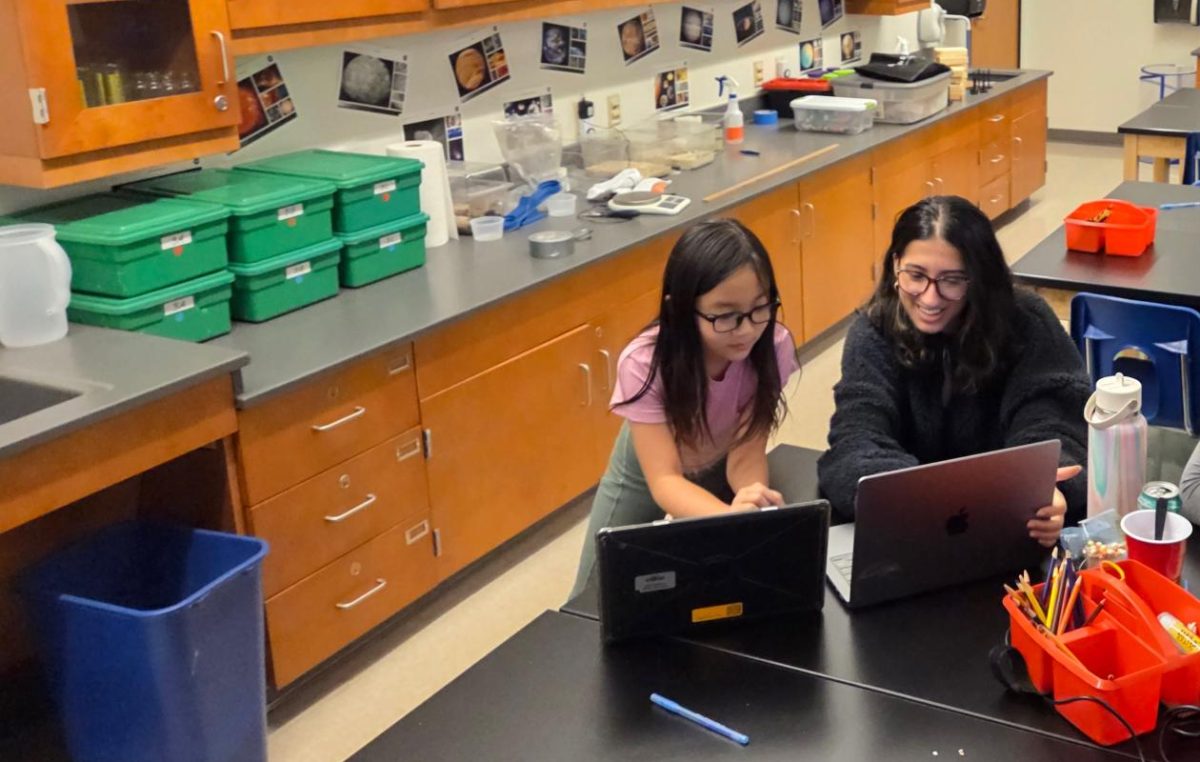
For the past decades, the Clayton elementary schools of Glenridge, Captain and Meramec have held a fair for younger students interested in science. It is a two-day event where, after months of brainstorming, preparing and perfecting, students can present their findings and get evaluated by judges who go around and observe the various projects. But the preparation is where the high schooler volunteers come in.
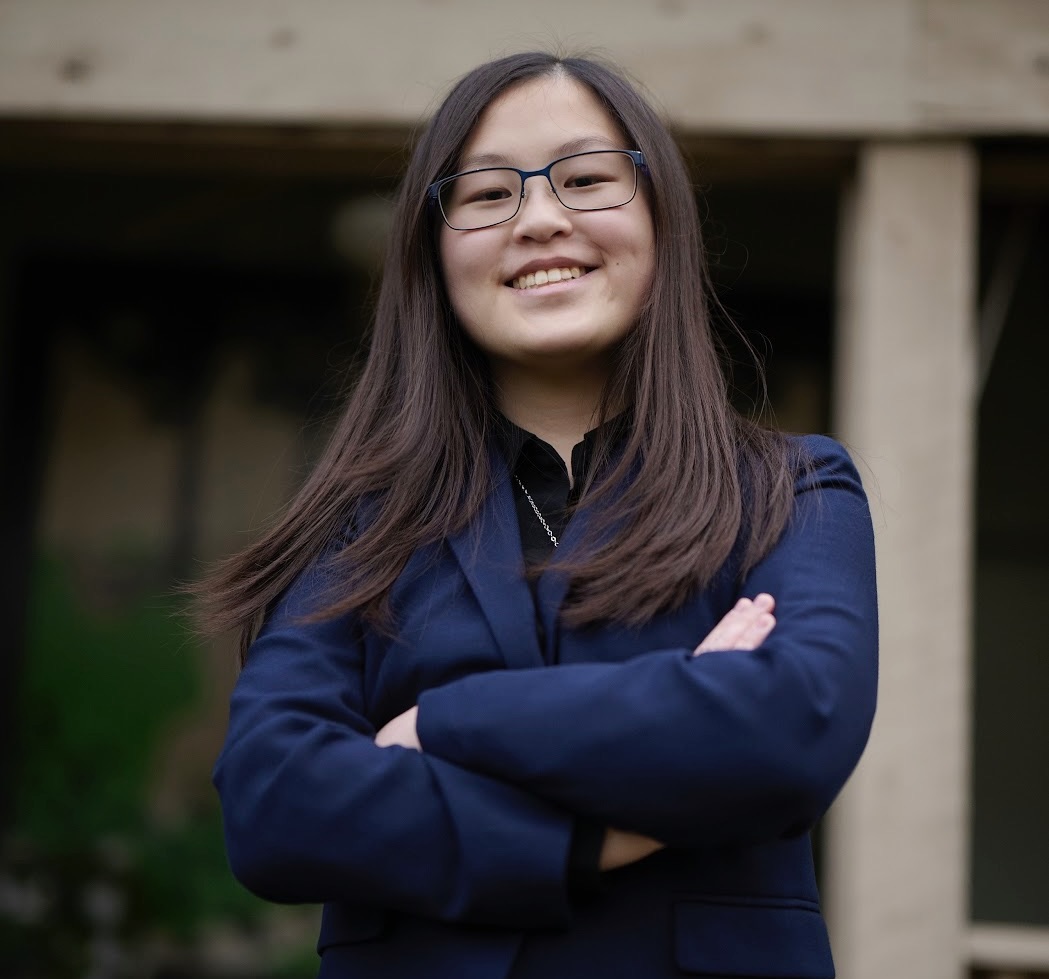
“Different elementaries have different hours, but I do it at Meramec. They meet Tuesdays and Wednesdays from [around] 3:30 to 5:30 p.m. We have kids that we’re kind of assigned to. So they’ll tell us their project, and then we help them brainstorm and plan,” junior Addy Poudel said.
From solar system diagrams to which ingredients make a cookie taste the best, the elementary students have a wide range of project ideas.
“Last week, a group of three boys launched a rocket and nearly hit another one of the mentors in the face. But it was nice, seeing them actually launch the rocket after a few tries [and] getting to see them succeed. They were very happy with how far it went,” sophomore Sabrina Perng said.
Beyond the basic logistics of science, safety and making sure the students do not burn down the classroom, the fair is an opportunity for high school student volunteers to see the students’ inventions come to life, and their growth throughout the weeks.
“I’m planning to go into STEM, specifically [the] medical field, so I figured this is a good time to get experience. There’s some quote about how teaching helps you learn [about] yourself. So I think teaching [the elementary school] students helps me too,” Perng said.
Poudel likes that she can apply her knowledge through volunteering.
“I can directly work with kids, and easily help them with whatever they need, and be there to answer the questions. I definitely recommend it to people who are science-oriented, and [even] if they’re not. [Maybe] they need volunteer work, [or] just want to help other people and do work in their community,” Poudel said.
Poudel likes that this unique opportunity allows elementary students to get help from their future peers.
“I did not go to [one of these] elementary [schools], but I used to do [the] science fair as well. I never got high schoolers’ help; I just had my mom help me,” Poudel said. “When I found out this opportunity was a thing, I was like, ‘I’ll use my skills and help kids.'”
![Registrar Lois Stiegemeier gives her daughter an inspirational speech to remind her of the uniqueness of every human, that she has higher significance to this world then she realizes. As a parent, Stiegemeier wanted to ensure her children went into the world with a positive attitude. “You are worth more than you [know]. Don't settle for less,” Stiegemeier said.](https://www.chsglobe.com/wp-content/uploads/2026/05/Screenshot-2026-05-18-11.27.23-AM.png)
![Sophomore Adam Gallegos walks his first-ever runway for Dolce & Gabbana. “When I saw a picture on the Vogue website of me, [I thought] this can't be me. This can't be real,” Gallegos said. “That picture to me will always be crazy.” Dolce & Gabbana Fall 2026 Menswear Look 51 / 100
Photo by Isidore Montag, Vogue, ©Condé Nast](https://www.chsglobe.com/wp-content/uploads/2026/04/image4-960x1200.jpg)
![Dorsey teaches his third-period geometry class on Thursday, April 9. "I enjoy that [the students] are willing to get up, work at the whiteboards and collaborate," Dorsey said.](https://www.chsglobe.com/wp-content/uploads/2026/05/IMG_9493-868x1200.jpg)