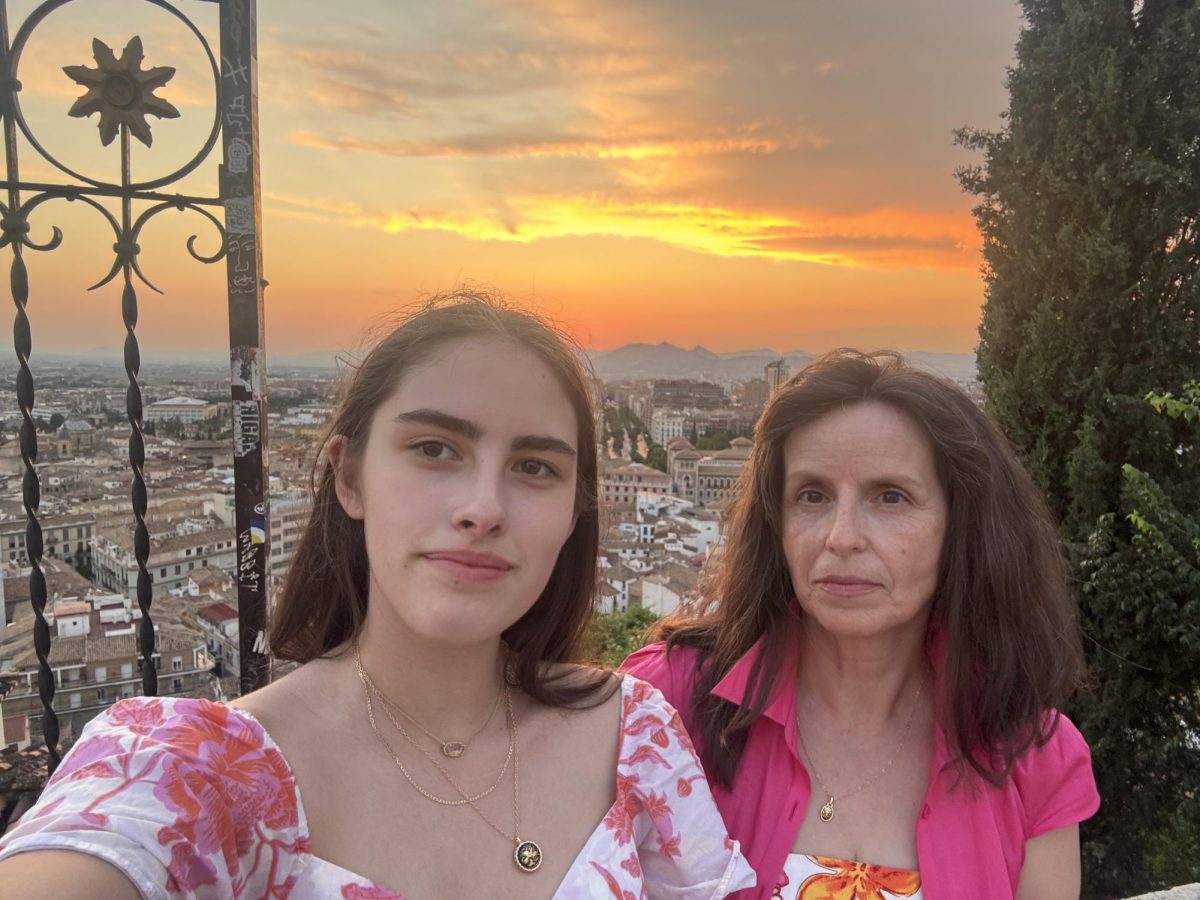


Move over, Cupid. While drugstore aisles are drowning in overpriced roses and heart-shaped boxes, a different kind of love is taking center stage: Galentine’s Day. What started as a sitcom punchline has turned into a movement, proving that the most soulmates in a woman’s life are often her best friends.
Instead of staying home, many single women are choosing to spend Valentine’s Day with friends. Sophomores Lauren Karpman, Anna Adeyoe and Sophia Adams plan to attend Galentine’s parties this year, despite having different relationship statuses.
“It’s a positive way to still experience Valentine’s Day, whether you’re dating someone or not — they’re both people you love,” Adams said.
Galentine’s Day often includes traditions such as gift exchanges and group activities. “I like spending time with my friends,” Adams said. “We usually do a fun gift exchange and different activities.”
This year, the group is planning a sleepover that includes a “favorite things” gift exchange.
“I like [it] when we do Valentine’s gift exchanges,” Karpman said. “This year, we’re doing a favorite things exchange. We exchanged things like Nee Dohs, and energy drinks, because that’s what we are into right now.”
Beyond sleepovers and gifts, Galentine’s Day reflects broader shifts in how young people view relationships, gender norms and personal identity. In past generations, Valentine’s Day was seen as a milestone, with having a romantic partner by Feb. 14 viewed as a marker of success. Today, many young women are redefining the holiday by celebrating friendships instead.
“Galentine’s is something to look forward to on Valentine’s Day,” Adeyoe said. “Instead of spending the day just with family or going about the day as if it were a normal Saturday, it makes the day more special to have a party or something to go to, and can make it feel like an actual holiday.”
The shift aligns with recent discussions in popular media, including a Vogue article titled “Is Having a Boyfriend Embarrassing Now?” that explores changing dating culture and the idea that being defined by a romantic partner can feel limiting. While relationships are still valued, many women are prioritizing independence, friendship and self-identity.
“I think it’s interesting,” Adams said. “It’s definitely empowering. I never thought about dating like that, and even though I have a boyfriend, I can see where other people are coming from, and how it could feel powerful for a woman to be single, even if that isn’t me. I’m grateful for my friends, but also for my boyfriend, and I think it’s fun to spend time with both on Valentine’s [Day].”
Students can be seen planning Galentine’s gatherings, themed card exchanges and sleepovers. These events reflect changing attitudes toward love and connection, emphasizing friendship and community alongside, or instead of, romance.
“My friends are very fun to be around, and I enjoy hanging out with them,” Adeyoe said. “I have a lot of fun with my friends. We always have such fun hang outs, and I’m lucky to have a group of girls I can really trust.”
As February approaches, Galentine’s Day serves as a reminder that personal worth is not defined by romantic relationships, but by community, friendship and self-love.
“Galentines Day is such a fun idea for making memories and an easy way to show your friends how much you love them. Not only do we get to give each other gifts and hang out, we also get to have a fun holiday in a month that can feel kind of long,” Karpman said.

![Registrar Lois Stiegemeier gives her daughter an inspirational speech to remind her of the uniqueness of every human, that she has higher significance to this world then she realizes. As a parent, Stiegemeier wanted to ensure her children went into the world with a positive attitude. “You are worth more than you [know]. Don't settle for less,” Stiegemeier said.](https://www.chsglobe.com/wp-content/uploads/2026/05/Screenshot-2026-05-18-11.27.23-AM.png)


![Sophomore Adam Gallegos walks his first-ever runway for Dolce & Gabbana. “When I saw a picture on the Vogue website of me, [I thought] this can't be me. This can't be real,” Gallegos said. “That picture to me will always be crazy.” Dolce & Gabbana Fall 2026 Menswear Look 51 / 100
Photo by Isidore Montag, Vogue, ©Condé Nast](https://www.chsglobe.com/wp-content/uploads/2026/04/image4-960x1200.jpg)
![Dorsey teaches his third-period geometry class on Thursday, April 9. "I enjoy that [the students] are willing to get up, work at the whiteboards and collaborate," Dorsey said.](https://www.chsglobe.com/wp-content/uploads/2026/05/IMG_9493-868x1200.jpg)