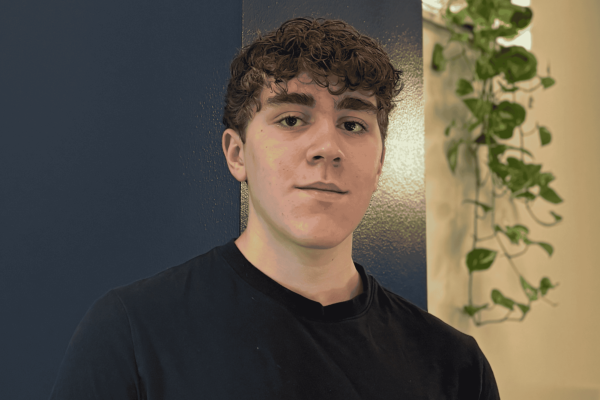
Adam Watson (00:00) Welcome back to “Simplifying the State,” the podcast where we break down politics so you don’t have to try to figure out why student journalists have more freedom in Arkansas than they do in Missouri. As always, I’m Adam Watson.
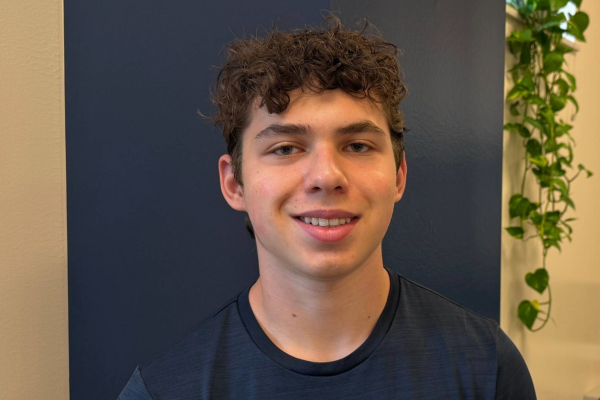
Drew (00:12) And I’m Drew Garfinkel.
Adam Watson (00:13) All right, before we start, please rate the podcast and follow it wherever you’re listening, and share it with anyone you think would enjoy it, like the Missouri House Education Committee. Okay, so today’s subject is going to be one that really closely relates to Missouri. That is basically the rights of student journalists. And that’s important because, as we speak, in the Missouri House Education Committee, there is a bill being debated called the Cronkite New Voices Act, HB 2918. And that would basically provide student journalists with independence. And we’ll talk a little bit more about that later, but, Drew, what are your, you know, thoughts? Do you think that student journalists, you know, should have more freedom than they do now?
Drew (00:59) Well, as a student journalist, yeah. It’s kind of like—well, obviously a bit biased here—but yeah, I think it’s American, being able to speak your mind.
Adam Watson (01:01) Yeah. Great. Do you think that, you know, student journalists are… what do you think the role of student journalists is compared to that of, you know, adult, like, professional journalists?
Drew (01:22) I guess to talk more like about high schoolers or, like, college students, because, like, adult journalists, they’re, like, talking about anything, but what we’re looking at is kind of through the lens of students. That’s for me the biggest difference.
Adam Watson (01:28) Mm-hmm. Mm-hmm. Mm-hmm. Yeah, I mean, I definitely think 100% I agree with your point. I mean, you know, so often people our age do not see themselves represented in news stories or do not see stories they care about being talked about outside of a school newspaper. And I think it’s very important that, you know, student journalists have the freedom to write and publish stories that matter to the student body and to the community they report on in an angle that they are interested in and that matters to them. And I think that that’s really important. So.
Drew (02:23) Yeah, definitely. I think that’s our job. Like, that’s what I try to do.
Adam Watson (02:26) Yeah. Yeah, I mean, that’s sort of what we do here. We try to talk about politics in a way that matters to high schoolers. So basically, the reason we might need a bill is because of a case that actually originated here in Missouri: Hazelwood School District v. Kuhlmeier, I think is how you pronounce that last name.
Drew (02:31) Mm-hmm. Yeah.
Adam Watson (02:50) Basically, these student journalists at Hazelwood East High School, they wrote a story within it. And then the principal received the school newspaper through a policy of prior review. Basically, the school was allowed to look at the stories that were being published, and they had the right to veto or change them or anything like that. And they deemed that a story that was in the paper was inappropriate. And so they stopped that issue from being published. The students sued the school district, and it made it all the way to the Supreme Court. And in a 5-3 decision, they determined that the First Amendment did not require schools to affirmatively promote particular types of student speech. So that basically made it so schools across the country could have a policy of prior review and, you know, just sort of veto student stories. What do you think, Drew?
Drew (03:38) So what this bill is doing is allowing students to say basically whatever they want as long as it’s not, like, illegal. So, in opposition to what you just talked about, I’m kind of just saying that, talking about the bill a little bit.
Adam Watson (03:50) Right. Yeah, I mean.
Drew (03:54) That’s what the bill was doing. So, like, no one at my school or institution would be able to limit what I put in the paper.
Adam Watson (04:03) Right. Yeah, so within the text of the bill—and I actually had the opportunity to go down to Jefferson City and testify in support of this bill, which was a really cool experience—within this bill, basically, it does basically what you talked about. It states that schools cannot restrict student journalism. It also says that schools cannot retaliate against the journalist and cannot retaliate against the student news advisor for the stories that are published within the school newspaper. And that’s a really important thing because there are some advisors who have been either fired or transferred to a desk job because of stories that have been written. But yeah, basically this bill does that, but it also has some safeguards in place. So it doesn’t fully take the reins off. You’re still responsible for not publishing libel, you’re responsible for not publishing slander, and you’re responsible for not advocating doing anything illegal or harmful or advocating harm. Yeah. Yeah, so there are still some limitations. But yeah, this bill, HB 2918, would basically give student journalists much more protection. And…
Drew (05:04) Yeah, that’s what I was getting at, yeah.
Adam Watson (05:17) Missouri is not the only state where this is occurring. Since the Supreme Court decision made it a national policy, schools are allowed to have prior review everywhere. Since then, a group called the Student Press Law Center, SPLC—not to be confused with the Southern Poverty Law Center—has been going state to state and helping get this New Voices legislation passed through the state legislature. So it’s in a bunch of different states: California, Arkansas, West Virginia, Iowa, Illinois, but you know, Missouri doesn’t have it yet. And they are debating that in the education committee. So for just a real quick plug here, for anyone who’s interested in seeing this bill passed, you know, call the members of that committee, you know, just say you’re interested in the House education right here.
Drew (06:01) Sorry, which committee?
Adam Watson (06:06) The House Committee on Elementary and Secondary Education. So call the members of that committee and tell them that you want HB 2918 passed.
Drew (06:17) So I have a question for you quickly. We were talking about what was limited and what was not limited. Do you think there should be limits on what we can publish? Like, generally.
Adam Watson (06:17) Yeah. Yeah. Mm-hmm. Mm-hmm.
Drew (06:28) Like, excluding illegal things. Like, if it’s straight up illegal, obviously that’s off-balance, but like just what we can say, do you think that should be limited in any way?
Adam Watson (06:34) Yeah. You know, that is a question that I think has plagued American society for, like, the last 150 years. To what extent does the free speech work? Yeah. I think constitutionally, I think there should not be a restriction on speech, you know? Like, we can disagree with speech, but—and you know, this is something someone, another person who testified said—the First Amendment protects all journalism, not just good journalism. And so I think that, you know—and I think, and I believe that—and I think that, you know, the First Amendment applies not just to things we believe in, but also things we disagree with. And there should be equal protection for those ideas. I mean, the First Amendment guarantees the right to speech, not, you know, the right to freedom from repercussions. But I do not think that…
Drew (07:10) Mm-hmm.
Adam Watson (07:31) As long as it’s not illegal and it’s not promoting harm or promoting law-breaking, I don’t think it should be censored. What do you think?
Drew (07:40) So yeah, that reminds me of a quote. It was like, “I disapprove of what you say, but I would defend to the death your right to say it.”
Adam Watson (07:45) Mm-hmm. Yeah, I think we had some of that in, like, some of our history classrooms. I think it was like eighth grade.
Drew (07:51) Yeah, I don’t remember who said it, but that’s… I agree with that. That while I don’t agree with what a lot of people say, obviously we need this discourse, and we need to have people with other opinions than us, and we can’t just, like, shut it down.
Adam Watson (08:09) Yeah. And that was one of the things one of the committee members said. He said that, you know, I think even though there are—he was a principal or an administrator at a school—and he talked about this time that, you know, some students who were very prominent supporters of a certain issue, you know, wrote a story that a lot of people disagreed with, but that he felt that it was important to have those kinds of discussions and discourse within a school, because not only is that good for building a sense of community for everybody, but it’s also important to democracy. The freedom to talk and the freedom to express yourself—those freedoms are fundamentally important to us as Americans and fundamentally necessary to maintaining our democracy.
Drew (09:01) Yeah, definitely.
Adam Watson (09:03) Yeah. I sort of wanted to ask you what you thought about the same question: Do you think student voices should be censored?
Drew (09:13) Yeah, I didn’t know the answer to that. I was just kind of thinking it’d be a deep question. It honestly depends if I agree with it or not, you know? But yeah, that’s my way of getting out of answering the question. Because yeah, it’s a difficult question.
Adam Watson (09:18) Right. Mm-hmm. Right. All the stuff I disagree with, let’s, yeah. Yeah, yeah, all the stuff I disagree with, yeah. All the stuff I disagree with should never be said. All the stuff I do agree with, put it on a billboard. You know? I think that’s…
Drew (09:43) Yep.
Adam Watson (09:44) I’m wondering, do you think that the Supreme Court was incorrect when it determined that schools should have the ability to conduct prior review and that it should be a state issue and up to the specific states? Or do you think that the First Amendment does protect student journalism?
Drew (10:02) I guess a school should have the right to control what it produces and what’s tied back to it. Because if I write a piece and it reflects poorly on the school, that could be negative. So I also think it depends. But for your question about if it should be a federal issue or up to the state…
Adam Watson (10:09) Mm-hmm. Mm-hmm.
Drew (10:24) I don’t know, what do you think?
Adam Watson (10:26) I again, I’m going to point to the First Amendment here. I mean, it protects the right to the press, right? It does not specify whether that is student press or professional press, or it just specifies “the press.” So I think that it does defend the right to student journalism. And I mean, look, there have been cases where we have seen that the First Amendment does apply to students. In Tinker v. Des Moines, the Supreme Court determined that students do have the right to make statements and to protest on school grounds and that those First Amendment rights do apply. And I think that the First Amendment protects the press, and it protects student press.
Drew (11:16) Kind of forgot about that. Yeah, it’s one of the things the First Amendment protects, which is the press, and for that to be in the First Amendment—like the Bill of Rights—that’s obviously, like, foundational U.S. stuff, foundational to our country. So, yeah, I feel just because we’re young shouldn’t mean it doesn’t apply to us.
Adam Watson (11:37) Yeah, I mean, if we use the argument that, well, the First Amendment never specifically names student journalism, then I think that’s a dangerous legal argument because the Constitution does not specifically mention a lot of things by name. Yet the ideas still apply, right? And I think that it says “freedom of the press,” and I think that that applies to all press. Whether we agree with it or disagree with it, it applies across the board.
Drew (12:04) Yeah, I agree. I don’t know how, you know, the judicial system will view that, but I think it’s right there in the ink.
Adam Watson (12:10) Mm-hmm. Yeah. Yeah. Well, I mean, there have not been any legitimate challenges to the law in any of the states that passed it. So I think that in of itself is an indication that, you know, they’re on solid legal ground with this law.
Drew (12:29) So yeah, hopefully we see this get passed.
Adam Watson (12:29) One last thing before we go. How do you think—and I think we sort of answered this at the beginning—how do you think this is going to matter to high schoolers?
Drew (12:42) It sets a precedent that, you know, kids have rights too, that we can do stuff. And there have been cases that actually, “This doesn’t apply to you; you’re in school, and teachers can look through your stuff legally.” That was a thing. But like, if we see more student rights, I feel like that’s a shift in the right direction.
Adam Watson (12:44) Mm-hmm. Mm-hmm. Mm-hmm. Right. And I think one last thing, and then we’ll wrap this up. But I think one of the reasons that so many young people are disillusioned with our politics and with our government is because they feel underrepresented. Like they feel that the system is not made in a way that helps them or that understands them or that represents them. And I think that providing students with these rights to where they can express themselves and to where they can share opinions and to where they can foster discourse… I think that will help young people feel as though they have some kind of say in our political system, even if they can’t vote yet.
Drew (13:44) Yeah, 100%. I feel like, you know, I’m also on that boat. Like, I feel like a bunch of 60- to 80-year-old people run the country, and we can’t do anything.
Adam Watson (14:00) All right, well, I think that’s going to do it for this episode. Thank you guys so much for listening. We’ll be back next week with our next episode. And again, make sure you call, you know, House reps—not just on the education committee, but, you know, just any House rep you can think of that might be willing to support this. And then if it passes the House, any senator you might… You think might be willing to support this. Send them an email, call them, do whatever you can if you think this bill is important. All right, and we’ll see you guys next time.
Music Attribution: “The World Is Ours” by Zane Little, used with permission, courtesy of freemusicarchive.org.