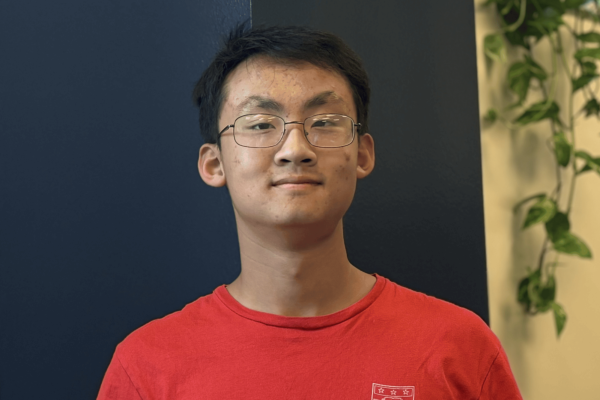


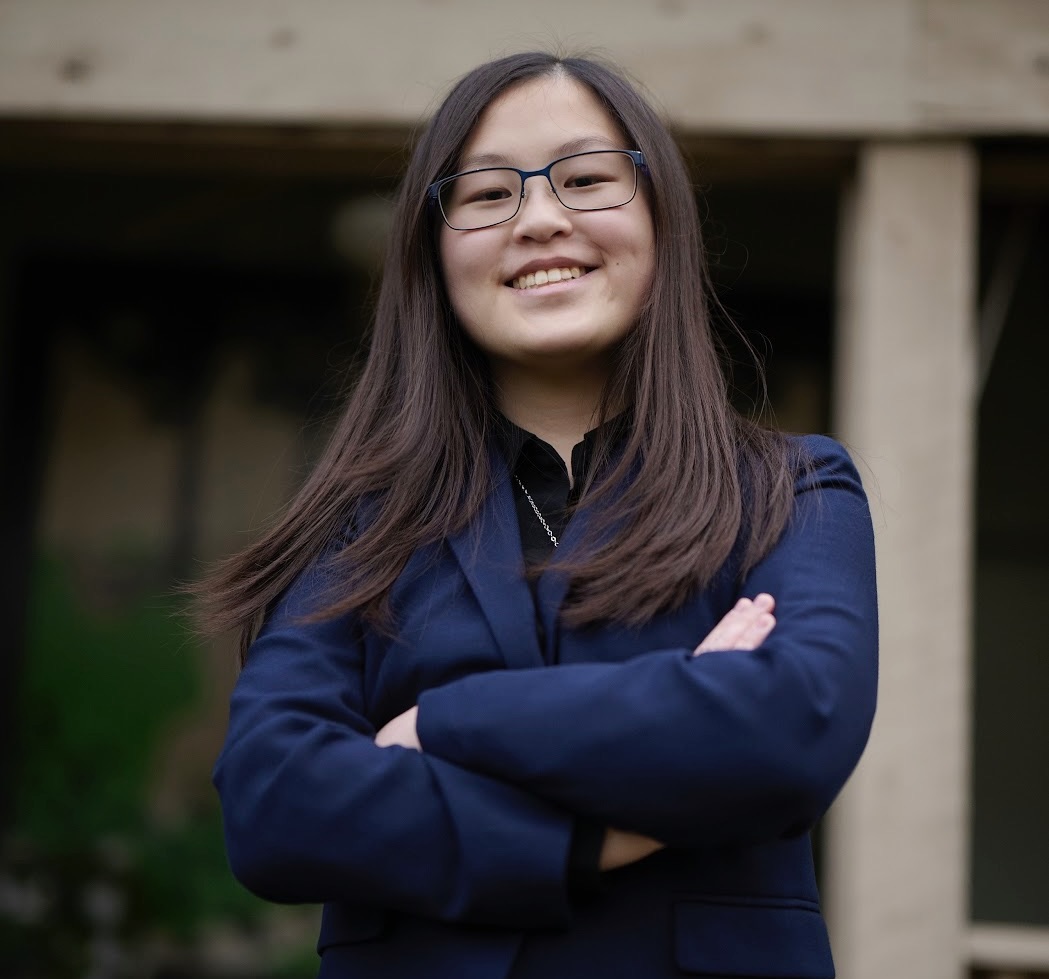
Senior Magnus Yin’s family came to America in search of something that was never guaranteed in China—opportunity through education. Their stories begin in the developing provinces of Hunan and Liaoning, more than a thousand miles apart.
“[My parents] lived in the countryside, and resources weren’t plentiful for education,” Yin said. “Funding for schools was limited, and teachers were usually unqualified to teach, so they had to pull [themselves] up at the bootstraps.”
Their childhoods unfolded during a period of political upheaval. Emerging from the Cultural Revolution, China was reconstructing its educational system after universities were closed for a decade, from 1966 to 1976. With limited domestic opportunities, studying abroad became their best path forward. Education was not just an expectation in their lives; it was the reason their paths crossed.
“They were able to attend Tokyo University in Japan, and that’s where they met,” Yin said. “My mom got a job as a [Business Intelligence] Developer, and my dad worked in biochemistry. After a few years, I was born. I grew up for a bit in Kawasaki, just outside of Tokyo.”
Though education brought them together, life in Japan made his parents reconsider what kind of future that education was meant to build. With Japan’s infamous work culture and strict hierarchy, they began considering moving again, not for their own future, but this time for Magnus.
“We had better job opportunities in America, and there was a prospect that we’d be better off,” Yin said. “I think the idea of moving to the U.S. was just to get a better life and to have better opportunities for me.”
The family left behind almost a decade’s worth of connections, and the final push to immigrate came after a natural disaster. In 2011, the Tōhoku earthquake triggered massive tsunamis that ravaged Japan’s coastline, damaging key infrastructure nationwide.
“I lived far enough inland that it wasn’t directly devastating,” Yin said. “We were afraid that since it had damaged a nuclear power plant, it would cause health harm.”
Magnus’s father secured a position in the United States on a work visa. Being only 4 years old during the move, the family’s third country would be the first in which Magnus would be educated.
His parents’ primary schooling in China involved extensive memorization. In the United States, the emphasis shifted.
“Here, I learned, not exactly to memorize, but [I] learn[ed] to understand,” Yin said. “I feel my mom 100% emphasizes critical thinking, and usually uses her past experience as an example to tell me what I shouldn’t do.”
At the same time, Magnus was constantly reminded that opportunity did not come with guarantees. In America, he lacked the connections his family had back in China or Japan.
“My parents made it clear that I wasn’t able to ride their coattails in any sense, and I had to find my own thing from scratch,” Yin said. “I’m starting virtually from zero compared to my peers.”
Even though his family lacked connections, Yin and his family felt liberated by distancing themselves from relatives’ judgment.
“For Asian cultures, everybody would start minding your business,” Yin said. “My mom said that it’s liberating that you can mind your own business in America. You’re allowed to have your own individual identity without caring too much about what those people thought about you.”
While a common emphasis is placed on getting into a prestigious college, Magnus’s parents break with the traditional view of success.
“They’ve already made it clear that prestige in college isn’t necessary,” Yin said. “I agree with them, and am more or less focused on what I’ll be doing at college instead.”
Magnus’s intellectual and personal freedom manifested throughout high school as he prepared for the Chemistry Olympiad.
“With a Chemistry Olympiad, I studied a lot on my own,” Yin said. Somewhere along the lines, I [realized] I was actually decent at chemistry, and I wanted to continue doing this. [It] reinvigorated the aspect of studying chemistry and opened up a lot of other opportunities for me, especially when I worked with other people.”
While his parents’ journey across borders shaped his upbringing, Magnus found that their destination mattered far less than the philosophy that drove them. For Magnus, the miles traveled helped shape his definition of success.
“I don’t think I would have developed critical thinking as quickly if they had not stressed it as much as they did,” Yin said. “Now, it’s just how I approach things in life.”
![Registrar Lois Stiegemeier gives her daughter an inspirational speech to remind her of the uniqueness of every human, that she has higher significance to this world then she realizes. As a parent, Stiegemeier wanted to ensure her children went into the world with a positive attitude. “You are worth more than you [know]. Don't settle for less,” Stiegemeier said.](https://www.chsglobe.com/wp-content/uploads/2026/05/Screenshot-2026-05-18-11.27.23-AM.png)
![Sophomore Adam Gallegos walks his first-ever runway for Dolce & Gabbana. “When I saw a picture on the Vogue website of me, [I thought] this can't be me. This can't be real,” Gallegos said. “That picture to me will always be crazy.” Dolce & Gabbana Fall 2026 Menswear Look 51 / 100
Photo by Isidore Montag, Vogue, ©Condé Nast](https://www.chsglobe.com/wp-content/uploads/2026/04/image4-960x1200.jpg)
![Dorsey teaches his third-period geometry class on Thursday, April 9. "I enjoy that [the students] are willing to get up, work at the whiteboards and collaborate," Dorsey said.](https://www.chsglobe.com/wp-content/uploads/2026/05/IMG_9493-868x1200.jpg)