
A two-year-long decision for the future of the district’s technology has come to a close; the administration has selected iPads for the 2026-2027 school year.
“I know, as with any device or any rollout, you’ve got some people (the early adopters) that are really excited about it, and then maybe other people are reluctant adopters,” Principal Dan Gutchewsky said. “I think one of the things that’s really important, which I do appreciate about the committee, is that they are looking at a very deliberate section of professional development for teachers to help enhance the classroom experience for kids and maximize the tool.”
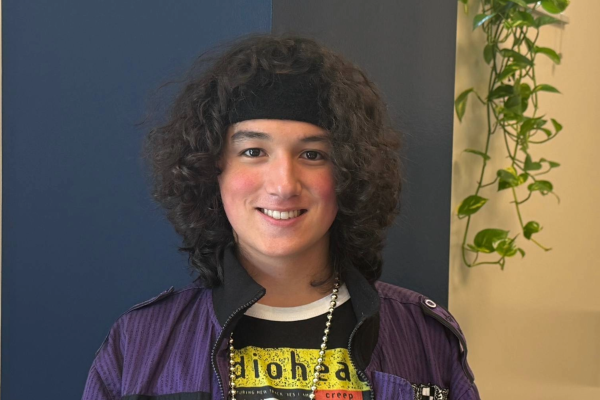
With the district’s commitment to the iPad program, students have reached out to their administrators with feedback. More specifically, junior Brody Mitchell provided a negative perspective.
“I believe that iPads are simply insufficient for the amount of work and the type of work that our students at CHS do every single day. The school will see a decrease in productivity. It’s overall a very poor decision,” Mitchell said.
To make his voice heard, Mitchell drafted a petition. “[The petition] has been out for about a month, since they announced the decision, and I have been considering making a video to [perhaps] go on a school broadcast,” Mitchell said.
Mitchell believes in an alternative to the proposed Apple tablets.
“I bought a MacBook Neo about three weeks ago, and it has been very, very nice. It is a relatively young product; it’s still in its infancy. But tech reviewers have been very pleased with its performance, despite its mobile chipset and only 8 GB of RAM. I have found it to be able to handle Final Cut Pro, Pixelmator Pro and all of my web browsing,” Mitchell said. “I found it to handle everything that I need to do with ease. It does not slow down when I’m editing a 4K video. I use it all day during school. I’ve been writing essays on it. I’ve been researching papers on it.”
He argues that the switch from a Google-based tech system to one from a rival company would be best implemented on the Neos.
“Google Chrome and all of the websites are exactly the same on [the Neo] as they would be on our Chromebooks, right? So every single student would know how to use this from day one,” Mitchell said. “My experience with iPads, because I used to use one for school, is that the apps we use every day are different on iPads. The entire interface is different. The fact is that the iPad was always designed to basically be a larger iPhone.”
His school of thought opposes the district’s. The list of capabilities for these iPads, as discussed by the technology committee, was a key factor in the decision.
“What stood out in feedback was the overall display quality and the ability to interact directly with the screen. Being able to write, draw, highlight and annotate naturally can make certain types of work feel more straightforward, especially when showing your thinking or creating something original,” Chief Technology Officer Luke Heitert said.
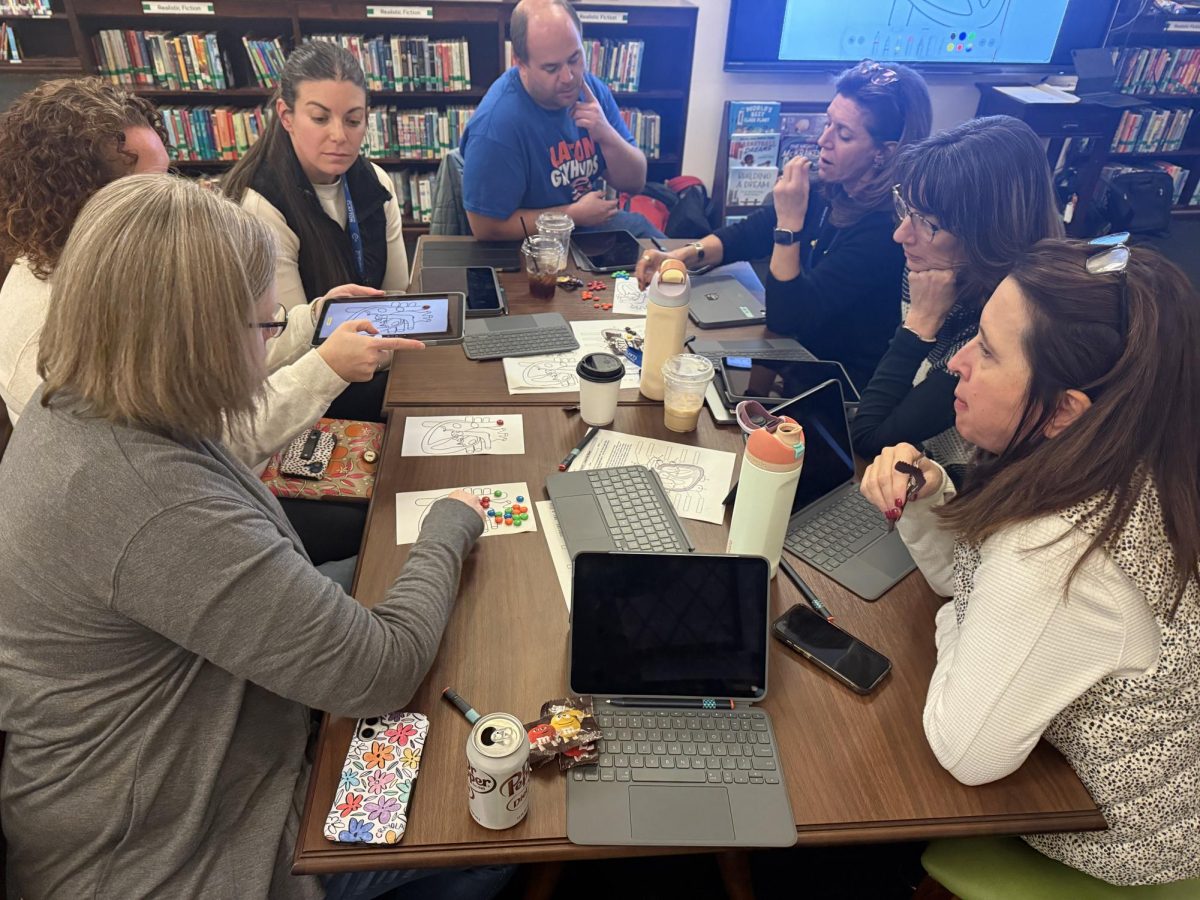
The technology committee studied certain devices with 41 affected individuals, consisting of students, teachers, technology staff and parents. They reached an agreement on the device of choice, giving feedback after trying the legion of new technology.
“One of the things that came up in the student group was that the students were very clear about the fact that they thought that the device was pretty cool and could do some really cool things,” Gutchewsky said.
Sophomore Sabrina Perng and her peers, members of the principal’s advisory council, the decision-making group at the scene of the eventual verdict, contributed their opinions and came to a conclusion, which doesn’t match what the administration had to say.
“We said there are parts of the iPad functioning systems that we like: They can have windows; they can take scans of your homework to put into Google Classroom,” Perng said. “They’re relatively light without the case, but we do need the case. But we did say we really need a functioning computer with a keyboard, because we’re used to that already. [We said] there’s not really a reason to make the change to an iPad. But they kind of just took the [fact that] we liked the iPad interface and ran with that. We said good things, but it wasn’t our preference.”
Brody Mitchell does not agree with the district’s decision.
“It’s honestly a travesty that this school district, who always claims to be very student-forward, very, very willing to work with students, has so blatantly ignored the opinion of the student body on this right,” Mitchell said. “There are coding people, engineering people, finance students—there are students in all of these kinds of areas, and every single one of them can utilize a computer, because that’s how the world runs. The world works on computers. It doesn’t work on big iPhones.”