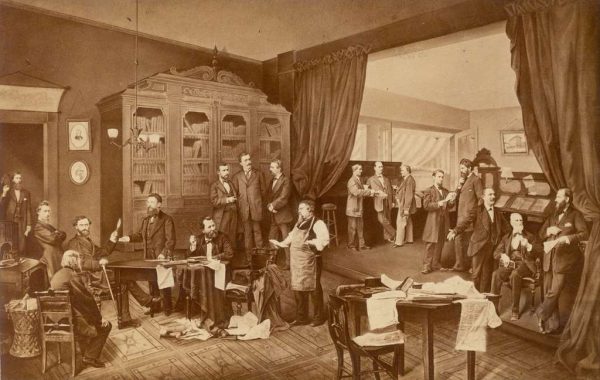

Retrospective: Clamo and Politics in 1968
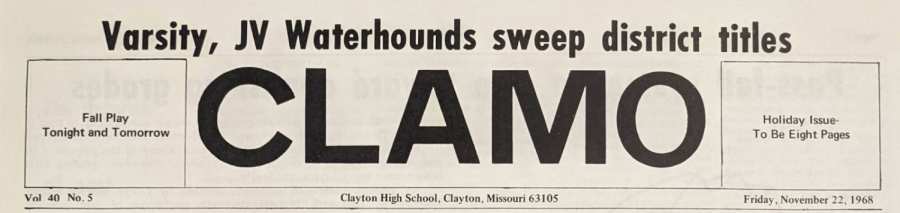
The heading of the Nov. 22, 1968 issue of Clamo.
The year was 1971, and Congress had recently passed a monumental piece of legislation. This piece of legislation would become the twenty-sixth amendment of the U.S. Constitution, which lowered the minimum voting age from 21 to 18. It was here that Washington acknowledged the political voice of a new generation of American youths. This youth was much different, consisting of high school and college students that, in the 1960s and early-1970s, helped spawn an altruistic zeitgeist that clamored for vast reforms in American society. This was a generation that saw some of their own get drafted to fight in an increasingly unpopular and hopeless war. As a result, their voice grew louder, accumulating into a wave of new politics bent on questioning the status quo.
Of course, Clayton and the greater St. Louis area were engulfed by this new wave of politics, and an example of this could be seen in the written newspaper works of CHS students at the time. These works can be seen in issues of the Globe’s predecessor, Clamo, as the newspaper started to publish more stories reflecting student political opinions in the years of 1968 and 1969.
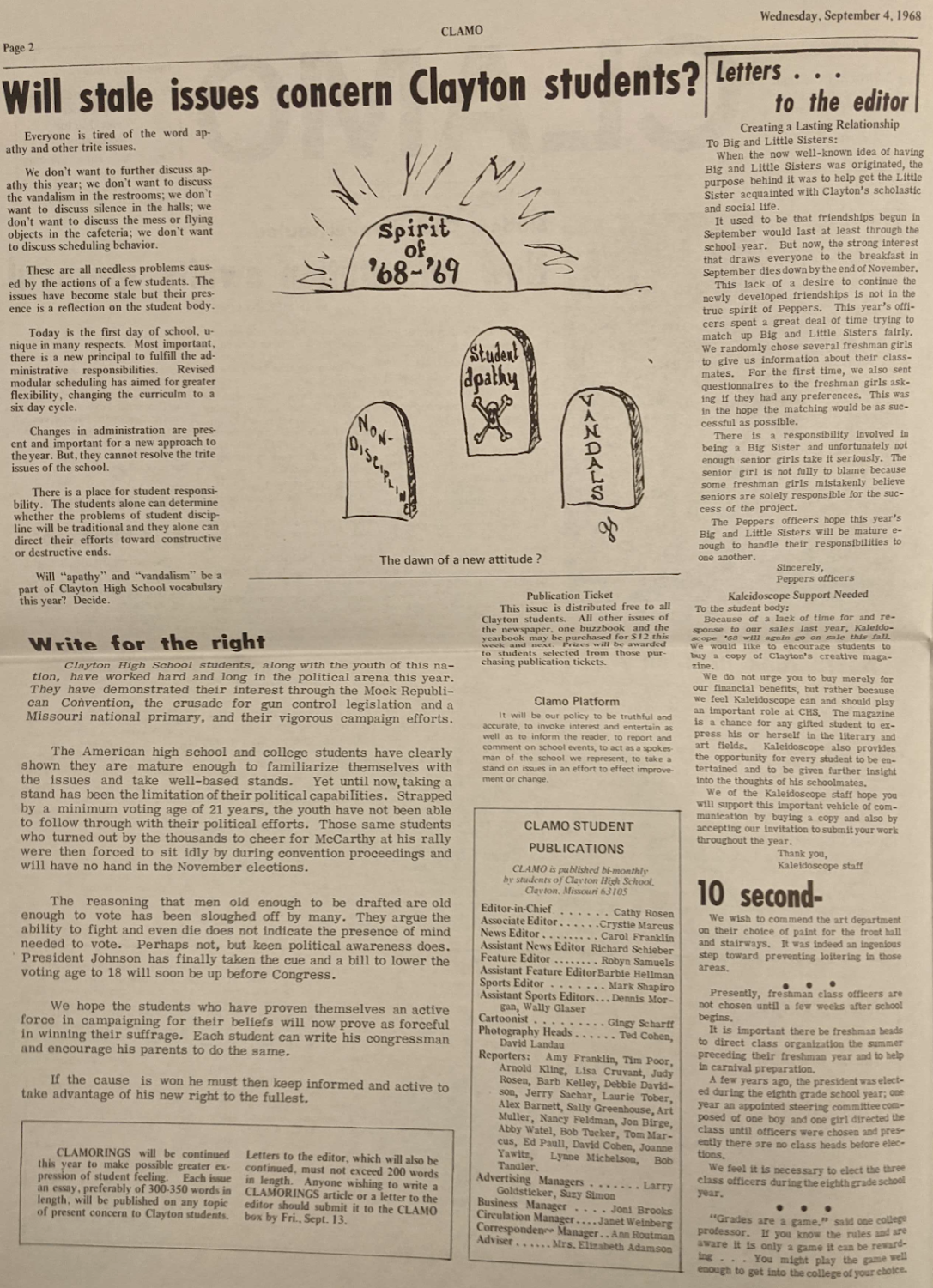
Editors of Clamo were arguing for the voting age to be lowered to 18 before the twenty-sixth amendment was passed. In a note on the Sept. 4, 1968 issue of Clamo, titled “Write for the right,” the editors supported legislation to soon lower the voting age that would allow high school seniors to vote. “The American high school and college students have clearly shown they are mature enough to familiarize themselves with the issues and take well-based stands,” the note read. The note would then go on to say, “We hope the students who have proven themselves an active force in campaigning for their beliefs will now prove as forceful in winning their suffrage.”
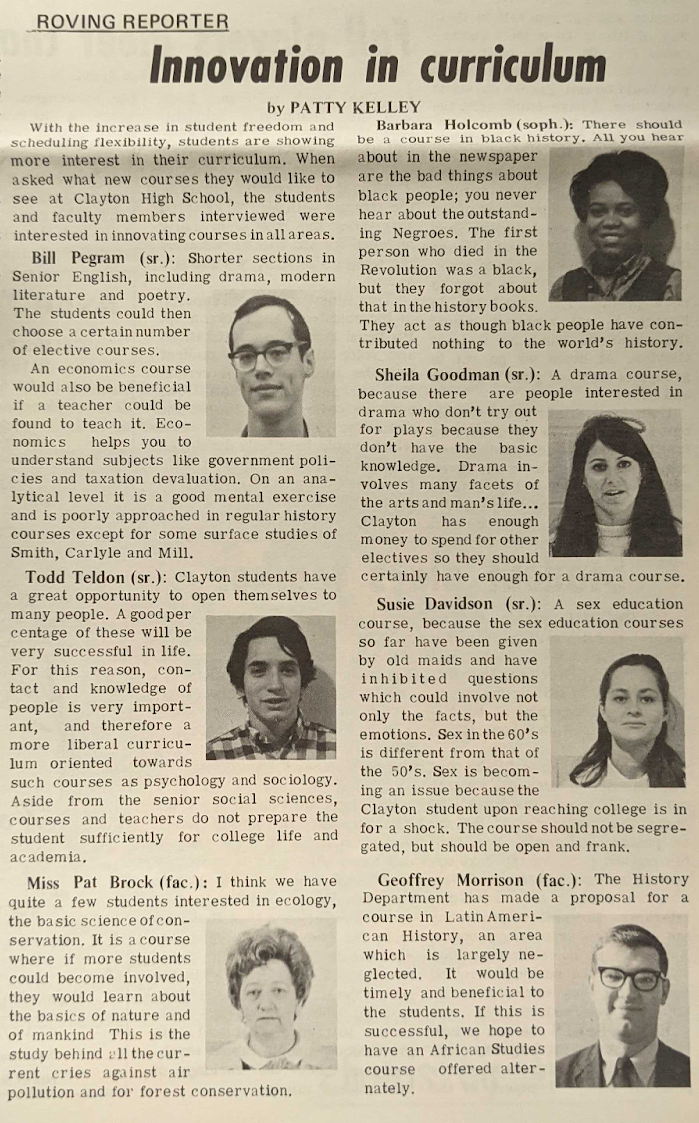
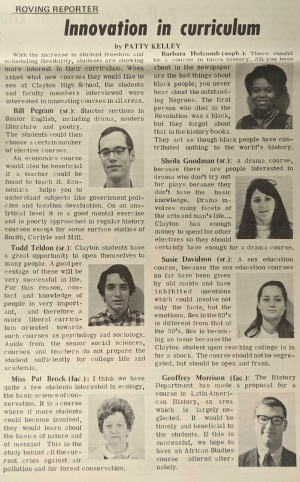
The articles of Clamo at the time also covered race relations, with the 1960s and 1970s being a time of many developments in how American society handled racism thanks to the civil rights movement. How education approached civil rights proved to be one focal point among some CHS students. In an interview with faculty members and students for an article on curriculum changes, Student Barbara Holcomb, ‘71, proposed a course on black history on the Dec. 20, 1968 issue. “The first person who died in the Revolution was a black, but they forgot about that in the history books,” said Holcomb. “[Historians] act as though black people have contributed nothing to the world’s history.”
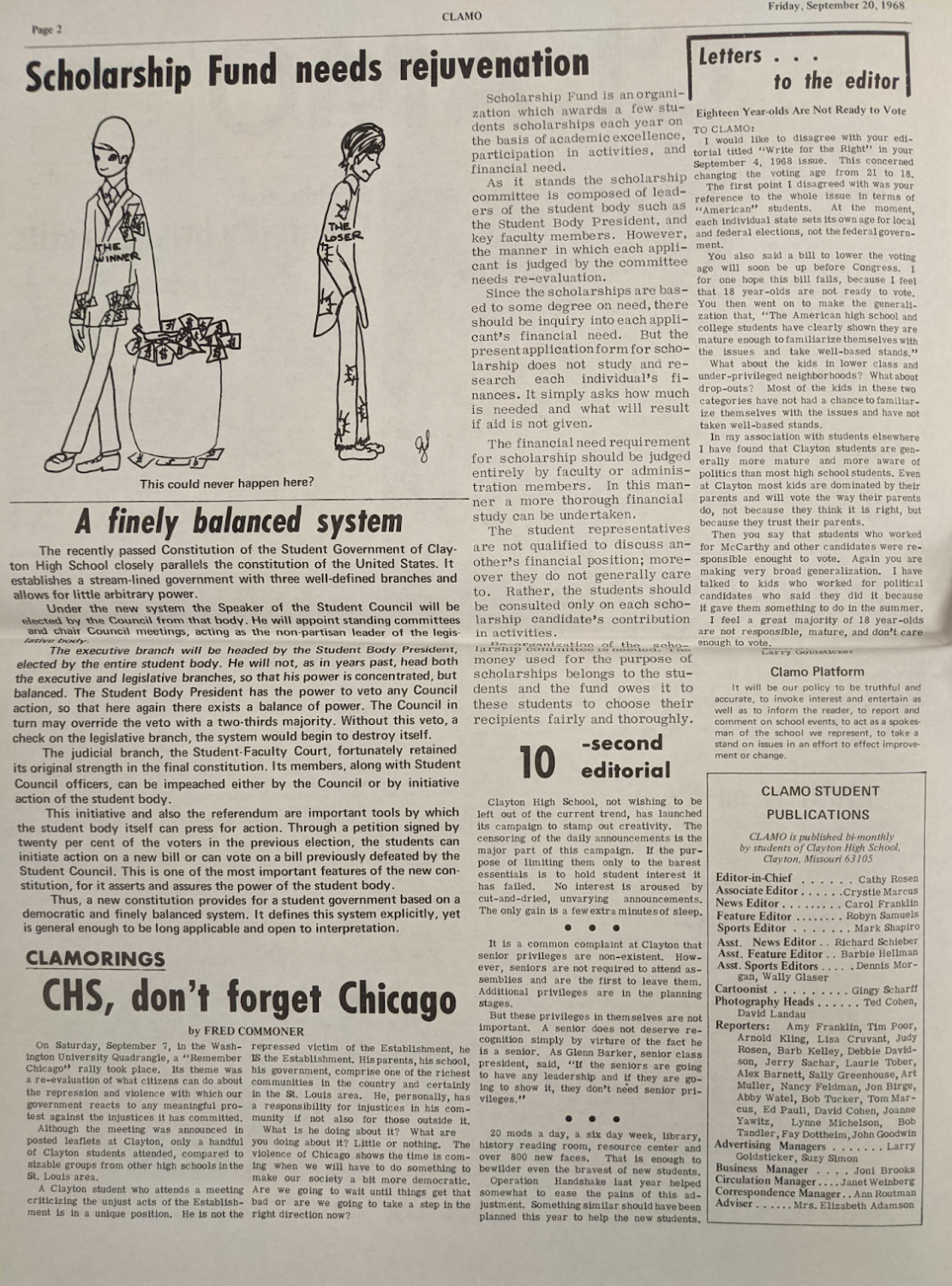
However, there were some students who criticized the recent outpouring of political activism by CHS students. In the Sept. 20, 1968 issue, one opinion article submitted by student Fred Commoner, graduation year unknown, argued that Clayton students should be wary of criticizing the political establishment. “A Clayton student who attends a meeting criticizing the unjust acts of the Establishment is in a unique position,” wrote Commoner. “He is not the repressed victim of the Establishment, he IS the Establishment. His parents, his school, his government, comprise one of the richest communities in the country and certainly in the St. Louis area.” Even in the present, Clayton being a particularly affluent and influential community remains true, especially in stark contrast to other communities in the St. Louis area as a part of ongoing local problems with income inequality.
These issues were relevant in the years 1968 and 1969, and although some have come to pass such as lowering the voting age, the general topics of discussion remain the same despite over 50 years later. Students are still politically outspoken, youth voter pressure is still something to be encouraged and how racism and the legacy of Jim Crow policies should be handled in society is still a subject of much debate. Even in the present, Clayton being a particularly affluent and influential community remains true, especially in stark contrast to other communities in the St. Louis area as a part of ongoing local problems with income inequality. Americans continue to be divided over the same problems written about over fifty years ago. But what can be agreed upon is this: the wave that swept across America in the 1960s and 1970s left a noticeable high-water mark.
-
The Sept. 4, 1968 Clamo issue where “Write for the right” was published. The note may have been written by Editor-in-Chief Cathy Rosen, ’69.
-
The Clamo article with Barbara Holcomb’s interview. Published on Dec. 20, 1968.
-
The Sept. 20, 1968 issue where Fred Commoner had his article published. The article also mentioned the 1968 Democratic National Convention and the violence surrounding the protests at the convention.
Support student journalism! A donation of $50 or more includes a subscription to the Clayton High School Globe 2026-2027 print news magazine. Once you have completed your donation, please email [email protected] with your home mailing address so we can ensure you never miss an issue.
We will mail a copy of our issues to the recipients of your choice.
Your donation helps preserve the tangible experience of print journalism, ensuring that student voices reach our community and that student democracy thrives.

Pronouns: he/him
Grade: 12
Years on staff: 4
What's an interesting fact about you? I have an older brother and an older sister.
What's your favorite movie? More than...

![Registrar Lois Stiegemeier gives her daughter an inspirational speech to remind her of the uniqueness of every human, that she has higher significance to this world then she realizes. As a parent, Stiegemeier wanted to ensure her children went into the world with a positive attitude. “You are worth more than you [know]. Don't settle for less,” Stiegemeier said.](https://www.chsglobe.com/wp-content/uploads/2026/05/Screenshot-2026-05-18-11.27.23-AM.png)


![Sophomore Adam Gallegos walks his first-ever runway for Dolce & Gabbana. “When I saw a picture on the Vogue website of me, [I thought] this can't be me. This can't be real,” Gallegos said. “That picture to me will always be crazy.” Dolce & Gabbana Fall 2026 Menswear Look 51 / 100
Photo by Isidore Montag, Vogue, ©Condé Nast](https://www.chsglobe.com/wp-content/uploads/2026/04/image4-e1777400235576-600x549.jpg)