

Students gathered to protest Immigration and Customs Enforcement (ICE) on Jan. 30, citing concerns over constitutional rights and recent ICE actions they described as increasingly harmful.
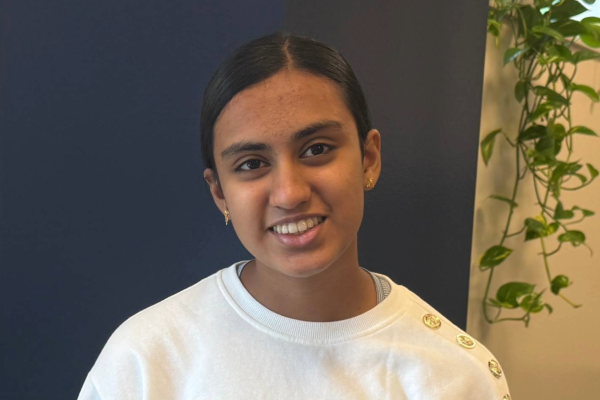
“America was built on immigration, and until we get justice, there will be no peace,” senior Natalie Jackson said.
The protests followed what participants described as a pattern of ICE behavior rather than a single triggering event, including raids, family separation and alleged violation of civil liberties.
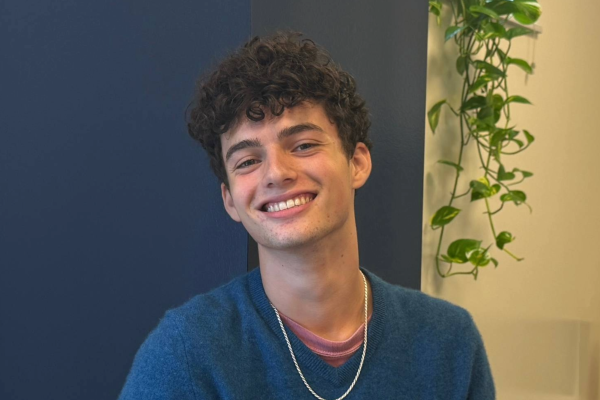
“I’m out here because I want to make my voice known,” senior Aidan Maurer-Halquist said. “I believe that ICE is messing with our guaranteed rights. They are disregarding our Constitution, the building block of our nation and what holds us together as a nation.”
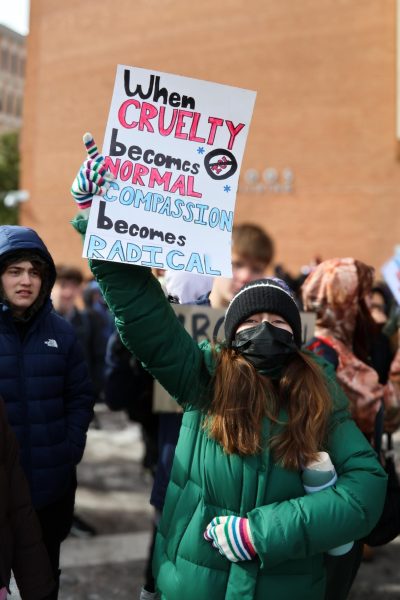
(Luciano Perman)
National news coverage and personal connections intensified the connections for many participants, making the issue feel immediate.
“It hits close to home when you have people that you relate to getting hurt,” Jackson said.
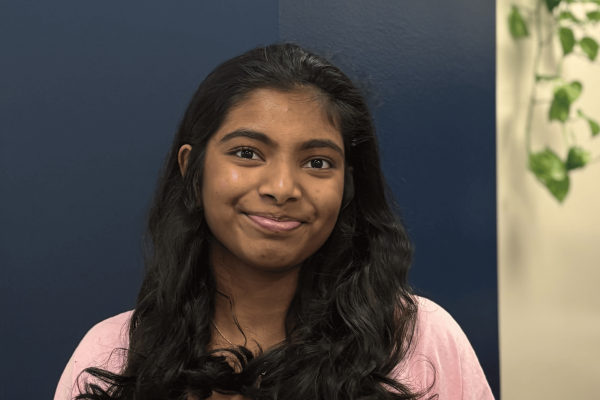
For some students, concern extended beyond U.S. borders. Sophomore Elise Waheed described international attention to ICE activity after her cousin in Belgium reached out.
“He saw the news of all the ICE raids and shootings and people who died, and he was actually concerned,” Waheed said. “I just feel so embarrassed that I’m living in this country.”
Some students’ concerns extend beyond ICE enforcement actions to what they describe as continued government funding and recruitment efforts for ICE.
The protest also focused on opposition to continued funding and recruitment for ICE, which participants characterized as contradictory to the nation’s immigrant history.
“I think it’s incredibly hypocritical of [certain people] to say that we can’t have immigrants in this country when they themselves are the children and descendants of immigrants,” Waheed said.
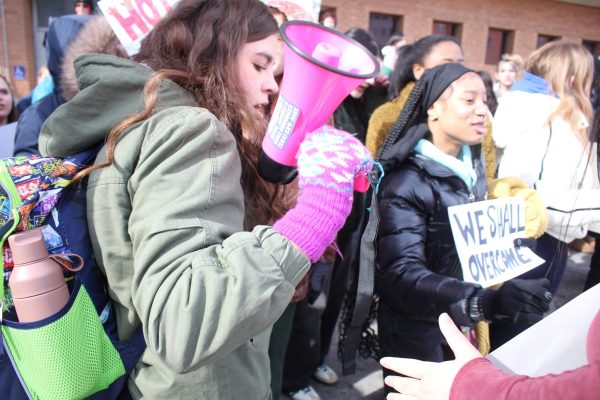
Recent violence linked to ICE further motivated participation, particularly events that gained national attention.
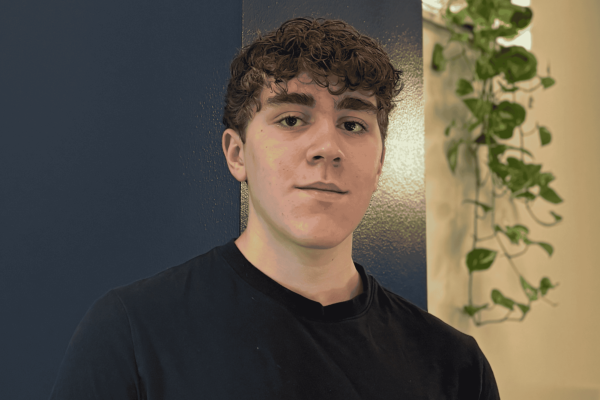
“The recent shootings and all the uproar in Minneapolis is really impactful on the students here,” junior Levi Holmes said. “That definitely motivated me to come out with everyone else.”
For many, the protest was framed as both a form of resistance and a civic duty.
“We cannot lose our Constitution,” Maurer-Halquist said. “That is the only thing that can prevent a dictatorship. If we can honor the Constitution, we can hold our nation together, and that’s what we’re here for.”